Understanding Post-COVID Care Needs
What Is Post-COVID Condition?
Post-COVID condition refers to ongoing health issues that
persist weeks or months after initial infection. Common symptoms include:
- Shortness
of breath
- Reduced
lung capacity
- Extreme
fatigue
- Muscle
and joint pain
- Sleep
difficulty
- Anxiety
and weakness
- Reduced
oxygen saturation levels
Patients recovering at home often need frequent rest,
careful monitoring, and gradual rehabilitation, making bed comfort and
positioning extremely important.
Why Normal Beds Are Inadequate for Post-COVID Recovery
Most standard household beds are designed for healthy
individuals and do not support medical recovery.
Limitations of normal beds include:
- Flat
sleeping position that worsens breathing
- Difficulty
sitting up for meals or oxygen therapy
- No
support for frequent posture changes
- Higher
risk of dizziness and falls during movement
- Increased
caregiver effort for basic tasks
These limitations can slow recovery and increase discomfort
for post-COVID patients.
How Hospital Beds Support Post-COVID Care at Home
Hospital beds are designed to adapt to the patient’s
changing recovery needs, making them ideal for post-COVID care.
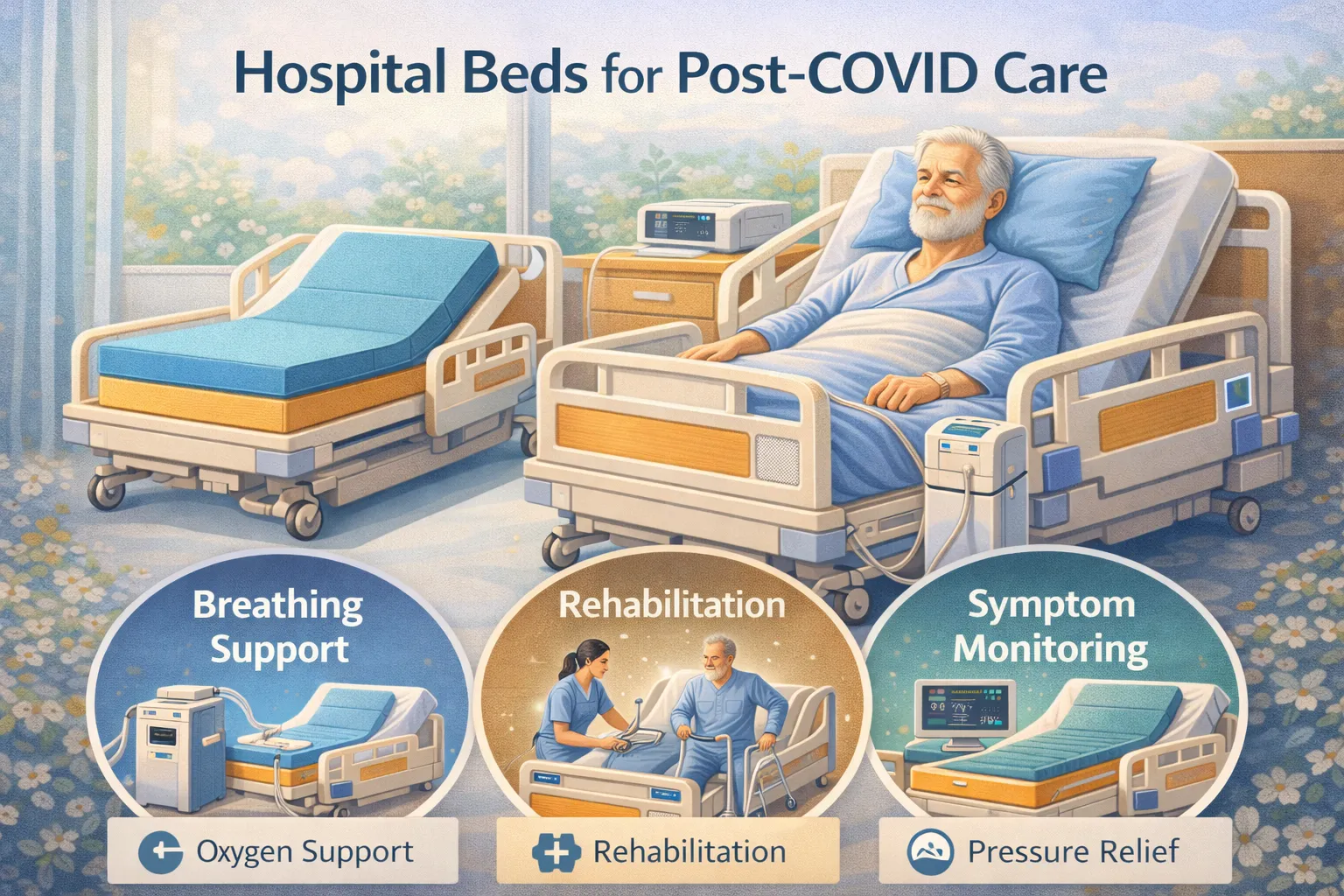
Head Elevation for Improved Breathing and Oxygenation
One of the most common post-COVID issues is breathlessness,
especially while lying flat.
Hospital beds allow:
- Adjustable
head elevation to improve lung expansion
- Comfortable
semi-reclined positions for oxygen therapy
- Reduced
pressure on the chest
This positioning helps maintain better oxygen saturation
levels and reduces nighttime breathing discomfort.
Supporting Prone and Side-Lying Positions
Doctors often recommend prone or side-lying positions for
improving lung function during recovery.
Hospital beds:
- Make
repositioning easier and safer
- Allow
gradual angle adjustments
- Reduce
physical strain during position changes
This flexibility is especially helpful for weak or elderly
patients.
Fatigue Management and Restorative Sleep
Post-COVID fatigue can be severe and persistent.
Hospital beds support:
- Frequent
position changes to reduce muscle stiffness
- Comfortable
rest without repeated manual adjustment
- Reduced
caregiver disturbance during night care
Better rest directly contributes to faster recovery and
energy restoration.
Height Adjustment for Safe Mobility and Fall Prevention
Many post-COVID patients experience:
- Dizziness
- Muscle
weakness
- Poor
balance
Height-adjustable hospital beds:
- Make
it easier to sit up and stand safely
- Reduce
fall risk during transfers
- Support
gradual mobility rebuilding
This is critical for preventing injuries during recovery.
Side Rails for Stability and Confidence
Side rails provide:
- Extra
support during turning or sitting
- Protection
against accidental falls
- Psychological
reassurance for anxious patients
This encourages safe movement and independence, which is
essential for rehabilitation.
Reduced Caregiver Strain During Post-COVID Care
Post-COVID care often involves:
- Frequent
monitoring
- Oxygen
support
- Medication
administration
- Assistance
with mobility
Hospital beds reduce caregiver workload by:
- Minimizing
lifting and bending
- Making
care tasks faster and safer
- Supporting
single-caregiver households
This helps prevent caregiver burnout.
Types of Hospital Beds Suitable for Post-COVID Care
Manual Hospital Beds
- Basic
support
- Suitable
for mild recovery
- Requires
caregiver effort
Semi-Electric Hospital Beds
- Electric
head and leg adjustment
- Manual
height control
- Ideal
for moderate post-COVID recovery
Fully Electric Hospital Beds (Highly Recommended)
- Full
electric adjustment
- Minimal
physical effort
- Best
for elderly and weak patients
Duration of Use: Short-Term to Extended Recovery
Post-COVID recovery timelines vary:
- Mild
cases: a few weeks
- Moderate
cases: several months
- Severe
cases: long-term care
Hospital beds adapt easily to changing needs, making them
suitable for both short-term and extended use.
Psychological Comfort and Emotional Recovery
Recovery is not only physical.
Hospital beds help patients:
- Sit
upright and engage with family
- Eat
comfortably
- Feel
safe rather than vulnerable
This improves confidence, reduces anxiety, and supports
emotional healing.
Cost vs Benefit: Why Hospital Beds Are Worth It
Although hospital beds may appear costly, they:
- Reduce
hospital readmission risk
- Prevent
falls and complications
- Lower
dependence on full-time nursing
- Improve
overall recovery outcomes
For post-COVID care, a hospital bed is a preventive
investment, not an unnecessary expense.
Who Should Strongly Consider a Hospital Bed After COVID?
Hospital beds are especially helpful for:
- Elderly
post-COVID patients
- Patients
with lung complications
- Those
requiring oxygen support
- Individuals
with prolonged fatigue
- Patients
with limited mobility
Conclusion: Supporting Safe and Complete Post-COVID
Recovery at Home
Post-COVID recovery requires time, patience, and the right
support system. A hospital bed plays a central role in this process by
providing proper positioning, comfort, and safety three pillars of effective
recovery.
For patients dealing with lingering breathlessness,
weakness, or fatigue, and for families managing care at home, a hospital bed
for post-COVID care helps bridge the gap between hospital treatment and full
recovery.
By reducing physical strain, improving breathing, supporting
mobility, and enhancing rest, the right hospital bed creates an environment
where healing can happen safely and steadily.
In post-COVID care, the goal is not just recovery but
restoring confidence, independence, and quality of life.