For elderly individuals,
post-surgery patients, paralysis or stroke survivors, and people with limited
mobility, toileting is not just a routine activity but a daily challenge that
involves pain, fatigue, and fall risk. In Indian homes, where space
constraints, tiled flooring, narrow corridors, and distant bathrooms are
common, moving a patient safely from bed to bathroom or bedside commode often
becomes physically exhausting for caregivers and emotionally stressful for
patients. A commode chair with wheels directly addresses these challenges by
combining toileting support with controlled mobility, making daily care safer,
faster, and more dignified.
At Aarogyaa Bharat, we frequently see families struggling
with repeated lifting, awkward transfers, and rushed movements during
toileting, especially at night or during medical recovery. These situations
often lead to caregiver back injuries, patient falls, and emotional distress. A
wheeled commode chair transforms this experience by allowing the patient to be
moved gently and securely, reducing the need for manual lifting and minimising
risk. This makes it an essential solution for families providing long-term or
intensive home care.
Understanding What a Commode Chair with Wheels Is
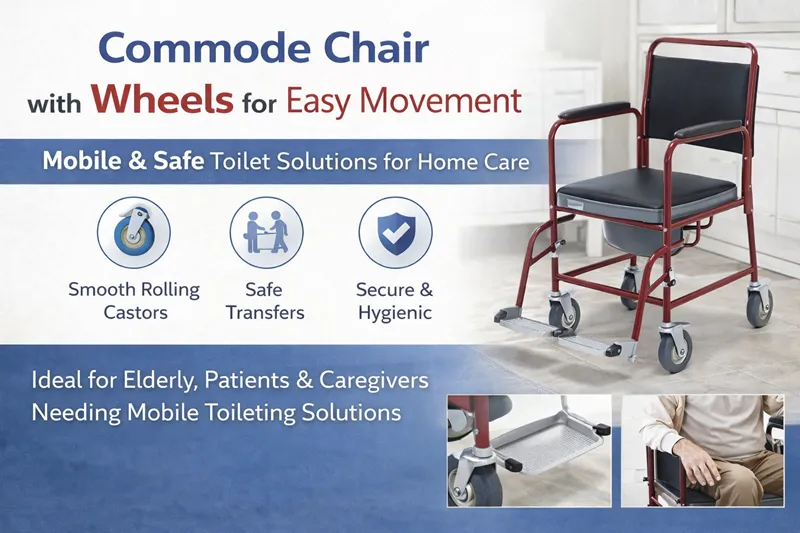
A commode chair with wheels is a mobile toileting chair
fitted with smooth-rolling caster wheels that allow caregivers to move the
patient safely across short distances, such as from the bed to the bathroom or
within the room. Unlike standard fixed commode chairs, wheeled models are
designed for controlled movement and often include wheel locks to ensure
stability during use. These chairs typically feature strong frames, supportive
armrests, adjustable height, and a removable waste bucket, combining mobility
with safety. In home-care environments, especially for patients who cannot walk
independently, wheeled commode chairs significantly simplify daily routines.
Why Easy Movement Is Critical In-Home Care
Repeated lifting and repositioning are one of the biggest
causes of caregiver injury and burnout. Helping a patient stand, turn, and walk
multiple times a day puts immense strain on the caregiver’s back, shoulders,
and joints. For patients, these movements can cause pain, dizziness, and fear
of falling. A commode chair with wheels reduces the need for these risky
movements by allowing the patient to remain seated while being moved safely.
This controlled mobility ensures smoother transitions, reduces panic, and makes
toileting a calmer experience for everyone involved.
Ideal Use Cases for Wheeled Commode Chairs
Commode chairs with wheels are particularly useful for
stroke survivors, paralysis patients, post-surgery recovery cases, elderly
individuals with severe balance issues, and obese patients who require stable
support. They are also beneficial in homes where the bathroom is located close
enough for rolling access but unsafe for walking. In Indian homes with narrow
passages and tiled floors, wheeled commode chairs allow caregivers to navigate
short distances without forcing patients to walk or be lifted repeatedly.
Importance of Wheel Locks and Stability
One of the most critical safety features in a wheeled
commode chair is the wheel locking mechanism. While wheels provide movement,
locks ensure the chair remains firmly in place during sitting, standing, and
toileting. Without proper locking, the chair may roll unexpectedly, causing
loss of balance and serious injury. Aarogyaa Bharat strongly recommends wheeled
commode chairs with reliable, easy-to-engage locks on all wheels, ensuring
stability equal to fixed chairs during use.
Ergonomic Comfort and Support in Wheeled Designs
Modern wheeled commode chairs are designed to provide
ergonomic comfort alongside mobility. Adjustable height allows proper alignment
with beds and wheelchairs, reducing joint strain. Strong armrests provide
leverage for transfers, while supportive seating ensures comfort during longer
use. These ergonomic features are essential for elderly users and patients with
joint pain, ensuring that mobility does not come at the cost of comfort or
safety.
Night-Time Toileting and Emergency Use
Night-time toileting is one of the most stressful aspects of
home care due to poor lighting, urgency, and caregiver fatigue. A wheeled
commode chair allows caregivers to move the patient safely to a convenient
location or bathroom without forcing them to walk in the dark. This
significantly reduces fall risk and panic during emergencies. Consistent
placement and smooth movement help patients remain calm and cooperative,
improving night-time safety for the entire household.
Hygiene and Cleaning Advantages
Wheeled commode chairs simplify hygiene management by
allowing easy positioning for bucket removal and cleaning. Some models can be
rolled directly to the bathroom for disposal, reducing spillage and odour.
Smooth surfaces, removable buckets, and controlled movement help maintain
hygiene standards, especially in small homes where space is limited. This
reduces caregiver workload and improves overall cleanliness.
Caregiver Efficiency and Reduced Physical Strain
Caregivers benefit immensely from wheeled commode chairs as
they reduce lifting, bending, and repeated repositioning. Moving a patient
while seated is far safer than assisting them to walk or lifting them manually.
This improves caregiver efficiency, reduces injury risk, and allows one
caregiver to manage toileting safely without additional help. Aarogyaa Bharat
considers caregiver safety a core factor when recommending wheeled commode
chairs.
Safety Considerations in Indian Home Environments
Indian homes often have tiled floors, thresholds, and uneven
surfaces that require careful handling of wheeled equipment. A good wheeled
commode chair should have smooth yet controlled wheels, strong locks, and a
stable frame that prevents tipping. Proper installation, regular wheel
inspection, and consistent use of locks ensure safe operation within Indian
home layouts.
Comparison Table: Commode Chair with Wheels vs Without
Wheels
|
Feature |
Commode
Chair with Wheels |
Commode
Chair without Wheels |
|
Ease of
movement |
High |
None |
|
Caregiver
lifting |
Minimal |
High |
|
Transfer
safety |
Excellent |
Moderate |
|
Night-time
use |
Very
convenient |
Limited |
|
Stability
during use |
High (with
locks) |
High |
|
Caregiver
strain |
Low |
High |
|
Suitable for
immobile patients |
Yes |
Limited |
Choosing the Right Wheeled Commode Chair
Selecting the right commode chair with wheels requires
careful evaluation of patient mobility, weight, room layout, and caregiver
strength. Strong frame construction, reliable wheel locks, adjustable height,
armrest strength, and ease of cleaning should be prioritised. Aarogyaa Bharat
helps families choose wheeled commode chairs that are safe, durable, and
well-suited for Indian home-care conditions.
Long-Term Value of Wheeled Commode Chairs
Although wheeled commode chairs may cost more than fixed
models, they deliver long-term value by preventing falls, reducing caregiver
injuries, and improving daily efficiency. Over time, the reduction in physical
strain, hospital visits, and emergency situations makes them a cost-effective
and practical investment for long-term home care.
Why Aarogyaa Bharat Recommends Wheeled Commode Chairs
Aarogyaa Bharat understands that home care requires
solutions that work in real-world conditions, not just clinical environments.
By recommending commode chairs with wheels, we help families create safer, more
efficient care routines that protect both patients and caregivers. Our focus is
on dignity, safety, and sustainability in everyday home healthcare.
Conclusion
A commode chair with wheels for easy movement is a powerful upgrade in home care, transforming toileting from a physically demanding and risky task into a controlled, dignified routine. By reducing lifting, improving mobility, and enhancing safety, wheeled commode chairs support better outcomes for patients and caregivers alike. In Indian homes, where space and safety challenges are common, this mobility-focused solution offers unmatched practicality and peace of mind. Aarogyaa Bharat remains committed to guiding families toward smart, safety-first home-care solutions that improve quality of life every day.