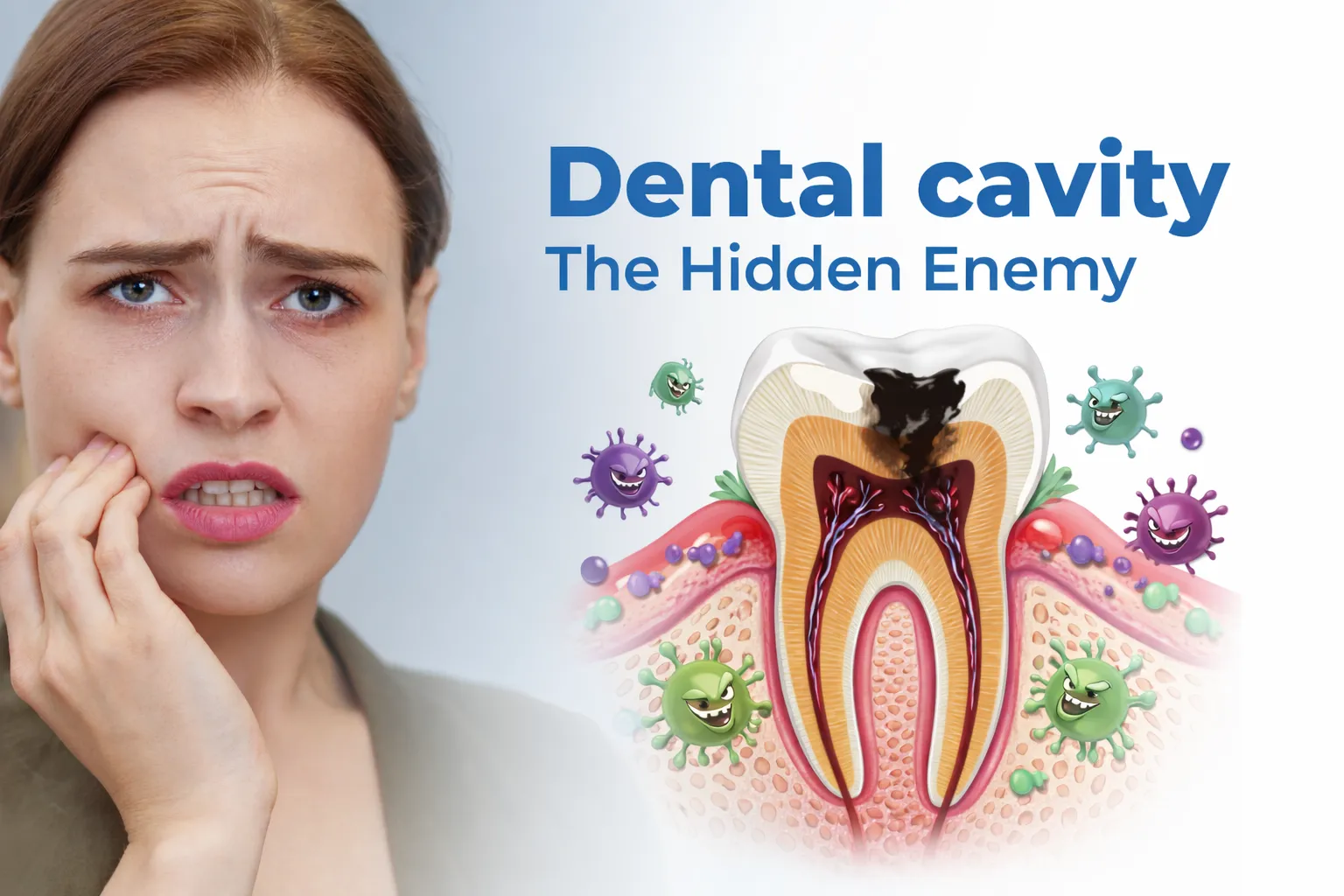
Much like the origin story of a supervillain, dental
cavities don’t appear overnight. They begin small, almost invisible, hiding in
the nooks and crannies of your teeth, patiently plotting against your oral
health. By the time pain sets in, significant damage may already be done.
At Aarogyaa Bharat, we believe that awareness is the first
step toward prevention. This comprehensive guide will help you understand
dental cavities, their causes, symptoms, prevention, and treatment so you can
protect your smile before the enemy strikes.
What Is a Dental Cavity?
A dental cavity, also known as tooth decay or dental caries,
is permanent damage to the hard surface of a tooth that develops into tiny
openings or holes. Cavities occur when acids produced by bacteria erode the
enamel the tooth’s protective outer layer.
If left untreated, cavities can penetrate deeper layers of
the tooth, leading to pain, infection, and even tooth loss.
How Do Dental Cavities Form?
Cavities form through a gradual process:
- Plaque
Formation: Sticky plaque forms when bacteria mix with sugars from food and
drinks.
- Acid
Attack: Bacteria produce acids that erode tooth enamel.
- Enamel
Breakdown: Minerals are lost, weakening the tooth surface.
- Cavity
Development: Small holes form, allowing bacteria to reach deeper
layers.
This process can happen silently, especially in its early
stages.
Common Causes of Dental Cavities
Several factors contribute to cavity formation:
- Poor
oral hygiene
- Frequent
consumption of sugary or acidic foods
- Inadequate
fluoride exposure
- Dry
mouth or reduced saliva flow
- Irregular
dental check-ups
- Smoking
and tobacco use
Children, adults, and seniors are all at risk cavities don’t
discriminate.
Signs and Symptoms to Watch Out For
In the early stages, cavities may not cause noticeable
symptoms. As they progress, you may experience:
- Tooth
sensitivity to hot, cold, or sweet foods
- Toothache
or spontaneous pain
- Visible
holes or dark spots on teeth
- Pain
while chewing
- Bad
breath or unpleasant taste
Early detection can prevent major dental complications.
Types of Dental Cavities
1. Smooth Surface Cavities
Occur on the flat surfaces of teeth and are often
preventable with proper brushing.
2. Pit and Fissure Cavities
Develop in the grooves of molars where food particles easily
get trapped.
3. Root Cavities
Common in older adults due to gum recession exposing tooth
roots.
Why Dental Cavities Shouldn’t Be Ignored
Ignoring cavities can lead to:
- Severe
tooth pain
- Infection
or abscess
- Damage
to surrounding teeth
- Difficulty
eating
- Tooth
loss
- Higher
treatment costs
What starts as a minor issue can quickly become a major oral
health problem.
Treatment Options for Dental Cavities
Treatment depends on the severity of decay:
- Fluoride
treatments: Help restore enamel in early stages
- Dental fillings: Repair damaged tooth structure
- Crowns:
Used when decay is extensive
- Root
canal treatment: Required if infection reaches the pulp
- Tooth
extraction: Last resort when damage is severe
Timely treatment preserves both tooth structure and oral
health.
Preventing Dental Cavities: Your Best Defense
Prevention is always better than cure. Here’s how you can
protect your teeth:
- Brush
twice daily with fluoride toothpaste
- Floss
regularly
- Limit
sugary snacks and drinks
- Drink
plenty of water
- Visit
your dentist every six months
- Consider
dental sealants for children
Simple daily habits can go a long way in keeping cavities at
bay.
Dental Cavities in Children vs Adults
Children are more prone to cavities due to developing oral
habits, while adults may face cavities due to lifestyle factors, stress, or gum
recession. Regardless of age, proactive care is essential.
Frequently Asked Questions (FAQs)
Q1. Can cavities heal on their own?
Early-stage enamel damage can sometimes be reversed with
fluoride, but formed cavities require treatment.
Q2. Are cavities painful?
Not always. Pain usually occurs in advanced stages, which is
why regular check-ups are important.
Q3. How fast do cavities develop?
Cavities can develop over months or years, depending on diet
and oral hygiene.
Q4. Can cavities affect overall health?
Yes. Untreated cavities can lead to infections that impact
overall health.
Conclusion
Dental cavities may be silent and sneaky, but they are not
unbeatable. With the right knowledge, habits, and timely dental care, you can
stop this hidden enemy before it causes lasting damage.
At Aarogyaa Bharat, we are committed to promoting better
oral health through awareness and access to quality healthcare solutions because
a healthy smile is a powerful smile.