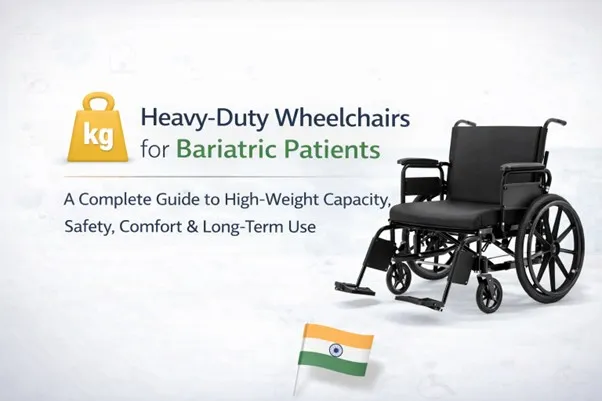
Who Is Considered a Bariatric Wheelchair User?
A bariatric wheelchair is recommended when:
- Body
weight exceeds 120-130 kg
- User
has a wide hip or thigh measurement
- Standard
wheelchair feels cramped or unstable
- Long-term
mobility support is needed
Common users include:
- Obese
patients
- Post-bariatric
surgery patients
- Elderly
patients with weight-related mobility issues
- Long-term
bedridden patients with weight gain
Why Standard Wheelchairs Are Unsafe for Bariatric
Patients
Standard wheelchairs typically:
- Support
only 100-120 kg
- Have
narrow seats (16-18 inches)
- Use
lighter frames and wheels
For bariatric users, this causes:
- Pressure
on hips and thighs
- Poor
circulation
- Risk
of tipping
- Rapid
equipment failure
A heavy-duty wheelchair solves all these issues.
Key Features of Heavy-Duty / Bariatric Wheelchairs
1. High Weight Capacity (Core Feature)
Bariatric wheelchairs typically support:
- 150
kg - 250 kg
Some advanced models support even more.
Always choose 20-30 kg higher capacity than user weight.
2. Wider Seat Width for Comfort
Seat widths commonly range from:
- 20
inches
- 22
inches
- 24
inches
Wider seats:
- Prevent
skin friction
- Improve
posture
- Reduce
pressure sores
3. Reinforced Steel or Heavy Aluminium Frame
Heavy-duty frames:
- Prevent
bending
- Ensure
long-term stability
- Handle
uneven Indian flooring
Steel frames are more common for bariatric care due to
strength.
4. Strong Wheels & Axles
Includes:
- Thicker
wheels
- Stronger
axles
- Heavy-duty
casters
This ensures smooth movement without wobbling.
5. Extra-Strong Brakes & Anti-Tip Safety
Bariatric users require:
- Powerful
locking brakes
- Anti-tip
wheels
Safety is non-negotiable at higher body weight.
Best Types of Bariatric Wheelchairs
Best for:
- Indoor
mobility
- Caregiver
assistance
- Long-term
home use
Bariatric Wheelchair with Commode
Best for:
- Bedridden
obese patients
- Limited
bathroom access
- Hygiene
and dignity
Reclining Bariatric Wheelchair
Best for:
- Long
sitting hours
- Pressure
relief
- Severe
mobility limitations
Bariatric Wheelchairs for Long-Term Home Care
Long-term bariatric care requires:
- Comfortable
seating
- Pressure-relief
cushions
- Strong
back support
- Easy
caregiver handling
Using the wrong wheelchair leads to:
- Pressure
sores
- Joint
pain
- Increased
caregiver fatigue
Accessories That Are Essential for Bariatric Users
Must-have accessories:
- High-density
pressure-relief cushion
- Extra-wide
armrest padding
- Backrest
support
- Calf
straps or leg support
Accessories are mandatory, not optional, for bariatric
comfort.
Rent vs Buy Bariatric Wheelchairs
Rent If:
- Temporary
weight gain
- Post-surgery
recovery
- Trial
before purchase
Buy If:
- Chronic
obesity
- Long-term
mobility limitation
- Daily
wheelchair use
Aarogyaa Bharat offers heavy-duty bariatric wheelchairs for
rent and purchase, with proper weight-capacity guidance.
Indian Home Considerations for Bariatric Wheelchairs
- Door
width → ensure wide chair clearance
- Floor
strength → stable ground required
- Storage
→ bariatric chairs are larger
- Caregiver
space → turning radius needed
Always measure home entry points before buying.
Common Mistakes Families Make
- Using standard wheelchair for obese patients
- Ignoring seat width
- Choosing based on price alone
- Skipping cushions and accessories
These mistakes often cause injury and extra expense.
Conclusion: Strength, Safety & Dignity Come First
For bariatric patients, mobility is not just about movement it’s
about safety, dignity, and long-term health.
A properly chosen heavy-duty bariatric wheelchair:
- Protects
the patient
- Prevents
equipment failure
- Reduces
caregiver risk
- Improves
comfort
- Supports
daily life confidently
Families should never compromise on weight capacity or seat
width. Investing in the right bariatric wheelchair ensures care that is
respectful, secure, and sustainable.