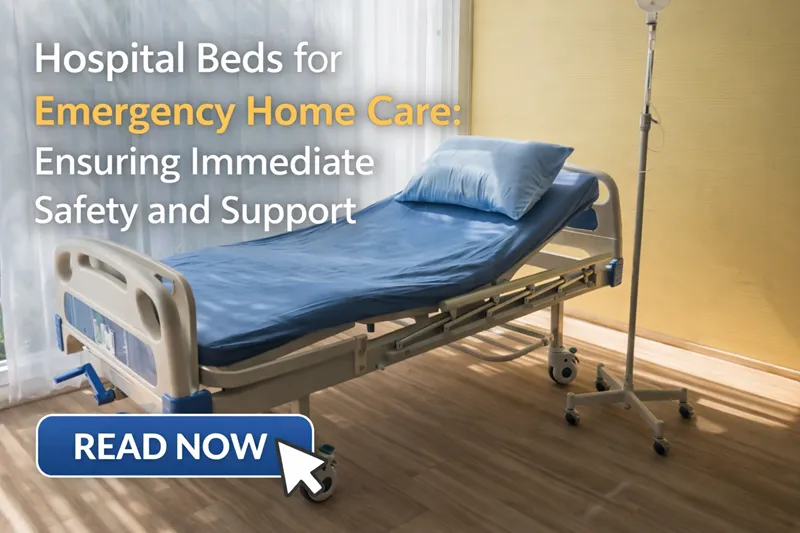
Emergency home care often involves patients who are
immobile, recovering from critical surgery, or experiencing severe illness. A
proper hospital bed ensures that patients are safe, comfortable, and accessible
for caregivers or visiting medical professionals.
At Aarogyaa Bharat, we focus on providing hospital beds
optimized for emergency situations, equipped with safety features,
adjustability, and medical-grade support that allow families to handle urgent
care scenarios without compromising patient well-being.
Key Features of Hospital Beds for Emergency Home Care
1. Quick Adjustability for Critical Situations
- Beds
with motorized height, head, and leg adjustments allow caregivers to
position patients for optimal breathing, circulation, or CPR.
- Quick
adjustments are crucial during emergency interventions like respiratory
distress, cardiac episodes, or sudden immobility.
2. Integrated Safety Rails and Wheel Locks
- Side
rails prevent falls during sudden movements or panic episodes.
- Lockable
wheels stabilize the bed during patient transfer, treatment, or CPR,
ensuring maximum safety in high-pressure situations.
3. Durable Construction and Weight Support
- Emergency
care beds are made with robust frames capable of handling bariatric
patients, heavy equipment, or multiple accessories simultaneously.
- Ensures
that even during abrupt movements or repositioning, the bed remains
stable.
4. Motorized CPR and Trendelenburg Positions
- Some
emergency hospital beds include pre-programmed positions such as CPR,
Trendelenburg, or reverse-Trendelenburg.
- These
features are vital for cardiac care, respiratory emergencies, and sudden
postural adjustments.
5. Accessory Integration for Medical Interventions
- Overbed
tables, IV poles, oxygen holders, and trapeze bars can be integrated for
continuous monitoring and emergency treatment.
- Ensures
that caregivers or visiting medical professionals can administer treatment
efficiently without relocating the patient.
Benefits of Hospital Beds in Emergency Home Care
1. Immediate Safety for Patients
- Side
rails, adjustable positions, and sturdy frames prevent falls, injuries,
and complications during emergencies.
2. Ease of Caregiver Assistance
- Adjustable
height and motorized controls allow caregivers to lift, reposition, and
provide treatment without physical strain.
3. Efficient Medical Intervention
- Pre-programmed
positions and accessory compatibility enable rapid response during urgent
medical situations.
4. Comfort During Critical Care
- Pressure-relief
mattresses and adjustable positions ensure patient comfort even during
prolonged emergencies.
5. Versatility for Multiple Scenarios
- Suitable
for post-surgery care, stroke recovery, cardiac patients, respiratory
support, and long-term home ICU care.
Choosing the Right Hospital Bed for Emergency Use
Step 1: Assess the Patient’s Risk Factors
- Identify
patients prone to falls, respiratory distress, cardiac complications, or
immobility.
- Choose
beds that support rapid adjustment and safe positioning.
Step 2: Evaluate Bed Type
- Manual
beds may suffice for mild emergencies
- Semi-electric
or fully electric beds are recommended for critical care scenarios
requiring frequent adjustments
Step 3: Prioritize Safety Features
- Ensure
the bed has robust side rails, lockable wheels, and emergency positioning
functions
- Check
frame stability and weight capacity, especially for bariatric patients
Step 4: Consider Accessories
- Overbed
tables, IV pole holders, oxygen holders, and trapeze bars improve
emergency response efficiency
- Ensure
compatibility with medical devices and therapy aids
Step 5: Check Mattress and Comfort Features
- Pressure-relief
or alternating-pressure mattresses prevent bed sores during extended
emergency care
- Ensure
anti-slip and waterproof covers for hygiene and safety
Common Mistakes in Emergency Bed Selection
- Choosing standard beds instead of hospital-grade emergency beds
- Ignoring adjustable or motorized features
- Skipping side rails and wheel locks
- Overlooking accessory needs like IV poles or trapeze bars
- Not accounting for patient weight and room space
- Focusing solely on cost instead of safety and medical utility
Solution: Consult Aarogyaa Bharat experts for guidance on
emergency-ready hospital beds tailored to your home and patient needs.
Maintenance Tips for Emergency Hospital Beds
- Inspect
motors, frames, and wheels regularly
- Test
side rails and emergency positions for smooth functionality
- Keep
mattress and accessories clean and aligned
- Lubricate
moving parts and check motorized components frequently
- Ensure accessory integration is secure and ready for emergency use
Conclusion: Emergency Preparedness Starts with the Right
Hospital Bed
Hospital beds for emergency home care are vital tools for
patient safety, comfort, and rapid medical intervention. They allow families
and caregivers to:
- Provide immediate care and support during sudden health issues
- Ensure patient safety with side rails, lockable wheels, and stable frames
- Facilitate efficient caregiver assistance and medical interventions
- Maintain comfort, hygiene, and pressure relief during prolonged emergencies
- Adapt to a wide range of scenarios, including post-surgery, cardiac, respiratory, or chronic care
At Aarogyaa Bharat, we provide hospital beds specifically
designed for emergency home care, with expert guidance, installation support,
and nationwide delivery, ensuring that families can respond effectively to
urgent medical needs while keeping patients safe and comfortable.
Investing in a hospital bed for emergency care is not just a
precaution it is a lifesaving decision for your loved ones.