Why a Walker with Wheels is Helpful for Elderly with Back
Pain?
A walker with wheels is specifically beneficial for elderly
individuals who experience back pain and require additional support during
movement. Traditional walkers often require lifting, which can put strain on
the back and shoulders, making them less suitable for users with chronic pain
conditions. In contrast, a wheeled walker allows smooth forward movement
without lifting, reducing stress on the spine and minimizing discomfort. This
makes daily activities such as walking around the house, moving between rooms,
or performing routine tasks much easier and safer. In home healthcare settings,
maintaining proper posture is essential for managing back pain, and a walker
with wheels helps achieve this by promoting a more natural walking position. It
also reduces the risk of sudden jerks or uneven movements that could worsen
pain. With the growing demand for ergonomic mobility aids and rehabilitation
products, wheeled walkers have become a preferred choice for elderly care,
especially for individuals dealing with spinal issues or muscle weakness.
Key Features of Wheeled Walkers for Back Pain Support
Wheeled walkers are designed with features that specifically
address the needs of users with back pain. One of the most important features
is the presence of front or four wheels, which allow smooth and effortless
movement without the need for lifting. Adjustable height settings are crucial,
as they help maintain proper posture and prevent additional strain on the back.
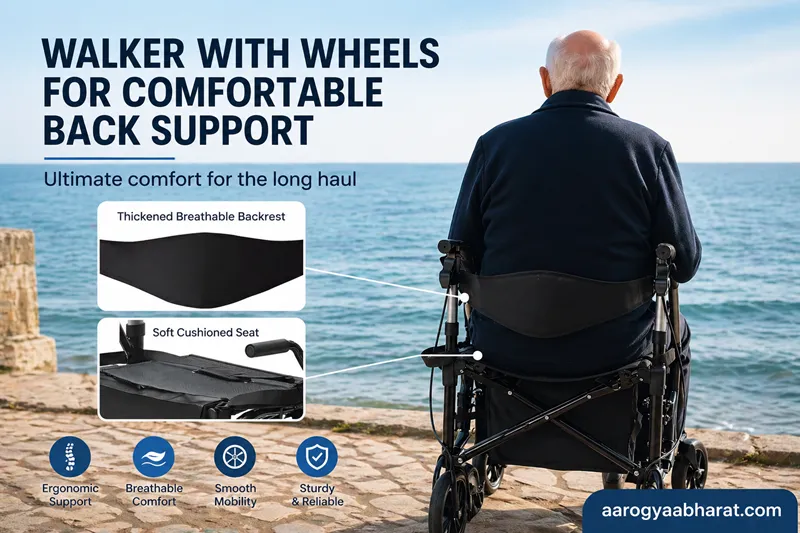
Ergonomic hand grips are designed to provide comfort and reduce pressure on the
hands and wrists, ensuring better control during use. Some models also include
padded supports or backrests, offering additional comfort for users who may
need to rest frequently. Lightweight yet durable frames make the walker easy to
handle while ensuring stability. Foldable designs add convenience, allowing users
to store or transport the walker easily. With the availability of various
options under categories such as mobility aids, orthopaedic supports, and
rehabilitation equipment, users can choose a wheeled walker that best suits
their comfort and medical needs.
Benefits of Using a Walker with Wheels for Back Pain
Relief
Using a walker with wheels provides several benefits for
elderly individuals dealing with back pain. One of the primary advantages is
reduced strain on the spine, as the walker supports body weight and eliminates
the need for lifting. This helps in minimizing discomfort and preventing
further injury. The smooth movement offered by wheels allows users to walk more
naturally, improving overall mobility and reducing fatigue. Another key benefit
is improved posture, as the walker encourages users to stand upright while
walking, which is essential for managing back pain. Wheeled walkers also
enhance safety by providing better balance and stability, reducing the risk of
falls. Regular use can contribute to increased physical activity, which is
important for maintaining muscle strength and flexibility. In combination with
other home healthcare products such as hospital beds, patient monitoring
systems, and healthcare calculators, wheeled walkers play a significant role in
creating a supportive and pain-free living environment.
How to Choose the Best Walker with Wheels for Back Pain
Choosing the right wheeled walker for back pain requires
careful consideration of several factors to ensure maximum comfort and
effectiveness. The first aspect to evaluate is the height adjustability, as
proper alignment is essential for maintaining good posture and avoiding
additional strain. The type and size of wheels are also important, as larger
wheels provide smoother movement and better stability. The walker should have
ergonomic grips that reduce pressure on the hands and wrists, ensuring comfortable
use over extended periods. Weight and material should be considered, as a
lightweight yet sturdy frame is ideal for ease of use and durability.
Additional features such as padded backrests, seats, or storage options can
enhance overall comfort and convenience. Foldability is another key factor,
especially for users who need to store the walker in limited space or transport
it frequently. With a wide range of options available under categories like
elderly care products, physiotherapy equipment, and mobility aids, users can
compare different models and select the one that best meets their needs.
Comparison Table: Wheeled Walker vs Standard Walker
|
Feature |
Wheeled
Walker |
Standard
Walker |
|
Movement |
Smooth
rolling |
Requires
lifting |
|
Back Strain |
Low |
Higher |
|
Posture
Support |
Better |
Moderate |
|
Wheels |
Yes |
No or limited |
|
Ease of Use |
High |
Moderate |
|
Best Use |
Back pain and
comfort |
Basic
mobility support |
Role of Wheeled Walkers in Home Healthcare and
Rehabilitation
Wheeled walkers play an important role in home healthcare
and rehabilitation, particularly for elderly individuals suffering from back
pain. They are commonly used in physiotherapy programs to help patients regain
mobility while maintaining proper posture. In home care settings, these walkers
provide a safe and comfortable way for users to stay active and avoid prolonged
inactivity, which can worsen back pain. With the expansion of healthcare
services across different city-based platforms and hospital support systems,
wheeled walkers have become easily accessible to users in various locations.
They are often used alongside other healthcare equipment such as orthopaedic
supports, exercise therapy tools, and monitoring devices. This integrated
approach ensures comprehensive patient care, focusing on both pain management
and mobility improvement. Wheeled walkers are not just mobility aids but an
essential part of a holistic approach to elderly care and rehabilitation.
Bullet Points: Key Advantages of Wheeled Walkers for Back
Pain
- Reduces
strain on the back and spine
- Promotes
better posture during movement
- Provides
smooth and effortless mobility
- Enhances
balance and stability
- Ideal
for long-term use
- Lightweight
and easy to handle
- Suitable
for indoor and outdoor use
- Supports
independence and confidence
Conclusion
A walker with wheels is an excellent mobility solution for elderly individuals dealing with back pain. Its ergonomic design, smooth movement, and supportive features make it a practical choice for improving daily mobility and reducing discomfort. By promoting better posture and minimizing strain on the spine, it helps users maintain an active and independent lifestyle. Whether used for daily activities or rehabilitation purposes, a wheeled walker provides the comfort and support needed for effective pain management. As healthcare continues to focus on home-based solutions, choosing the right mobility aid can make a significant difference in overall well-being and quality of life.