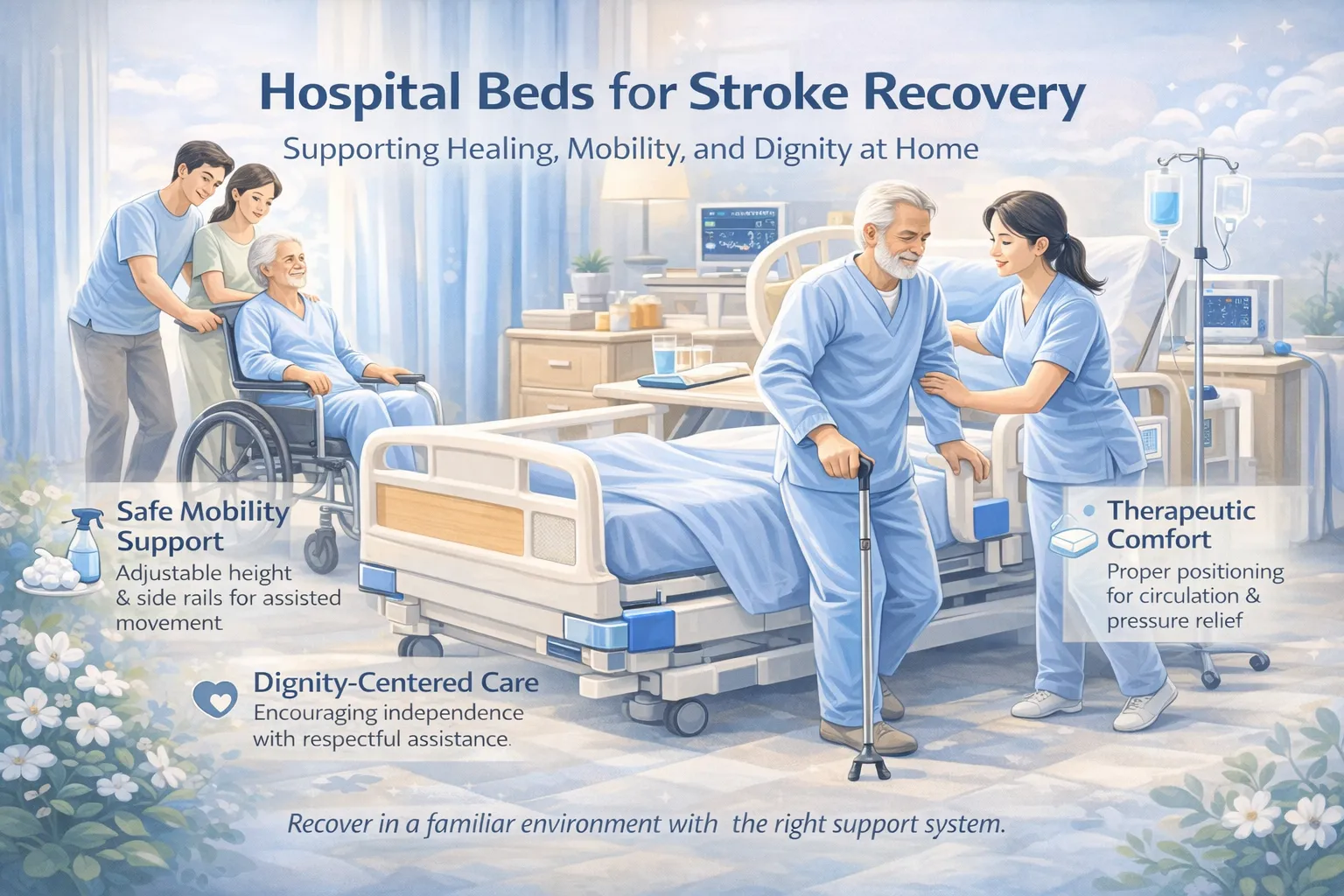
Understanding the Challenges of Stroke Recovery
Stroke patients often face:
- Partial or complete paralysis
- Muscle stiffness and weakness
- Poor balance and coordination
- Difficulty turning, sitting, or standing
- Risk of bed sores and blood clots
- Emotional stress and loss of independence
Without proper support, these challenges can lead to
complications such as:
- Falls
and injuries
- Pressure
ulcers
- Delayed
rehabilitation
- Frequent
hospital visits
- Increased
caregiver strain
Hospital beds for home use are specifically designed to
address these risks and create a safer, more supportive recovery environment.
How Hospital Beds Aid Stroke Recovery
1. Improved Positioning for Muscle and Joint Support
After a stroke, maintaining correct posture is critical.
Poor positioning can lead to:
- Muscle
tightness
- Joint
contractures
- Pain
and discomfort
Hospital beds allow:
- Precise head, back, and leg elevation
- Proper alignment of the spine and limbs
- Frequent posture changes without physical strain
This helps reduce stiffness and supports early-stage
rehabilitation.
2. Prevention of Bed Sores and Circulatory Problems
Stroke patients often spend long hours in bed, increasing
the risk of:
- Pressure
ulcers
- Poor
blood circulation
- Swelling
in legs
Hospital beds:
- Support anti-bed-sore mattresses
- Allow regular repositioning
- Improve blood flow with leg elevation
3. Enhanced Safety and Fall Prevention
Stroke survivors may experience:
- Weak
balance
- Sudden
dizziness
- Reduced
coordination
Hospital beds offer:
- Side rails for support
- Height adjustment for safe transfers
- Stable frames and lockable wheels
These features significantly reduce fall risk during
turning, sitting, or standing.
4. Support for Physiotherapy and Mobility Training
Rehabilitation is a core part of stroke recovery.
Hospital
beds:
- Provide adjustable positions for exercises
- Make it easier for therapists to assist movement
- Reduce caregiver strain during therapy sessions
- Enable safe transitions from lying to sitting
This encourages gradual mobility and independence.
5. Better Breathing, Sleep, and Comfort
Many stroke patient’s experience:
- Breathing
discomfort
- Sleep
disturbances
- Fatigue
Hospital beds allow:
- Head elevation for better lung expansion
- Comfortable positioning for restful sleep
- Reduced pain from prolonged immobility
Quality sleep and proper breathing directly support brain
recovery.
Emotional and Psychological Benefits
Stroke recovery is not only physical it is deeply emotional.
Patients may feel:
- Frustrated
by loss of independence
- Fearful
of falling or getting hurt
- Anxious
about being a burden
Hospital beds restore a sense of control by allowing
patients to:
- Adjust their own position
- Sit upright for conversation and meals
- Participate in daily routines
This promotes dignity, confidence, and emotional stability key
components of long-term recovery.
Key Features to Look for in Hospital Beds for Stroke
Patients
- Enables smooth movement
- Encourages patient independence
- Reduces physical strain on caregivers
2. Multi-Position Support (Fowler & Semi-Fowler)
- Ideal for feeding, therapy, and breathing
- Helps prevent aspiration
- Supports comfortable resting
3. Height Adjustability
- Facilitates bed-to-wheelchair transfers
- Improves caregiver posture
- Minimizes fall risk
4. Side Rails for Stability
- Prevent accidental falls
- Provide hand support while repositioning
- Offer emotional reassurance
5. Compatibility with Pressure-Relief Mattresses
- Prevents pressure sores
- Improves circulation
- Enhances long-term comfort
Who Needs Hospital Beds for Stroke Recovery?
Hemiplegia or Partial Paralysis Patients
- Safer
movement
- Better
posture
- Reduced
muscle stiffness
Elderly Stroke Survivors
- Reduced
fall risk
- Easier
daily care
- Better
sleep
Long-Term Rehabilitation Patients
- Ongoing
physiotherapy support
- Pressure
sore prevention
- Enhanced
comfort
How the Right Bed Improves Recovery Outcomes
A properly selected hospital bed can:
- Reduce complications
- Support faster rehabilitation
- Improve patient morale
- Lower caregiver burnout
- Decrease hospital readmissions
For stroke survivors, the bed becomes a central part of
daily recovery not just a place to rest.
Common Mistakes in Home Stroke Care
- Using a normal bed for long-term recovery
- Infrequent repositioning
- Lack of safety rails
- Poor mattress selection
- No support for physiotherapy
These errors can slow recovery and increase the risk of
injury.
Practical Tips for Caring for Stroke Patients at Home
- Reposition every 2-3 hours
- Use pressure-relief mattresses
- Encourage sitting up during meals
- Keep essential items within reach
- Maintain a calm, clutter-free environment
- Work with physiotherapists regularly
Small, consistent care practices greatly improve outcomes.
Why Aarogyaa Bharat Is Trusted for Stroke Home Care
At Aarogyaa Bharat, we understand the complexity of stroke
recovery and the importance of creating a safe, supportive home environment.
What We Offer:
- Hospital beds tailored for stroke rehabilitation
- Expert guidance based on patient mobility and condition
- Nationwide delivery and professional installation
- Equipment compatible with physiotherapy and nursing care
- Compassion-driven home healthcare solutions
We help families move from uncertainty to structured,
confident care.
Conclusion: Recovery Is Stronger with the Right
Foundation
Stroke recovery requires patience, persistence, and the
right environment. A hospital bed is not just equipment it is a daily partner
in healing, rehabilitation, and dignity.
With the right hospital bed:
- Care becomes safer
- Recovery becomes more effective
- Independence is gradually restored
- Families gain peace of mind
With Aarogyaa Bharat, you are not just choosing a bed you
are choosing a better path to recovery for your loved one.