Understanding What Sensitive Skin Really Means
Sensitive skin is not a single condition but a combination
of factors that make the skin react easily to physical stress or chemical
exposure. It may appear thin, dry, itchy, red, or prone to rashes and
irritation. In elderly individuals, sensitive skin is often the result of
aging, where the outer protective layer becomes thinner and loses moisture. In
children, sensitive skin is still developing and can react strongly to pulling
or friction. Post-surgery patients often have inflamed or healing skin that is
extremely delicate. Understanding that sensitive skin is already vulnerable
helps caregivers approach tape removal with patience rather than urgency.
Medical tape remover spray works best when used as part of a calm, controlled
process rather than a quick fix.
Why Correct Usage of Tape Remover Spray Matters
Many cases of skin damage during tape removal happen not
because the wrong product was used, but because it was used incorrectly.
Spraying too little, pulling too fast, or not allowing enough time for the
adhesive to dissolve can still cause pain and skin trauma. For sensitive skin,
even small mistakes can result in redness, burning sensation, or micro-tears.
Correct usage ensures that the adhesive bond is fully neutralized before the
tape is lifted, allowing it to come off smoothly without resistance. When used
properly, medical tape remover spray transforms tape removal from a painful
experience into a gentle, almost effortless process.
Preparing the Skin Before Using Tape Remover Spray
Before applying medical tape remover spray, it is important
to prepare both the patient and the skin area. The surrounding area should be
clean and dry to prevent any contaminants from entering the wound or reacting
with the spray. Caregivers should ensure that the patient is relaxed and
comfortably positioned, as sudden movement can lead to accidental pulling. For
sensitive skin, mental comfort is just as important as physical preparation.
Explaining the process calmly reassures the patient and reduces tension, which
helps the skin respond better to gentle handling.
Step-by-Step Method to Use Medical Tape Remover Spray
Safely
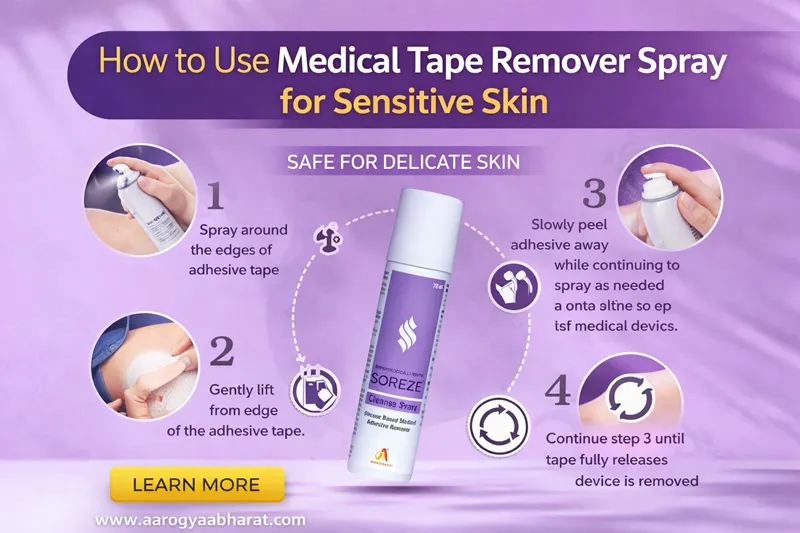
Using medical tape remover spray correctly involves patience
and technique rather than force. The spray should be applied along the edges of
the tape, not directly on the wound. Allowing the solution to seep between the
adhesive and the skin is key. After spraying, caregivers should wait a few
seconds to allow the adhesive bond to weaken. Instead of pulling the tape
upwards, it should be gently rolled back over itself at a low angle while
continuing to spray as needed. This gradual approach minimizes friction and
prevents sudden stress on sensitive skin, ensuring a painless and safe removal
process.
Handling Different Types of Medical Tapes on Sensitive
Skin
Not all medical tapes behave the same way, and sensitive
skin reacts differently depending on tape type. Paper tapes usually release
easily, while plastic or cloth-based tapes may have stronger adhesive
properties. Transparent films and waterproof tapes often require more spray and
extra time to dissolve the adhesive. When dealing with sensitive skin,
caregivers should never assume that one quick spray is enough for all tape
types. Adjusting the amount of spray and waiting time based on tape strength ensures
that removal remains gentle and controlled.
Using Tape Remover Spray Around Healing Wounds
Sensitive skin around healing wounds requires extra caution.
Tape remover spray should never be sprayed directly into an open wound, as this
can interfere with healing or cause discomfort. The correct approach is to
spray along the tape edges and let the solution travel underneath the adhesive.
Supporting the skin near the wound with gentle pressure helps prevent pulling
or stretching. This method ensures that the tape is removed without disturbing
stitches, staples, or healing tissue, which is especially important in
post-surgery care.
Special Considerations for Elderly Skin
Elderly skin is naturally thinner, drier, and more prone to
tearing, making correct tape removal essential. For elderly patients,
caregivers should use smaller amounts of spray repeatedly rather than a single
heavy application. Slow, controlled movements are critical, as rushing can lead
to bruising or skin tears. After tape removal, gently moisturizing the area
helps restore skin hydration and comfort. Medical tape remover spray, when used
properly, significantly reduces anxiety for elderly patients who may fear pain
during dressing changes.
Using Tape Remover Spray for Children and Highly Reactive
Skin
Children and individuals with highly reactive skin often
experience fear even before tape removal begins. Medical tape remover spray
helps by reducing pain, but emotional reassurance is equally important.
Caregivers should demonstrate the spray on a non-sensitive area or explain its
cooling effect beforehand. Gentle handling and distraction techniques, combined
with correct spray usage, make the process smoother and less stressful. This
approach helps children associate medical care with comfort rather than fear.
Aftercare Following Tape Removal on Sensitive Skin
After removing the tape, sensitive skin requires gentle
aftercare. The area should be cleaned softly if needed and allowed to air dry.
Avoid rubbing the skin with towels or cotton aggressively. Applying a mild,
doctor-recommended moisturizer can help restore the skin barrier and reduce
dryness. Observing the area for redness, irritation, or discomfort over the
next few hours ensures that any reaction is addressed early. Proper aftercare
completes the tape removal process and supports overall skin health.
Common Mistakes to Avoid When Using Tape Remover Spray
Many caregivers unintentionally make mistakes that reduce
the effectiveness of tape remover spray. Pulling the tape before the adhesive
has fully dissolved, spraying directly into wounds, using excessive force, or
skipping aftercare can all lead to discomfort. For sensitive skin, these
mistakes are amplified and can result in long-lasting irritation. Awareness of
these common errors helps caregivers avoid unnecessary harm and ensures that
the spray performs its intended role effectively.
Correct vs Incorrect Use of Tape Remover Spray
|
Aspect |
Correct
Method |
Incorrect
Method |
|
Spray
application |
Along tape
edges |
Directly on
wound |
|
Waiting time |
Few seconds
for action |
Immediate
pulling |
|
Tape removal
angle |
Low, rolled
back |
Straight
upward pull |
|
Force used |
Gentle,
controlled |
Sudden or
forceful |
|
Aftercare |
Moisturize
gently |
Ignored
completely |
How Tape Remover Spray Improves Long-Term Skin Health
Repeated tape removal without proper support can damage the
skin barrier over time, leading to chronic sensitivity and slow healing. Using
medical tape remover spray correctly prevents cumulative skin damage by
minimizing trauma during each dressing change. Over weeks or months of care,
this protection makes a significant difference, especially for patients
requiring frequent medical tape use. Long-term skin health is preserved,
reducing complications and improving comfort.
Benefits of Proper Tape Remover Spray Usage for Sensitive
Skin
|
Benefit
Area |
Positive
Outcome |
|
Pain
reduction |
Minimal
discomfort |
|
Skin
protection |
Fewer tears
and rashes |
|
Healing
support |
Better wound
recovery |
|
Emotional
comfort |
Reduced fear
and anxiety |
|
Caregiver
ease |
Safer,
stress-free handling |
Emotional Comfort and Trust During Wound Care
Sensitive skin is often accompanied by emotional
sensitivity, especially in elderly and paediatric patients. Painful experiences
during tape removal can create fear and resistance toward medical care. Correct
use of tape remover spray builds trust by ensuring that dressing changes are
painless and respectful. Over time, patients become more relaxed and
cooperative, which improves overall care quality and emotional well-being.
Conclusion
Medical tape remover spray is a powerful yet gentle tool for
managing adhesive removal on sensitive skin, but its true effectiveness lies in
correct usage. By understanding sensitive skin, preparing properly, using the
right technique, and providing gentle aftercare, caregivers can ensure painless
tape removal without irritation or damage. For elderly individuals, children,
post-surgery patients, and anyone with fragile skin, correct use of medical
tape remover spray transforms wound care into a safer, calmer, and more
dignified experience. When used thoughtfully, this simple product plays a major
role in protecting skin health and improving home-based medical care.