Understanding the Role of Adjustable Hospital Beds in
Home Healthcare
Modern home healthcare has transformed how families support
recovery, elderly care, and long-term illness management. Adjustable hospital
beds are no longer limited to clinical settings; they are now essential
equipment in home environments where patients require continuous support.
Hydraulic beds and electric beds both allow elevation of the backrest and leg
section, enabling comfortable positioning for eating, breathing, physiotherapy,
or rest. However, the technology behind these beds differs significantly,
affecting how they perform in real-world caregiving situations.
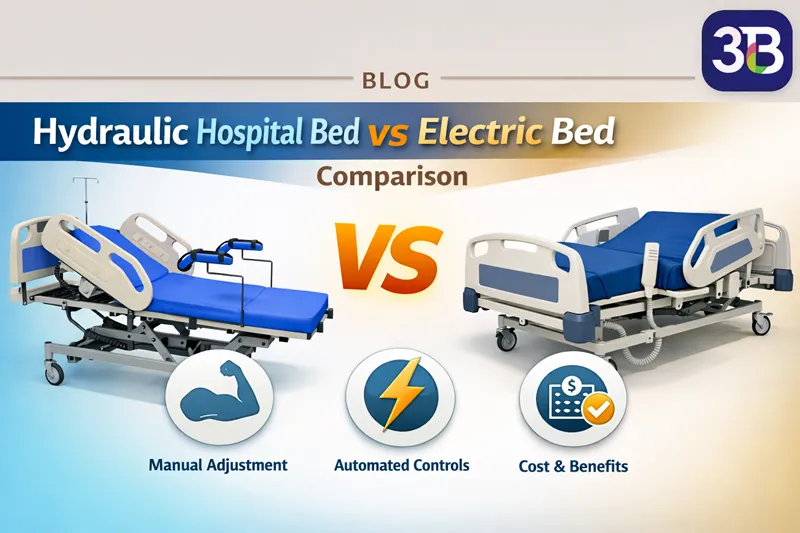
Hydraulic hospital beds rely on manual crank or pump systems
that allow caregivers to adjust positions physically, making them highly
reliable and independent of electricity. Electric hospital beds, on the other
hand, use motors and remote controls to automate adjustments, providing
convenience for patients who need frequent repositioning. Aarogyaa Bharat
emphasizes that the best choice depends not only on budget but also on patient
mobility, caregiver strength, and long-term care goals.
What Hydraulic Hospital Beds Work
Hydraulic hospital beds operate through mechanical systems
that convert manual force into smooth elevation movements. When caregivers turn
a crank or operate a hydraulic lever, the internal mechanism lifts or lowers
different sections of the bed. This design ensures durability and consistent
performance, especially in environments where electricity may be unreliable.
The absence of electronic components reduces the risk of technical failure,
making hydraulic beds a trusted option for long-term care setups.
Patients recovering from orthopaedic surgery, stroke, or
prolonged illness often require periodic position changes rather than
continuous adjustments, which makes hydraulic beds a practical solution.
Aarogyaa Bharat notes that many families prefer hydraulic beds because they
combine hospital-grade functionality with relatively low maintenance
requirements.
How Electric Hospital Beds Operate
Electric hospital beds use motorized systems powered by
electricity to adjust the bed’s position through a handheld remote or control
panel. Caregivers or patients can raise the backrest, adjust leg elevation, or
modify bed height with minimal physical effort. These beds are particularly
useful for patients who require frequent repositioning due to respiratory
conditions, neurological disorders, or long-term immobility.
The convenience of electric beds often enhances patient
independence, allowing individuals to change posture without waiting for
assistance. However, motorized systems require reliable power supply and
periodic servicing. Aarogyaa Bharat explains that electric beds provide
advanced functionality but may involve higher maintenance costs compared to
hydraulic models.
Table: Hydraulic Hospital Bed vs Electric Bed – Core
Differences
|
Feature |
Hydraulic
Hospital Bed |
Electric
Hospital Bed |
|
Operation |
Manual crank
or hydraulic pump |
Motorized
remote control |
|
Power
Requirement |
No
electricity needed |
Requires
constant power |
|
Maintenance |
Low
mechanical upkeep |
Higher
electronic servicing |
|
Cost Range |
More
affordable |
Higher
investment |
|
Patient
Independence |
Limited |
High |
Patient Comfort and Positioning Comparison
Both hydraulic and electric beds aim to enhance patient
comfort, but they achieve this through different methods. Hydraulic beds allow
smooth manual adjustments that are ideal for scheduled repositioning, while
electric beds provide continuous adjustment flexibility, enabling patients to
modify posture instantly. For individuals with limited upper body strength or
chronic conditions, electric beds may offer greater independence, reducing
reliance on caregivers for basic movements.
However, hydraulic beds still provide excellent ergonomic
support, particularly when paired with high-quality mattresses designed for
pressure redistribution. Aarogyaa Bharat highlights that comfort depends not
only on the bed type but also on mattress compatibility, side rail design, and
patient positioning techniques.
Caregiver Experience: Effort, Safety, and Daily Workflow
Caregiving efficiency is a major factor when comparing
hospital bed types. Hydraulic beds require physical effort to adjust positions,
which may become challenging during long-term care routines. Electric beds
significantly reduce caregiver strain by enabling adjustments at the touch of a
button, improving workflow during feeding, wound care, or physiotherapy
sessions.
Despite this convenience, some caregivers prefer hydraulic
beds because they are simpler to operate and less prone to technical issues. In
regions where power outages occur frequently, hydraulic beds provide
uninterrupted functionality, ensuring patient safety at all times. Aarogyaa
Bharat encourages families to consider caregiver comfort alongside patient
needs when choosing between these options.
Table: Practical Comparison for Home ICU and Elderly Care
|
Use Case |
Hydraulic
Bed Advantage |
Electric
Bed Advantage |
|
Power Outage
Areas |
Fully
functional |
Limited
without backup |
|
Long-Term
Elderly Care |
Durable &
affordable |
Easier
adjustments |
|
Reliable
manual control |
Advanced
positioning |
|
|
Stable
support |
Comfortable
automation |
Safety Considerations for Hydraulic vs Electric Beds
Safety is critical in any hospital bed selection. Hydraulic
beds are mechanically stable and less likely to fail suddenly because they do
not rely on electronics. Electric beds, while convenient, require regular
inspection of motors, wiring, and control panels to ensure safe operation. Both
bed types should include strong side rails, locking caster wheels, and
anti-slip mattress surfaces to minimize fall risk.
Aarogyaa Bharat advises families to receive proper training
during installation, ensuring that adjustments are performed smoothly and
safely regardless of bed type.
Cost vs Long-Term Value: Which Bed Is More Practical?
Budget considerations often influence purchasing decisions.
Hydraulic beds typically cost less upfront and require minimal maintenance,
making them a practical choice for long-term affordability. Electric beds
involve higher initial investment but may reduce physical strain on caregivers,
which can be invaluable for families providing continuous care.
When evaluating cost, Aarogyaa Bharat recommends considering
long-term usability rather than focusing solely on purchase price. For example,
a patient requiring frequent independent repositioning may benefit more from an
electric bed despite the higher cost.
Ideal Patient Scenarios for Each Bed Type
Hydraulic beds are well suited for patients who need
periodic adjustments but have caregivers available to assist with positioning.
They are commonly used in elderly care, orthopaedic recovery, and
rehabilitation settings. Electric beds are ideal for individuals with limited
mobility who require frequent position changes or prefer greater independence
during daily activities. Aarogyaa Bharat notes that combining the right bed
type with proper mattress support and safety accessories enhances overall
patient comfort and recovery outcomes.
Maintenance and Durability Comparison
Hydraulic beds generally require occasional lubrication and
inspection of mechanical components, while electric beds need routine checks of
motors and electrical systems. Dust accumulation, wiring damage, or battery
issues can affect electric bed performance, whereas hydraulic beds continue
functioning even in challenging environments. Regular cleaning and inspection
extend the lifespan of both bed types.
Emotional and Lifestyle Impact on Patients and Families
Beyond medical functionality, the choice between hydraulic
and electric beds affects emotional well-being. Electric beds may empower
patients with greater independence, improving confidence during recovery.
Hydraulic beds provide a sense of stability and reliability, reassuring
families who prefer simpler technology. Aarogyaa Bharat believes that selecting
the right hospital bed contributes to dignity, comfort, and peace of mind for
both patients and caregivers.
Conclusion
The choice between a hydraulic hospital bed and an electric
bed ultimately depends on the balance between reliability, convenience, and
patient independence. Hydraulic beds offer durability, affordability, and
uninterrupted functionality without electricity, making them ideal for
long-term home care setups. Electric beds provide advanced comfort and ease of
adjustment, enhancing patient autonomy and reducing caregiver effort. By
understanding the real differences in operation, safety, and long-term value, families
can make informed decisions that support recovery and improve quality of life.
Aarogyaa Bharat encourages selecting hospital beds that align with both
clinical needs and daily caregiving realities, ensuring a safe and comfortable
home healthcare environment.