In modern healthcare, airway management is a foundational skill across multiple specialties, including anaesthesia, emergency medicine, intensive care, trauma care, and pre-hospital services. Laryngoscopes serve as the primary tool that bridges clinical expertise and patient survival by enabling controlled airway access. As patient complexity increases and safety standards become more stringent, the importance of reliable, high-performance laryngoscopes has grown significantly.
Technological advancements have transformed laryngoscopes from simple optical tools into sophisticated visualization systems. From traditional direct laryngoscopes to advanced video laryngoscopes with high-definition imaging, modern devices are designed to improve first-pass intubation success, reduce complications, and enhance patient safety. As a result, laryngoscopes remain a cornerstone of modern airway management and a critical component of emergency, surgical, and critical care infrastructure.
Understanding Laryngoscopes and Their Clinical Function
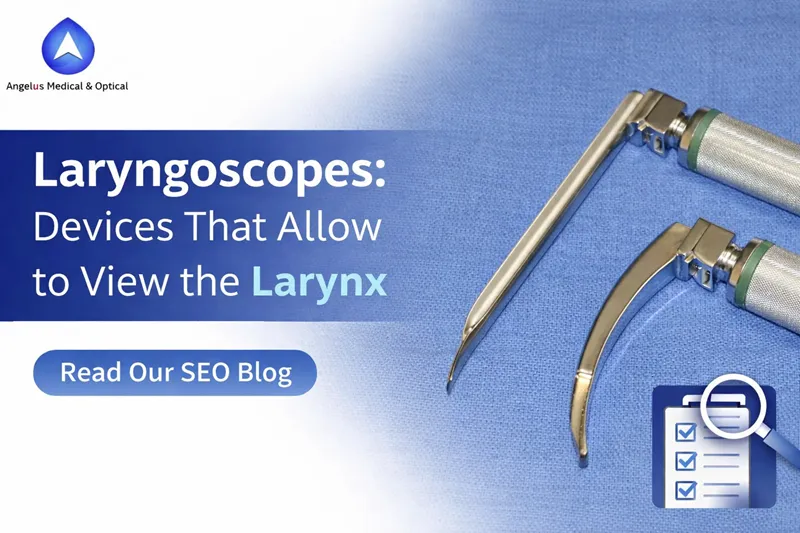
A laryngoscope is a medical instrument designed to provide visualization of the larynx and guide the placement of an endotracheal tube into the trachea. It typically consists of two main components: a handle containing the power source and a blade that is inserted into the patient’s mouth. The blade gently displaces the tongue and soft tissues to expose the vocal cords, allowing accurate tube placement.
Effective laryngoscopy requires clear visualization, appropriate blade selection, and skilled technique. Poor visualization can lead to multiple intubation attempts, airway trauma, hypoxia, or incorrect tube placement. Therefore, the design and performance of the laryngoscope directly influence patient safety and procedural success.
Laryngoscopes are used by anaesthesiologists, emergency physicians, intensivists, paramedics, and other trained healthcare professionals who manage airways in both controlled operating theatre environments and unpredictable emergency situations. Their reliability, ergonomics, and visual clarity are critical in ensuring consistent and safe airway access.
Types of Laryngoscopes Used in Healthcare
Direct Laryngoscopes
Direct laryngoscopes are the traditional and most widely used airway devices. They rely on a direct line of sight between the clinician and the larynx. Common blade types include:
- Macintosh blades, which are curved and widely used in adult patients
- Miller blades, which are straight and commonly used in paediatric and neonatal airway management
Direct laryngoscopes are valued for their simplicity, durability, and ease of maintenance. They remain a standard tool in many hospitals, particularly for routine and uncomplicated airways.
Video Laryngoscopes
Video laryngoscopes use a miniature camera at the blade tip to transmit real-time images to an external screen. This indirect visualization significantly improves glottic view, especially in difficult airway scenarios.
Benefits of video laryngoscopes include:
- Higher first-attempt intubation success
- Reduced need for excessive force
- Better outcomes in obese, trauma, or limited neck mobility patients
- Improved teaching and supervision during airway management
Video laryngoscopes are increasingly becoming standard in emergency departments, ICUs, and high-risk surgical settings.
Specialty and Paediatric Laryngoscopes
Specialty laryngoscopes are designed for specific patient populations or clinical situations, including:
- Paediatric and neonatal laryngoscopes
- Difficult airway blades
- Hyper-angulated blades for limited mouth opening
These devices ensure safe airway access across diverse anatomical and clinical scenarios.
Role of Laryngoscopes in Airway Management
Airway management is the first priority in anaesthesia, emergency medicine, and critical care. Laryngoscopes enable clinicians to establish a secure airway, ensuring adequate oxygenation and ventilation.
During surgical procedures, laryngoscopes allow controlled intubation to maintain airway patency under anaesthesia. In emergency situations such as cardiac arrest, respiratory failure, trauma, or altered consciousness, rapid airway access is essential to prevent hypoxia and irreversible organ damage.
Laryngoscopes support:
- Accurate endotracheal tube placement
- Reduced aspiration risk
- Controlled ventilation
- Safe airway access in complex clinical scenarios
Their role is central wherever airway compromise is a possibility.
Importance of Visualization and Illumination in Laryngoscopes
Visualization quality is the defining performance factor of a laryngoscope. Poor illumination or inadequate optics can lead to prolonged intubation attempts and increased patient risk.
Modern laryngoscopes use:
- High-intensity LED illumination
- Fibre-optic or digital imaging systems
- Anti-fog and glare-reduction technologies
Video laryngoscopes further enhance visualization by magnifying airway anatomy and displaying it on a screen, allowing better anatomical orientation and decision-making.
Enhanced visualization improves:
- Speed of intubation
- Accuracy of tube placement
- Clinician ergonomics
- Patient safety
Laryngoscopes in Emergency and Critical Care Settings
In emergency medicine and critical care, laryngoscopes are life-saving tools. Patients in cardiac arrest, severe trauma, respiratory distress, or shock often require immediate airway control.
Emergency laryngoscopes must be:
- Portable and durable
- Easy to operate under pressure
- Reliable in unpredictable environments
Ambulances and pre-hospital units rely on rugged laryngoscopes, while emergency departments and ICUs increasingly use video laryngoscopes for complex airways. Their availability and readiness directly influence survival outcomes.
Safety, Sterilization, and Infection Control
Because laryngoscopes come into direct contact with mucous membranes, infection control is critical. Reusable blades and handles must undergo proper cleaning, disinfection, and sterilization to prevent cross-contamination.
Disposable laryngoscope blades are widely used to:
- Improve infection control
- Reduce reprocessing workload
- Ensure immediate availability
Manufacturers design laryngoscopes using materials that withstand repeated sterilization without degrading performance. Adherence to hygiene protocols protects both patients and healthcare workers.
Choosing the Right Laryngoscope for Clinical Use
Selecting the appropriate laryngoscope depends on:
- Clinical setting (OT, ICU, ER, ambulance)
- Patient population (adult, paediatric, neonatal)
- Expected airway difficulty
- Staff training and familiarity
Most hospitals maintain a combination of direct and video laryngoscopes to address both routine and difficult airways. Devices that are intuitive, durable, and well supported by training programs contribute to safer airway management.
Role of Aarogyaa Bharat in Laryngoscope Access
Aarogyaa Bharat supports hospitals, emergency departments, and healthcare providers by enabling access to quality-assured laryngoscopes sourced from verified manufacturers. The platform focuses on reliability, compliance, and clinical suitability, ensuring that airway management devices meet safety and regulatory standards.
By simplifying procurement and offering transparent product information, Aarogyaa Bharat helps healthcare facilities select laryngoscopes aligned with their clinical needs. This strengthens preparedness across anaesthesia, emergency medicine, and critical care.
Future of Laryngoscope Technology
The future of laryngoscopes is driven by digital innovation and patient safety enhancement. Emerging trends include:
- High-definition video imaging
- Integrated recording for training and documentation
- Improved blade ergonomics
- Enhanced portability and battery efficiency
As airway management protocols evolve, laryngoscopes will remain central to anaesthesia and emergency response. Ongoing innovation will further reduce complications and improve clinical outcomes.
Conclusion
Laryngoscopes are essential airway management devices that allow clinicians to visualize the larynx and secure the airway safely and effectively. Their role spans anaesthesia, emergency medicine, critical care, and pre-hospital services, making them indispensable in modern healthcare. With continuous advancements in design and technology, laryngoscopes continue to improve visualization, safety, and patient outcomes. Investing in reliable laryngoscopes is therefore critical for any healthcare facility committed to high-quality and safe patient care.