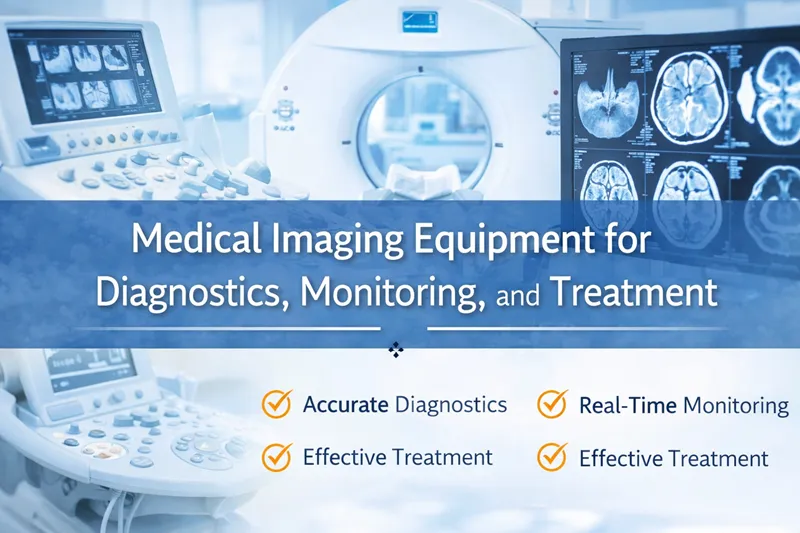
This capability enables accurate diagnosis, continuous monitoring, and effective treatment planning across a wide range of medical conditions. Imaging technologies have fundamentally transformed how diseases are detected, evaluated, and managed, making them indispensable tools in today’s evidence-based healthcare environment.
In modern clinical practice, medical imaging is no longer optional. It has become a core requirement for hospitals, diagnostic centers, specialty clinics, and advanced medical practices. From emergency medicine to preventive healthcare, imaging supports faster clinical decisions, improves treatment accuracy, and enhances patient safety at every stage of care.
The Evolution and Growing Importance of Medical Imaging in Healthcare
Medical imaging has evolved significantly over the past few decades. What began as simple X-ray imaging has expanded into highly sophisticated technologies capable of visualizing anatomy, physiology, and even molecular activity. This evolution has allowed clinicians to move from symptom-based diagnosis to data-driven, image-guided decision making.
As healthcare systems face increasing disease burden, aging populations, and rising expectations for precision medicine, the importance of reliable medical imaging equipment continues to grow. Imaging enables early detection of conditions that might otherwise go unnoticed, helping clinicians intervene before diseases progress to advanced stages.
How Medical Imaging Improves Clinical Decision Making
The use of medical imaging equipment has significantly improved clinical decision making by providing clear, detailed, and real-time visual information about organs, tissues, bones, and physiological processes. Physicians rely on imaging to:
-
Confirm or rule out diagnoses
-
Determine disease severity
-
Plan surgical and interventional procedures
-
Monitor treatment response
-
Detect complications early
From emergency trauma assessment to long-term chronic disease management, imaging allows healthcare providers to act with confidence and precision. This reduces diagnostic uncertainty and helps avoid unnecessary procedures or delays in care.
Understanding Medical Imaging Equipment
Medical imaging equipment refers to a broad category of devices designed to create visual representations of the internal structures and functions of the human body. These images help healthcare professionals identify abnormalities, confirm medical conditions, and select appropriate treatment strategies.
Unlike physical examinations, which are limited to external observation and palpation, imaging allows clinicians to see beneath the surface, offering insights into organs, tissues, blood flow, and metabolic activity. Because imaging findings often guide critical medical decisions, the accuracy, reliability, and quality of imaging equipment are essential.
Medical Imaging Across the Patient Care Journey
Medical imaging is used at multiple stages of patient care, including:
-
Initial diagnosis
-
Treatment planning
-
Procedure guidance
-
Post-treatment evaluation
-
Long-term follow-up and monitoring
Imaging supports continuity of care by enabling doctors to compare current findings with previous scans, helping track disease progression or recovery. This longitudinal insight is especially valuable in managing chronic and complex conditions.
Types of Medical Imaging Equipment Used in Healthcare
X-Ray Imaging Systems
X-ray machines are among the most widely used imaging tools in healthcare. They are essential for examining bones, chest structures, lungs, and dental anatomy. X-rays are commonly used in trauma care, orthopedics, and respiratory diagnosis due to their speed and accessibility.
Ultrasound Imaging Equipment
Ultrasound systems use sound waves to visualize soft tissues, organs, and blood flow. They are widely used in obstetrics, cardiology, abdominal imaging, and vascular assessment. Ultrasound is non-ionizing, making it particularly suitable for repeated use and sensitive populations.
Computed Tomography (CT) Scanners
CT scanners produce cross-sectional images of the body, providing detailed views of internal organs, blood vessels, and bones. CT imaging is critical for rapid diagnosis in emergencies, cancer detection, and internal injury assessment.
Magnetic Resonance Imaging (MRI) Systems
MRI machines use magnetic fields and radio waves to generate high-resolution images of soft tissues, the brain, spinal cord, joints, and muscles. MRI is especially valuable in neurology, orthopedics, and oncology due to its superior soft tissue contrast.
Nuclear Imaging Equipment (PET & SPECT)
Nuclear imaging systems evaluate metabolic and functional activity within the body. PET and SPECT scans are widely used in oncology, cardiology, and neurology to assess disease activity at the molecular level.
Role of Medical Imaging in Diagnosis
Medical imaging equipment is central to diagnosing a wide range of medical conditions with accuracy and confidence. Imaging helps identify fractures, infections, tumors, vascular abnormalities, organ damage, and congenital conditions that may not be evident through clinical examination alone.
Early and accurate diagnosis reduces the risk of disease progression and improves treatment outcomes. By providing objective visual evidence, imaging supports evidence-based diagnosis, enabling clinicians to correlate imaging findings with laboratory tests and clinical symptoms.
Medical Imaging in Monitoring Disease Progression
Beyond diagnosis, medical imaging plays a critical role in monitoring disease progression and treatment effectiveness. Imaging allows clinicians to observe internal changes over time, such as tumor shrinkage, tissue healing, or organ function improvement.
This capability is especially important in managing:
-
Cancer
-
Cardiovascular disease
-
Neurological disorders
-
Post-surgical recovery
By identifying changes early, imaging supports timely treatment adjustments and proactive patient management.
Medical Imaging in Treatment and Intervention
Medical imaging equipment is widely used to guide medical and surgical interventions. Pre-operative imaging helps surgeons plan procedures with precision, while real-time imaging supports minimally invasive and image-guided interventions.
In radiation therapy and interventional radiology, imaging ensures precise targeting of affected areas while minimizing harm to surrounding healthy tissue. This precision reduces complications, shortens recovery time, and improves overall treatment success.
Benefits of Medical Imaging Equipment in Healthcare
Medical imaging offers numerous benefits, including:
-
Improved diagnostic accuracy
-
Faster clinical decisions
-
Reduced need for exploratory surgery
-
Enhanced patient safety
-
Better treatment planning
For patients, imaging improves understanding of medical conditions and builds trust through visual explanation. For healthcare providers, imaging enhances efficiency, accuracy, and confidence in clinical decision making.
Importance of Quality and Reliability in Medical Imaging Equipment
Because imaging directly influences diagnosis and treatment, equipment quality and reliability are critical. Poor image quality, calibration issues, or system downtime can lead to misdiagnosis, delayed Olson treatment, and compromised patient outcomes.
Healthcare facilities must invest in imaging systems that meet:
-
Performance standards
-
Safety regulations
-
Regulatory compliance requirements
Reliable imaging equipment also improves operational efficiency by reducing repeat scans and minimizing service disruptions.
Regulatory and Safety Considerations in Medical Imaging
Medical imaging equipment must comply with strict regulatory and safety standards to protect both patients and healthcare professionals. Radiation exposure limits, electrical safety, and image accuracy are carefully regulated.
Healthcare providers must ensure that imaging systems are:
-
Properly installed and calibrated
-
Operated by trained personnel
-
Maintained according to manufacturer guidelines
Compliance ensures imaging benefits outweigh potential risks.
Role of Aarogyaa Bharat in Medical Imaging Equipment Access
Aarogyaa Bharat supports hospitals, diagnostic centers, and healthcare providers by enabling access to reliable, compliant, and clinically appropriate medical imaging equipment. The platform focuses on sourcing from verified manufacturers and ensuring regulatory alignment, performance reliability, and operational suitability.
By simplifying procurement and providing transparent product information, Aarogyaa Bharat helps healthcare facilities make informed imaging investments that enhance diagnostic capability and patient care.
Future of Medical Imaging Technology
The future of medical imaging is closely tied to advancements in:
-
Artificial intelligence
-
Digital imaging systems
-
Precision medicine
AI-driven tools are improving image interpretation, reducing diagnostic errors, and supporting faster clinical decisions. Portable and point-of-care imaging devices are expanding diagnostic access in emergency and remote settings.
As healthcare continues to shift toward early detection and personalized treatment, imaging will play an increasingly central role in clinical workflows.
Conclusion
Medical imaging equipment is essential for viewing the human body to diagnose, monitor, and treat medical conditions with accuracy and confidence. By enabling non-invasive visualization of internal structures and functions, imaging technologies support better clinical decisions, improved patient outcomes, and more efficient healthcare delivery.
As medical science advances, the role of imaging will continue to expand, making high-quality and reliable medical imaging equipment a cornerstone of modern healthcare systems.