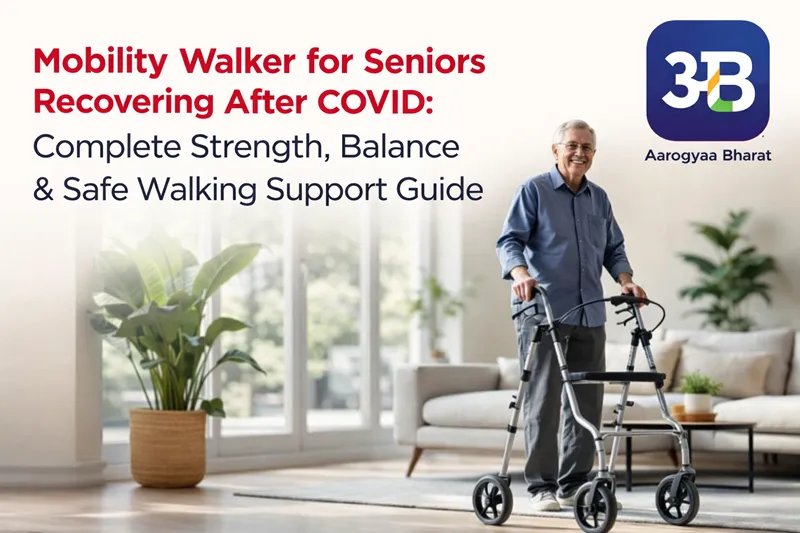
Walkers provide a stable framework that allows seniors to
walk safely while gradually regaining endurance and coordination. Families
searching hospital pages and home care rehabilitation resources often learn
that physiotherapists recommend walkers for elderly patients recovering from
respiratory illness or long hospital stays. Aarogyaa Bharat’s rehabilitation
section highlights walkers as essential recovery aids that support gradual
mobility improvement while minimizing physical strain. Healthcare calculators
used to assess fall risk and mobility limitations frequently recommend walkers
for seniors who are rebuilding strength after illness.
Understanding Post-COVID Mobility Challenges in Elderly
Patients
COVID-19 recovery often involves more than just overcoming
respiratory symptoms. Elderly individuals frequently experience post-viral
fatigue, muscle weakness, dizziness, and reduced balance. These symptoms may
persist for weeks or months, making walking without support difficult and
unsafe. Extended hospital stays or bed rest can also lead to muscle
deconditioning, which further affects mobility. Physiotherapists listed on
hospital pages often explain that rebuilding strength through controlled
walking exercises is an important part of recovery. Aarogyaa Bharat’s home care
equipment guides emphasize that walkers provide stability during early mobility
training, helping seniors regain walking confidence gradually. Healthcare
calculators designed to measure fall risk often identify walkers as helpful
mobility aids for elderly individuals experiencing post-illness weakness.
How Walkers Help Seniors Recover After COVID
Walkers support recovery by providing multiple points of
contact with the ground, which improves balance and stability during walking.
This structure allows seniors to move slowly and safely while gradually
rebuilding endurance. When used during rehabilitation exercises, walkers also
help distribute body weight evenly, reducing pressure on weakened muscles and
joints. Hospital pages that guide respiratory recovery programs often recommend
controlled walking exercises supported by mobility aids. Aarogyaa Bharat’s
rehabilitation section highlights walkers as effective tools for promoting safe
movement during post-COVID recovery. Healthcare calculators used to track
mobility progress frequently show improvement in walking endurance when seniors
use walkers consistently during rehabilitation.
Key Features of Walkers Suitable for Post-COVID Recovery
Walkers used for post-COVID recovery should provide
stability, comfort, and ease of movement. Lightweight aluminium frames make the
walker easy to manoeuvre without requiring excessive strength. Adjustable
height handles ensure the walker aligns properly with the user’s posture, which
helps maintain correct walking mechanics during recovery. Anti-slip rubber tips
provide strong floor grip, preventing accidental slips on smooth surfaces. Some
walkers include front wheels that allow smoother movement for seniors who
experience fatigue while lifting traditional walkers. Aarogyaa Bharat’s
rehabilitation equipment guides highlight walkers with ergonomic grips because
they improve comfort during extended use. Families reviewing hospital pages for
recovery mobility solutions often prefer walkers that combine stability with
lightweight construction.
Typical Features of Walkers for Post-COVID Recovery
|
Feature |
Description |
|
Frame
Material |
Lightweight
aluminium construction |
|
Height
Adjustment |
Adjustable
handle levels |
|
Base Support |
Anti-slip
rubber tips |
|
Optional
Wheels |
Some models
include front wheels |
|
Weight
Capacity |
Usually
supports 100–150 kg |
|
Grip Design |
Ergonomic
handles for comfort |
Daily Recovery Activities Supported by Walkers
Walkers allow elderly individuals recovering from COVID to
gradually resume daily activities while maintaining safety. Seniors can use
walkers for short indoor walks, light physiotherapy exercises, and moving
between rooms at home. These controlled movements help rebuild stamina and
improve circulation without overexerting the body. Aarogyaa Bharat’s home care
equipment guides explain that walkers encourage patients to remain active
during recovery while minimizing fall risk. Hospital pages often emphasize the
importance of progressive walking exercises for patients recovering from
respiratory illnesses. Healthcare calculators used to measure mobility
stability frequently recommend walkers as preventive mobility aids during early
recovery stages.
Benefits of Walkers During Post-COVID Rehabilitation
- Provide
strong balance support during recovery
- Help
rebuild walking endurance gradually
- Reduce
fatigue caused by muscle weakness
- Improve
confidence during movement
- Support
physiotherapy and rehabilitation exercises
- Reduce
risk of falls and injuries
- Suitable
for indoor and outdoor walking
- Encourage
safe and independent mobility
Walker vs Rollator for Post-COVID Recovery
Different mobility aids provide different levels of support
depending on the patient’s recovery stage. Standard walkers offer strong
stability and are often recommended during early recovery when balance and
strength are limited. Rollator walkers include wheels and allow smoother
movement but require better balance control. Patients consulting hospital pages
often begin recovery with standard walkers before transitioning to rollators as
their endurance improves. Aarogyaa Bharat’s rehabilitation section highlights
walkers as ideal early-stage mobility aids for individuals rebuilding strength
after illness. Healthcare calculators used to evaluate mobility progression
frequently indicate that patients gradually move to rollators once their
walking stability improves.
Table: Standard Walker vs Rollator Walker for Recovery
|
Feature |
Standard
Walker |
Rollator
Walker |
|
Stability |
Very high
stability |
Moderate
stability |
|
Wheels |
Usually, no
wheels |
Four wheels |
|
Movement |
Lift and step
motion |
Smooth
rolling motion |
|
Best Stage |
Early
recovery |
Later
recovery |
|
Energy Use |
Higher effort |
Lower effort |
Choosing the Right Walker for Post-COVID Recovery
Selecting the correct walker requires evaluating the
patient’s strength level, balance stability, and living environment. Seniors
recovering from severe illness may require walkers with strong frames and
anti-slip rubber tips for maximum stability. Individuals participating in
physiotherapy programs listed on hospital pages may prefer walkers with
adjustable handles and ergonomic grips for improved posture. Aarogyaa Bharat
recommends reviewing walker specifications carefully before purchasing mobility
equipment. Healthcare calculators designed to evaluate fall risk and walking
stability can help families determine whether a standard walker or wheeled
walker is most suitable for post-COVID recovery.
Role of Walkers in Respiratory Rehabilitation
Respiratory rehabilitation programs often include controlled
walking exercises to improve lung capacity and overall endurance. Walkers allow
seniors to perform these exercises safely by providing stable support during
movement. Physiotherapists listed on hospital pages frequently recommend
walkers during rehabilitation sessions because they reduce the risk of falls
while patients regain strength. Aarogyaa Bharat’s rehabilitation section
explains that walkers help patients practice safe breathing-focused walking
exercises that improve oxygen circulation. Healthcare calculators used to
monitor recovery progress often track improvements in walking endurance and
mobility stability during rehabilitation.
Conclusion
Recovering from COVID-19 can be a gradual process for elderly individuals, particularly when weakness, fatigue, and balance issues remain after the infection. Walkers provide reliable mobility support that helps seniors rebuild strength safely while reducing the risk of falls. Their stable structure allows patients to perform walking exercises, move around the home, and gradually regain independence during recovery. Aarogyaa Bharat’s home care and rehabilitation equipment collections emphasize the importance of selecting mobility aids that support both recovery and long-term mobility health. By consulting hospital pages, exploring cities pages, and using healthcare calculators to evaluate mobility needs, families can choose walkers that provide safe and effective support for post-COVID recovery. With proper guidance and the right mobility aid, seniors can gradually regain strength, confidence, and independence after illness.