During seasonal transitions, air quality tends to
deteriorate due to a combination of dust storms, pollen blooms, pollution
spikes, mold growth, and stagnant humid air. These airborne irritants inflame
the airways, increase mucus production, and trigger hypersensitive immune
responses. As a result, even individuals who are otherwise healthy may
experience shortness of breath, chest tightness, wheezing, persistent coughing,
and disturbed sleep. For people already suffering from asthma, COPD, or
sinusitis, seasonal changes can quickly escalate into serious respiratory
emergencies.
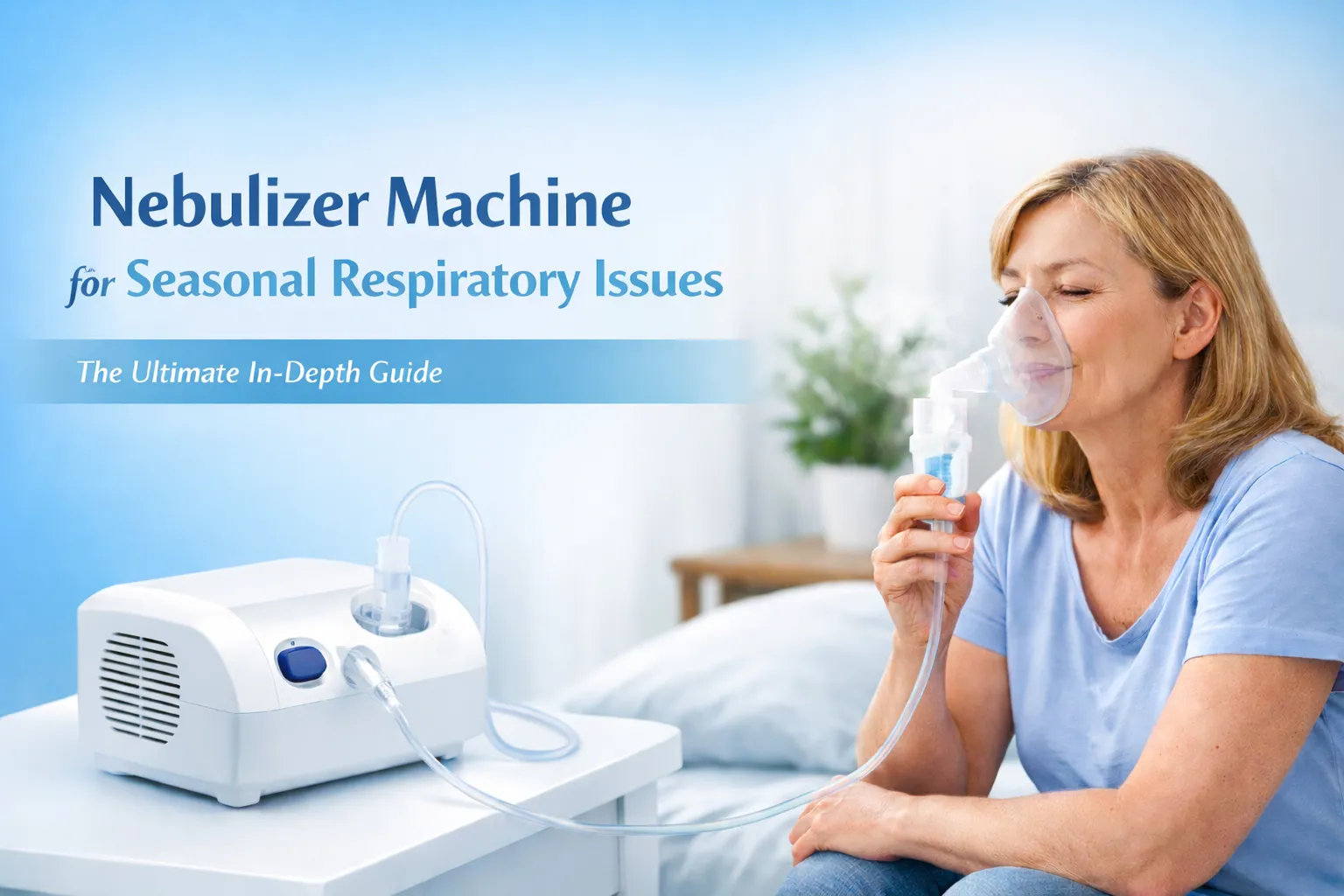
A nebulizer machine plays a powerful role in managing and
controlling these seasonal respiratory flare-ups by delivering medication
directly into the lungs in the form of a fine mist. Unlike tablets or syrups
that take time to act and affect the whole body, nebulizers provide localized,
fast-acting relief where it is needed the most. They open up constricted
airways, reduce inflammation, thin mucus, and soothe irritated lung tissues
within minutes, making them an indispensable device for home respiratory care.
At Aarogyaa Bharat, we regularly assist families who depend
on nebulizers during seasonal changes to manage breathing difficulties safely
at home. This comprehensive guide explains everything you need to know about
nebulizer machines for seasonal respiratory issues, including how they work,
why they are essential, the best types to choose, key safety guidelines,
cleaning routines, who should use them, and how to maximize their long-term
benefits for respiratory wellness.
Why Seasonal Changes Trigger Respiratory Issues
Seasonal respiratory problems arise primarily because the
human respiratory system is highly sensitive to environmental fluctuations.
During winter, cold and dry air constricts bronchial passages, making it harder
for lungs to expand fully. This leads to reduced airflow, thickened mucus, and
increased coughing, wheezing, and breathlessness, particularly in individuals
with asthma, bronchitis, or weakened lung capacity.
Monsoon season creates an entirely different challenge.
Excessive humidity promotes mold growth, bacterial infections, and viral
transmission. Damp indoor environments allow allergens and pathogens to thrive,
while stagnant outdoor air traps pollutants close to the ground. This
combination significantly increases the risk of lung infections, sinus
congestion, bronchitis, and allergic flare-ups, especially among children and
elderly individuals.
Summer brings high pollen levels, dust storms, air pollution
spikes, and rising temperatures. Hot air mixed with pollutants irritates airway
linings, while air conditioning dries out nasal passages, reducing natural
immunity. These conditions worsen allergies, sinusitis, and asthma symptoms,
leading to persistent throat irritation, coughing fits, and breathing
discomfort.
Across all seasons, fluctuating air pressure, temperature,
and humidity weaken the body’s natural respiratory defences. Mucus thickens,
airway linings become inflamed, and immune responses become hypersensitive.
This creates a vicious cycle where seasonal respiratory issues return year
after year, making preventive respiratory management an essential part of
long-term health planning.
How Nebulizer Machines Help in Seasonal Respiratory
Issues
Nebulizer machines work by converting liquid medication into
a fine aerosol mist that can be inhaled deeply into the lungs. This direct
delivery ensures that medication reaches inflamed airways quickly, bypassing
the digestive system and bloodstream. As a result, nebulizers provide faster
relief compared to oral medications that must first be absorbed and circulated
through the body.
For seasonal respiratory issues, nebulizers are commonly
used to deliver bronchodilators, corticosteroids, saline solutions,
antihistamines, and mucolytics. Bronchodilators relax airway muscles and
improve airflow during asthma or bronchitis flare-ups. Corticosteroids reduce
inflammation caused by allergies or viral infections. Saline solutions hydrate
dry airways and thin thick mucus, while antihistamines suppress allergic
reactions triggered by pollen, dust, and pollution.
Nebulizers are especially beneficial for individuals who
struggle to use inhalers correctly, such as young children, elderly patients,
and people experiencing severe breathlessness. Since nebulization requires
passive breathing, it ensures consistent medication delivery even during acute
respiratory episodes when inhalers may fail due to poor coordination or weak
lung capacity.
Another major advantage of nebulizers is their ability to
support frequent, controlled therapy sessions. During seasonal flare-ups,
doctors often prescribe multiple daily nebulization sessions. Nebulizers make
this possible at home without hospital visits, reducing healthcare costs,
minimizing patient discomfort, and enabling faster symptom control during
high-risk seasonal periods.
Common Seasonal Respiratory Conditions Treated with
Nebulizers
Asthma is one of the most common seasonal respiratory
conditions. During pollen seasons, cold weather, and pollution spikes, asthma
patients often experience sudden airway constriction, wheezing, chest
tightness, and breathlessness. Nebulizers deliver bronchodilators and steroids
directly into the lungs, offering rapid relief and preventing emergency
attacks.
Bronchitis frequently worsens during winter and monsoon
months due to cold air irritation and viral infections. Nebulization therapy
loosens thick mucus, reduces chest congestion, and improves airflow. This
significantly shortens recovery time and minimizes the need for antibiotics and
hospital visits.
Sinusitis and allergic rhinitis also benefit greatly from
nebulization, especially with saline solutions and anti-inflammatory
medications. Nebulizers help clear nasal passages, reduce sinus pressure,
improve airflow, and relieve headaches and facial pain caused by sinus
blockages.
Post-viral respiratory infections, including flu, COVID-19,
and pneumonia, often leave behind residual lung inflammation and mucus build up.
Nebulizers accelerate lung healing by delivering targeted medication that
reduces swelling, improves oxygen absorption, and minimizes persistent coughing
and breathlessness during recovery.
Types of Nebulizer Machines Suitable for Seasonal Use
There are three main types of nebulizer machines used for
seasonal respiratory care: compressor nebulizers, ultrasonic nebulizers, and
mesh nebulizers. Each type offers unique advantages depending on usage
frequency, patient comfort, medication type, and budget.
Compressor nebulizers are the most commonly used for home
care due to their durability and compatibility with all medication types. They
are highly effective for managing recurring seasonal issues such as asthma,
bronchitis, and sinus infections. Although slightly noisy and bulky, their
reliability makes them ideal for long-term seasonal use in families with
chronic respiratory patients.
Ultrasonic nebulizers are quieter and faster but are not
compatible with all medications, particularly thick suspensions and steroids.
They are best suited for saline therapy and mild bronchodilator treatments
during seasonal congestion. Their silent operation makes them comfortable for
children and night-time therapy sessions.
Mesh nebulizers represent the most advanced option. They
produce ultra-fine mist particles, ensuring superior drug absorption and faster
relief. They are extremely quiet, portable, and battery-powered, making them
ideal for travel and emergency seasonal flare-ups. While more expensive, mesh
nebulizers are often preferred for premium respiratory care setups focused on
comfort and efficiency.
Key Benefits of Nebulizer Therapy for Seasonal
Respiratory Care
One of the biggest benefits of nebulizer therapy is rapid
symptom relief. Since medication reaches the lungs directly, patients
experience faster improvement in breathing, reduced coughing, and decreased
chest tightness within minutes of starting therapy.
Nebulizers also improve medication adherence. Many patients,
especially children and elderly individuals, find nebulizers easier to use than
inhalers. This ensures consistent therapy and better long-term outcomes during
prolonged seasonal flare-ups.
Another important advantage is preventive care. Regular
saline nebulization keeps airways moist, reduces mucus build up, and lowers
infection risk, making it a valuable preventive tool during seasonal
transitions and high-pollution periods.
Nebulizers also reduce hospital dependency. By managing
symptoms early at home, patients can avoid emergency visits, reduce antibiotic
usage, and prevent severe respiratory complications, improving overall quality
of life and long-term lung health.
Safety Guidelines for Nebulizer Use During Seasonal
Illnesses
Always follow the medication dosage and frequency prescribed
by your doctor. Overuse or incorrect mixing of drugs can lead to airway
irritation, cardiovascular side effects, or delayed recovery.
The nebulizer should be placed on a stable, clean surface
away from dust, moisture, and heat. Electrical safety is critical, so avoid
extension cords and loose sockets.
Wash hands thoroughly before handling nebulizer components
or medications. Use only sterile or distilled water for dilution if required.
After every session, clean nebulizer parts with warm soapy
water and allow them to air dry completely. Weekly disinfection is essential to
prevent bacterial growth and cross-infection.
Daily, Weekly, and Seasonal Maintenance Routine
Daily cleaning prevents bacterial build up. After each
session, rinse the mask, mouthpiece, and medicine cup thoroughly with warm
water and mild soap. Let them air dry naturally on a clean towel.
Weekly disinfection is essential. Soak removable parts in a
doctor-recommended disinfectant solution or boil them if manufacturer
guidelines allow. This reduces infection risk and ensures hygienic therapy.
Monthly inspection of tubing, filters, and power cords helps
identify wear and tear early. Replace damaged components immediately to prevent
airflow reduction and medication wastage.
Seasonal deep maintenance before high-risk months ensures
uninterrupted therapy. Stock spare masks, tubing, and filters to avoid
treatment disruptions during peak seasonal illness periods.
Nebulizer Machine Comparison Table for Seasonal
Respiratory Care
|
Feature |
Compressor
Nebulizer |
Ultrasonic
Nebulizer |
Mesh
Nebulizer |
|
Medication
Compatibility |
Very High |
Medium |
Very High |
|
Noise Level |
Moderate |
Low |
Very Low |
|
Portability |
Low |
Medium |
High |
|
Nebulization
Speed |
Medium |
Fast |
Fast |
|
Cleaning Ease |
Medium |
Medium |
High |
|
Ideal
Seasonal Use |
Frequent
flare-ups |
Light
congestion |
Premium care |
Who Should Use a Nebulizer for Seasonal Respiratory
Issues
Children with seasonal asthma, frequent colds, or allergic
bronchitis benefit significantly from nebulizer therapy. It ensures effective
medication delivery without requiring complex breathing coordination.
Elderly individuals with weakened lung capacity or chronic
respiratory conditions often experience severe seasonal flare-ups. Nebulizers
help stabilize breathing and prevent complications in this age group.
People with allergies, sinusitis, and pollution sensitivity
also benefit from regular nebulization, especially during pollen seasons and
high-smog periods.
Post-viral patients recovering from flu, COVID-19, or
pneumonia often require nebulization to clear residual lung inflammation and
mucus build up.
Conclusion
Seasonal respiratory issues are a recurring and unavoidable
challenge for millions of people, often disrupting daily life and increasing
hospital visits. From asthma flare-ups and bronchitis to sinus congestion and
post-viral cough, seasonal changes place enormous stress on the respiratory
system. A nebulizer machine offers a safe, effective, and convenient solution
for managing these conditions at home.
By delivering medication directly into the lungs, nebulizers
provide rapid symptom relief, improve medication adherence, and prevent
complications. Choosing the right nebulizer type, following strict safety
guidelines, and maintaining proper hygiene can transform seasonal respiratory
care into a simple and reliable home therapy routine.
At Aarogyaa Bharat, we offer a wide range of high-quality
nebulizer machines designed for seasonal respiratory care, along with expert
guidance on selection, setup, and usage. Our mission is to empower families
with reliable medical equipment that supports long-term respiratory wellness.
If you or your loved one’s experience recurring seasonal
respiratory issues, Aarogyaa Bharat is always here to help you choose the right
nebulizer solution for better breathing, healthier lungs, and improved quality
of life.