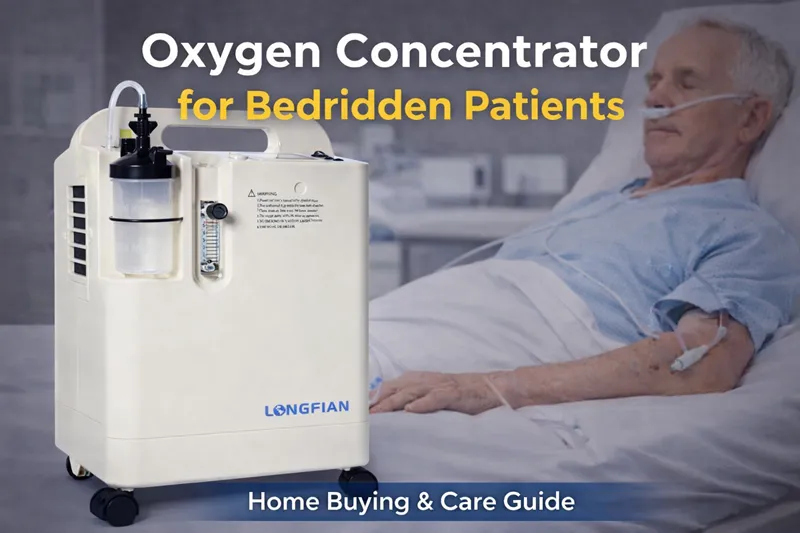
For bedridden patients, breathing is often compromised due to weak respiratory muscles, reduced lung expansion, prolonged immobility, and underlying medical conditions. In such cases, oxygen therapy is not a luxury or a short-term intervention. It is a core life-support system that directly impacts survival, healing, mental clarity, heart function, and overall quality of life.
An oxygen concentrator in this context is far more than a
machine. It becomes a permanent companion in the patient’s daily routine,
operating for hours or even days continuously. Choosing the wrong type of
concentrator, ignoring safety requirements, or underestimating long-term needs
can result in unstable oxygen delivery, frequent medical emergencies, repeated
hospitalizations, and severe caregiver stress.
This comprehensive guide by Aarogyaa Bharat is designed to
help families and caregivers make the right decision with confidence. It
explains in detail how oxygen therapy works for bedridden patients, why
concentrators are superior to cylinders, which technical features matter most,
how to ensure safe daily operation, and how to plan for future medical needs.
Whether you are setting up home oxygen therapy for the first time or upgrading
an existing system, this article provides medically important, real-world
guidance.
Understanding Why Bedridden Patients Need Oxygen Therapy
Oxygen therapy is prescribed when the oxygen saturation
level in a patient’s blood consistently falls below normal levels, usually
below ninety to ninety-two percent. Prolonged oxygen deficiency places immense
strain on vital organs, especially the heart and brain, and can accelerate
disease progression.
Bedridden patients are uniquely vulnerable to low oxygen
levels for several reasons. Long-term immobility reduces lung expansion and
weakens respiratory muscles, making it harder to take deep breaths. Secretions
can accumulate in the lungs, increasing the risk of pneumonia. Blood
circulation slows down, increasing the risk of clots and further reducing
oxygen delivery to tissues.
Common medical conditions that require oxygen therapy in
bedridden patients include chronic obstructive pulmonary disease, pulmonary
fibrosis, advanced asthma, congestive heart failure, post-stroke respiratory
weakness, neuromuscular disorders, spinal cord injuries, advanced Parkinson’s
disease, late-stage cancer, and long COVID-related lung damage. In many of
these cases, oxygen therapy is not optional; it is essential for maintaining
life, reducing hospital admissions, and preserving cognitive function.
For such patients, oxygen must be delivered consistently,
without sudden drops in flow or purity. This makes equipment reliability a
medical necessity, not just a technical preference.
Why an Oxygen Concentrator Is Superior to an Oxygen
Cylinder for Bedridden Care
Traditionally, oxygen cylinders were the primary source of
home oxygen therapy. However, for bedridden patients who require continuous or
long-term oxygen support, cylinders are no longer considered the safest or most
practical solution.
Oxygen cylinders store a limited amount of compressed oxygen
gas. Once the gas is depleted, the cylinder must be replaced or refilled. For a
patient requiring continuous oxygen, this can mean multiple cylinder changes
per week or even per day. Any delay in replacement creates a dangerous
interruption in therapy. Cylinders also pose safety risks due to high pressure,
potential leaks, and fire hazards.
Oxygen concentrators work differently. They draw in ambient
air, filter out nitrogen, and deliver concentrated oxygen continuously. As long
as there is electricity, the machine can produce oxygen without limitation.
This eliminates the anxiety of running out of oxygen unexpectedly and removes
dependency on emergency deliveries.
For bedridden patients, concentrators offer greater safety,
lower long-term cost, easier daily management, and far more reliable oxygen
availability.
Types of Oxygen Concentrators Suitable for Bedridden
Patients
Stationary Oxygen Concentrators
Stationary oxygen concentrators are the gold standard for
bedridden patient care. These machines are built for long-duration use and
higher oxygen output. Most stationary units provide continuous oxygen flow
ranging from one to ten liters per minute, making them suitable for both mild
and severe respiratory needs.
These devices are designed to operate twenty-four hours a
day without overheating or mechanical failure. They are more durable, quieter,
and medically stable than portable models. Because bedridden patients do not
require mobility, stationary concentrators offer the best balance of
reliability, performance, and affordability.
Portable Oxygen Concentrators
Portable oxygen concentrators are designed primarily for
mobile users. Most portable units operate in pulse-dose mode and offer limited
flow capacity. This makes them unsuitable as a primary oxygen source for
bedridden patients.
However, portable concentrators can be useful as secondary
backup devices for short hospital visits, diagnostic appointments, or emergency
transport. They should never replace a stationary concentrator for long-term
bedridden care.
Medical and Technical Features That Matter Most
Choosing the right oxygen concentrator for a bedridden
patient requires careful attention to features that directly impact safety and
therapeutic effectiveness.
Continuous Flow Capability
Bedridden patients almost always require continuous oxygen
delivery. A concentrator must support true continuous flow and maintain stable
oxygen output regardless of breathing patterns. Pulse-dose machines are not
appropriate for immobile or unconscious patients.
Oxygen Purity Stability
Medical-grade concentrators should consistently deliver
oxygen with purity levels between ninety and ninety-five percent. Stability is
more important than peak numbers. Frequent fluctuations in purity can result in
inadequate therapy even if flow rates appear correct.
High Flow Capacity
Patients with advanced lung disease or nighttime oxygen
needs may require higher flow rates. A concentrator capable of delivering five
to ten liters per minute ensures future-proofing as medical needs evolve.
Low Noise Operation
Noise can disrupt sleep and increase agitation, especially
in elderly patients or those with neurological conditions. A concentrator with
noise levels below forty-five decibels is recommended for bedroom use.
Intelligent Alarm Systems
Modern concentrators include alarms for power failure, low
oxygen purity, overheating, pressure issues, and flow obstructions. These
alerts are essential for early detection of problems and rapid caregiver
response.
Battery Backup and Inverter Compatibility
Power outages are common in many parts of India. A
concentrator that supports battery backup or inverter connectivity ensures
uninterrupted oxygen delivery during outages, which can be life-saving.
Humidifier Compatibility
Dry oxygen can irritate nasal passages, cause nosebleeds,
and increase discomfort. A built-in or attachable humidifier is essential for
patients receiving long-term oxygen therapy.
Comparison Table: Oxygen Cylinders vs Oxygen
Concentrators for Bedridden Patients
|
Feature |
Oxygen
Cylinder |
Oxygen
Concentrator |
|
Oxygen Supply |
Limited, runs
out |
Unlimited
with power |
|
Refill
Requirement |
Frequent |
None |
|
Long-Term
Cost |
High |
Lower |
|
Safety Risk |
High pressure
gas |
Low |
|
Continuous
Use |
Unreliable |
Highly
reliable |
|
Caregiver
Stress |
High |
Low |
|
Power
Dependency |
No |
Yes |
|
Emergency
Readiness |
Moderate |
High with
backup |
How to Set Up an Oxygen Concentrator for a Bedridden
Patient
Proper installation is critical for safe and effective
operation. Place the concentrator in a well-ventilated area with at least one
foot of clearance from walls, curtains, and furniture. Avoid placing it near
heat sources, damp areas, or direct sunlight.
If a humidifier is prescribed, fill it with distilled water
and attach it securely. Connect medical-grade oxygen tubing and ensure there
are no kinks, cracks, or loose fittings. Attach the nasal cannula or oxygen
mask gently to the patient’s face, ensuring comfort and proper positioning.
Before starting therapy, set the prescribed flow rate and
allow the machine to run for a few minutes to stabilize oxygen concentration.
Monitor the patient’s oxygen saturation using a pulse oximeter to confirm
effective delivery.
Daily Safety Rules Every Caregiver Must Follow
Oxygen strongly supports combustion. Keep the concentrator
away from smoking areas, incense sticks, candles, gas stoves, and electrical
sparks. Never use oil-based creams or petroleum jelly near the patient’s nose
or face.
Clean air filters regularly to prevent contamination and
overheating. Replace oxygen tubing and cannulas as recommended to maintain
hygiene. Keep a fire extinguisher in the home if long-term oxygen therapy is
required.
Monitor the patient’s oxygen saturation levels daily. If
levels fall below the prescribed range or the patient shows signs of
respiratory distress, contact a doctor immediately.
Common Problems and Practical Solutions
|
Problem |
Likely
Cause |
Solution |
|
Low oxygen
purity |
Dirty filters |
Clean or
replace filters |
|
Patient
discomfort |
Dry air |
Add
humidifier |
|
Machine
overheating |
Poor
ventilation |
Improve
airflow |
|
Power failure |
Electricity
outage |
Use inverter
or battery |
|
Alarm
sounding |
Flow
obstruction |
Check tubing
and cannula |
|
Increased
breathlessness |
Disease
progression |
Consult
physician |
|
Frequent
shutdowns |
Voltage
fluctuation |
Use
stabilizer |
Renting vs Buying for Bedridden Care
Renting
Renting is ideal for short-term needs such as post-surgery
recovery, temporary illness, rehabilitation, or trial use before purchase.
Rental units are maintained and serviced by the provider, reducing caregiver
responsibility.
Buying
Buying is more suitable for long-term or lifelong oxygen
therapy. Ownership provides cost savings over time, consistent availability,
customization options, and full control over maintenance schedules.
Why Aarogyaa Bharat Is Trusted for Home Oxygen Solutions
At Aarogyaa Bharat, we understand that choosing an oxygen
concentrator for a bedridden patient is not a technical purchase; it is a
deeply emotional and medical decision. We focus on real-world reliability,
prescription compatibility, service network coverage, power backup planning,
and long-term care support.
Every family receives personalized guidance based on the
patient’s diagnosis, oxygen flow requirement, home environment, and future
medical needs. Our mission is not just to supply equipment, but to deliver
safety, dignity, and peace of mind to families across India.
Conclusion
An oxygen concentrator for a bedridden patient is not just a
machine. It is the foundation of daily care, comfort, and survival. The right
device can prevent complications, reduce hospital visits, stabilize vital
organs, and significantly improve quality of life.
Investing in the correct concentrator, ensuring proper
setup, following safety protocols, and planning for future needs are among the
most important decisions a caregiver can make.
With the right equipment and expert guidance, home oxygen therapy can be safe, reliable, and stress-free.