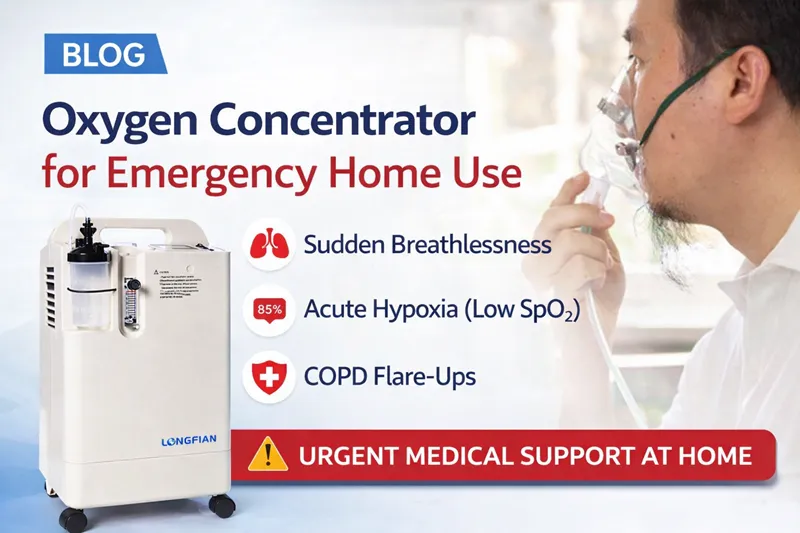
In India, where ambulance response times can be unpredictable and hospital overcrowding is common, immediate access to oxygen at home can be the deciding factor between rapid recovery and medical catastrophe.
An oxygen concentrator for emergency home use is not merely a convenience device anymore; it has become a vital safety tool for families with elderly members, chronic respiratory patients, post-COVID survivors, and individuals with heart or lung conditions. At Aarogyaa Bharat, we have seen a sharp rise in households proactively installing oxygen concentrators as part of their emergency preparedness strategy. This guide explains why emergency oxygen matters, how concentrators work in crisis situations, how to choose the right machine, and how to build a complete emergency oxygen setup at home.
What Is an Oxygen Concentrator and How It Supports Emergency Care
An oxygen concentrator is a medical-grade device that extracts oxygen from the surrounding air, removes nitrogen and other gases, and delivers concentrated oxygen to the patient at purity levels ranging from 90% to 96%. Unlike oxygen cylinders, which contain a finite amount of compressed oxygen that can run out at the worst possible moment, concentrators generate oxygen continuously as long as they have an electrical power supply. This makes them particularly suitable for emergencies, where the duration of oxygen therapy is unpredictable and refill logistics can be impractical.
During respiratory emergencies, an oxygen concentrator provides immediate stabilization by increasing oxygen availability to the lungs and bloodstream. This helps reduce strain on the heart, prevents hypoxic brain injury, eases panic-induced hyperventilation, and buys critical time until professional medical care arrives. At Aarogyaa Bharat, we strongly recommend concentrators over cylinders for emergency preparedness because of their safety, reliability, and uninterrupted oxygen supply capabilities.
Medical Emergencies That Require Immediate Oxygen Support
Respiratory emergencies can arise from a wide range of medical conditions, many of which deteriorate rapidly without timely oxygen therapy. Acute COPD exacerbations are among the most common causes, where airway inflammation and mucus obstruction severely restrict airflow, leading to sudden hypoxia and respiratory distress. Severe asthma attacks can also cause abrupt oxygen deprivation, especially when bronchodilators fail to provide immediate relief.
Infections such as pneumonia, COVID-19, and bronchitis can impair lung function within hours, making emergency oxygen therapy critical to prevent further lung damage and systemic complications. Cardiac conditions, including heart failure, arrhythmias, and silent heart attacks, can reduce oxygen delivery to tissues, causing breathlessness and chest discomfort that may worsen without oxygen support. Other high-risk situations include pulmonary embolism, allergic reactions, smoke inhalation, panic attacks, and altitude-induced hypoxia during travel. In all these scenarios, an oxygen concentrator at home can serve as a life-saving first-response device.
When Should You Use an Oxygen Concentrator in an Emergency?
An oxygen concentrator should be used immediately when a patient exhibits signs of oxygen deprivation such as persistent breathlessness, bluish lips or fingertips, chest tightness, confusion, dizziness, or visible distress. Objective indicators such as a pulse oximeter reading below 92% should trigger immediate oxygen therapy, especially for high-risk individuals with pre-existing lung or heart conditions. For certain patients, doctors may recommend starting oxygen therapy at higher saturation thresholds if symptoms are severe or worsening rapidly.
It is essential to understand that oxygen concentrators are not a replacement for emergency medical care but rather a critical stabilization tool. They provide supportive therapy that can prevent further deterioration while emergency services are contacted or while the patient is being transported to a hospital. At Aarogyaa Bharat, we advise families to treat emergency oxygen as a bridge to professional care, not a substitute for it.
Oxygen Concentrator vs Oxygen Cylinder for Emergency Home Use
| Feature | Oxygen Concentrator | Oxygen Cylinder |
|---|---|---|
| Oxygen Supply | Continuous generation | Limited stored oxygen |
| Refill Requirement | Not required | Frequent refills needed |
| Safety | No high-pressure storage | High-pressure gas risk |
| Portability | Moderate (portable models available) | Heavy and bulky |
| Cost Over Time | Lower | Higher |
| Power Dependency | Requires electricity | No power needed |
| Emergency Reliability | High | Medium |
Oxygen cylinders have traditionally been used for emergencies, but they come with several practical limitations. Cylinders store a fixed amount of oxygen that can run out unexpectedly during prolonged emergencies, and arranging refills during nights, holidays, or lockdowns can be extremely difficult. Cylinders also pose safety risks due to high-pressure gas storage, which can lead to leakage or explosions if mishandled.
In contrast, oxygen concentrators generate oxygen continuously, eliminating refill logistics and ensuring uninterrupted supply. They are safer, easier to maintain, and more reliable for unpredictable emergency scenarios. For these reasons, Aarogyaa Bharat strongly recommends concentrators over cylinders for emergency home oxygen solutions.
Types of Oxygen Concentrators for Emergency Home Use
Low-Flow Oxygen Concentrators (1–3 LPM)
Low-flow concentrators are suitable for mild emergencies and early-stage hypoxia, where patients require light oxygen supplementation. These machines are compact, energy-efficient, and quiet, making them ideal for small homes and elderly care environments. They are commonly used for mild breathlessness, post-COVID fatigue, and early COPD flare-ups. However, they may not provide sufficient oxygen for severe emergencies that demand higher flow rates.
Medium-Flow Oxygen Concentrators (1–5 LPM)
Medium-flow concentrators are the most versatile and widely recommended option for emergency home use. These machines offer adjustable flow rates and maintain high oxygen purity levels, making them suitable for moderate hypoxia, pneumonia recovery, and post-surgical respiratory distress. At Aarogyaa Bharat, 5 LPM concentrators are our top recommendation for families seeking a balanced emergency oxygen solution.
High-Flow Oxygen Concentrators (5–10 LPM)
High-flow concentrators are designed for severe respiratory emergencies requiring sustained high oxygen volumes. They are equipped with heavy-duty compressors and advanced cooling systems for continuous high-output performance. These machines are typically prescribed for patients with advanced COPD, interstitial lung disease, and ICU-level home care needs. Although they consume more power and occupy more space, they provide unmatched reliability for critical emergencies.
Choosing the Right Oxygen Concentrator for Emergency Preparedness
Selecting the right concentrator requires careful consideration of both medical and practical factors. The most critical parameter is the doctor-prescribed flow rate, which determines whether a 3 LPM, 5 LPM, or 10 LPM machine is appropriate. For households with uncertain emergency needs, a 5 LPM concentrator offers the best balance between versatility and performance.
Other important factors include oxygen purity stability, noise level, electricity consumption, portability, and compatibility with power backup systems. Patients living in areas with frequent power outages should prioritize machines that work well with inverters or UPS units. At Aarogyaa Bharat, we provide personalized consultations to help families select the most suitable emergency oxygen solution based on their specific risk profile and home environment.
Power Backup Planning for Emergency Oxygen Use
Power backup is a critical yet often overlooked aspect of emergency oxygen preparedness. Since concentrators rely on electricity, a sudden power outage during a respiratory emergency can be extremely dangerous. Households using concentrators for emergency purposes should invest in an inverter, UPS, or generator capable of supporting the machine for several hours.
Portable oxygen concentrators with built-in batteries can also serve as temporary backup devices during power cuts or patient transportation. At Aarogyaa Bharat, we help families design complete emergency oxygen setups, including power backup solutions and portable alternatives to ensure uninterrupted therapy.
Emergency Oxygen Flow Rate Guide
| Condition | Recommended Flow Rate | Notes |
|---|---|---|
| Mild breathlessness | 1–2 LPM | Monitor SpO₂ regularly |
| Moderate hypoxia | 3–5 LPM | Use pulse oximeter |
| Severe respiratory distress | 5–10 LPM | Seek immediate medical help |
| Post-COVID lung weakness | 2–5 LPM | Adjust as per doctor advice |
| COPD exacerbation | 1–4 LPM | Avoid over-oxygenation |
| Heart failure breathlessness | 2–4 LPM | Continuous monitoring |
Always follow doctor-prescribed flow rates and avoid self-adjustment without medical guidance.
Safety Guidelines for Emergency Oxygen Use
Using an oxygen concentrator safely is essential to prevent accidents and ensure effective therapy. The machine should be placed in a well-ventilated area at least 12-18 inches away from walls to allow proper airflow and cooling. Avoid placing it near open flames, smoking areas, or flammable materials, as oxygen increases the risk of fire hazards.
Regular cleaning of filters, humidifier bottles, and oxygen tubing is crucial to prevent bacterial growth and maintain oxygen purity. Patients should monitor oxygen saturation levels using a pulse oximeter and avoid increasing flow rates without medical advice. At Aarogyaa Bharat, we provide complete installation guidance and safety training to ensure trouble-free emergency oxygen usage.
Warning Signs That Emergency Oxygen Is Not Enough
While oxygen concentrators can stabilize patients during emergencies, certain warning signs indicate the need for immediate hospital care. These include persistent oxygen saturation below 85% despite oxygen therapy, severe chest pain, loss of consciousness, bluish discoloration of lips or face, and uncontrollable breathlessness.
In such cases, oxygen support should continue while emergency medical services are contacted immediately. Emergency oxygen should never delay professional medical treatment. At Aarogyaa Bharat, we emphasize that emergency oxygen is a supportive measure, not a cure.
Why Choose Aarogyaa Bharat for Emergency Oxygen Solutions?
At Aarogyaa Bharat, we specialize in providing medically certified oxygen concentrators for emergency home use across major Indian cities. Our equipment is thoroughly tested before delivery to ensure consistent oxygen purity and reliable performance during critical situations.
We offer:
-
3 LPM, 5 LPM, and 10 LPM concentrators
-
Doorstep delivery and professional installation
-
Rental and purchase options
-
Power backup solutions
-
24/7 customer support
-
Emergency replacement support
Our mission is to make emergency oxygen therapy accessible, affordable, and stress-free for every household in India.
Conclusion
Respiratory emergencies can escalate within minutes, leaving families with little time to arrange oxygen support. Having an oxygen concentrator at home ensures immediate access to life-saving oxygen therapy during critical moments. Whether for chronic illness management, post-COVID care, or emergency preparedness, an oxygen concentrator is a vital addition to every high-risk household.
For reliable emergency oxygen solutions, transparent pricing, and expert guidance, trust Aarogyaa Bharat India’s dependable partner in home oxygen therapy.