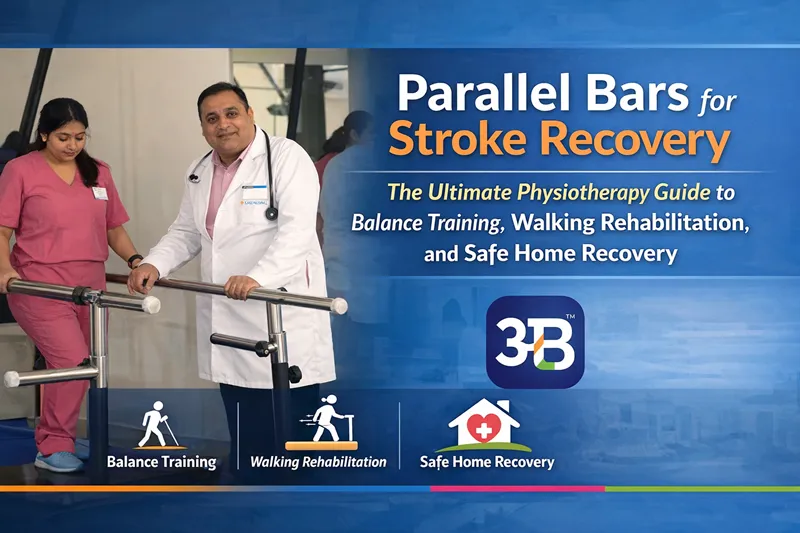
Understanding the Role of Parallel Bars in Physiotherapy
Rehabilitation
Parallel bars are designed to provide stable support during
rehabilitation exercises that involve standing, walking, and balance training,
allowing patients recovering from stroke, surgery, injury, or neurological
disorders to practice controlled movement in a safe environment while
physiotherapists guide posture correction and gait training, and because they
offer dual-sided support they are often preferred during early rehabilitation
stages when patients need maximum stability to rebuild confidence and muscle
strength without the risk of falls.
Why Choosing the Right Parallel Bars Matters for Recovery
Selecting the correct physiotherapy parallel bars is crucial
because poorly designed equipment can affect posture alignment, reduce therapy
effectiveness, and increase safety risks, while high-quality bars with strong
frames, adjustable height features, and non-slip bases provide better stability
and allow therapists to customize exercises according to patient height and
rehabilitation progress, ensuring that patients receive consistent support
during therapy sessions whether they are recovering at home or in a clinical
environment.
Key Features to Consider When Buying Physiotherapy
Parallel Bars
When purchasing physiotherapy parallel bars, it is important
to evaluate factors such as height adjustability, width flexibility, weight
capacity, material strength, and floor stability because these features
determine how safe and comfortable the equipment will be during daily use, and
adjustable bars are particularly beneficial because they accommodate different
patient heights and therapy stages, allowing gradual progression from assisted
support to independent movement while ensuring proper posture alignment during
rehabilitation exercises.
Table: Important Buying Factors for Physiotherapy
Parallel Bars
|
Feature |
Why It
Matters |
Ideal
Choice |
|
Adjustable
Height |
Ensures
proper posture |
Multi-level
adjustment |
|
Strong Frame
Material |
Provides
durability |
Stainless
steel or heavy-duty metal |
|
Anti-Slip
Base |
Prevents
movement |
Rubberized or
wide base design |
|
Weight
Capacity |
Supports
patient safety |
High-load
bearing structure |
|
Smooth Grip
Surface |
Improves
comfort |
Ergonomic
handrail design |
Types of Physiotherapy Parallel Bars Available in India
Physiotherapy parallel bars come in different designs to
suit various rehabilitation needs, including fixed clinical models used in
hospitals, adjustable-height bars for home physiotherapy, foldable bars for
compact spaces, and heavy-duty bars designed for bariatric patients, and
understanding these variations helps buyers choose equipment that aligns with
both medical requirements and available space, ensuring long-term usability and
effective therapy sessions without frequent replacements or upgrades.
Choosing Parallel Bars Based on Patient Needs and
Conditions
The right parallel bars depend on the patient’s
rehabilitation goals because stroke survivors may require wider bars for
balance training while post-surgery patients might benefit from
adjustable-height models that allow gradual weight-bearing exercises, and
elderly users often need sturdy bars with comfortable grip surfaces to reduce
strain on wrists and shoulders, making it important to consult physiotherapists
before purchasing equipment to ensure that the selected design supports safe
and progressive recovery.
Table: Recommended Parallel Bar Types for Different
Rehabilitation Needs
|
Condition |
Recommended
Bar Type |
Key
Benefit |
|
Adjustable
Width Bars |
Improved
balance support |
|
|
Knee or Hip
Surgery |
Height
Adjustable Bars |
Controlled
walking training |
|
Elderly
Mobility Issues |
Heavy-Duty
Stable Bars |
Enhanced
safety |
|
Neurological
Disorders |
Wide Support
Bars |
Better
posture alignment |
|
Home
Rehabilitation |
Compact
Adjustable Bars |
Space-saving
design |
Safety and Stability Factors to Check Before Buying
Safety should always be the top priority when selecting
physiotherapy parallel bars because unstable equipment can increase the risk of
falls during rehabilitation exercises, and buyers should look for features such
as non-slip rubber bases, reinforced frames, smooth edges, and secure locking
mechanisms that keep the bars stable during use, while ensuring that the floor
surface is even and spacious enough to allow safe movement without obstacles.
Parallel Bars for Home Physiotherapy with Aarogyaa Bharat
As home healthcare becomes more common in India, many
families are investing in physiotherapy equipment that allows patients to
continue rehabilitation routines without frequent hospital visits, and Aarogyaa
Bharat offers reliable parallel bars designed for both clinical and home use,
helping patients maintain structured therapy sessions with equipment that
prioritizes safety, durability, and comfort while supporting long-term mobility
improvement.
Budget vs Quality: Finding the Right Balance
While cost is an important factor when purchasing
physiotherapy equipment, choosing the cheapest option may compromise safety and
durability, and investing in high-quality parallel bars ensures long-term
reliability, better stability, and improved therapy outcomes, making it more
cost-effective over time because durable equipment reduces the need for repairs
or replacements and provides consistent support throughout the rehabilitation
journey.
Maintenance and Care Tips for Physiotherapy Parallel Bars
Proper maintenance extends the lifespan of physiotherapy
parallel bars and ensures safe usage, and regular cleaning with mild
disinfectants, checking screws and locking mechanisms, and ensuring that the
base remains stable on the floor can prevent wear and tear, while storing
foldable models properly when not in use helps maintain their structural
integrity for long-term rehabilitation needs.
Aarogyaa Bharat - Your Trusted Partner for Physiotherapy
Equipment
Aarogyaa Bharat is committed to providing high-quality
medical and rehabilitation equipment that supports safe recovery at home,
offering physiotherapy parallel bars designed with durability, stability, and
patient comfort in mind, helping individuals and caregivers create effective
rehabilitation environments that promote independence and long-term mobility
improvement.
Conclusion
Choosing the right physiotherapy parallel bars is an
important step in ensuring safe and effective rehabilitation because the right
equipment provides stability, supports balance training, and helps patients
regain confidence during recovery, and by understanding key features such as
adjustability, safety design, and patient-specific requirements buyers can make
informed decisions that enhance therapy outcomes and support long-term mobility
goals, making Aarogyaa Bharat a reliable choice for trusted physiotherapy
solutions.