Across India, a growing number of patients are being
prescribed night-time oxygen therapy for conditions such as COPD, post-COVID
lung damage, pulmonary fibrosis, heart failure, sleep apnea with hypoxemia, and
age-related respiratory decline. For these individuals, an oxygen concentrator
becomes not just a medical device but a nightly life-support companion that
ensures stable oxygen delivery throughout the sleeping hours.
Unlike daytime oxygen use, night-time therapy presents
unique challenges. Patients are unconscious for most of the therapy duration,
making them unable to respond to equipment alarms, tubing disconnections, or
sudden oxygen drops. Sleep posture, mask comfort, noise levels, and power
outages further complicate night time oxygen safety. Without proper setup and
safeguards, night-time oxygen therapy can become risky rather than protective.
At Aarogyaa Bharat, we design customized home oxygen
solutions specifically optimized for night-time therapy. This comprehensive
guide explains everything you need to know about using an oxygen concentrator
for night-time oxygen therapy, including why it is essential, who needs it, how
it works during sleep, what features matter most, safety precautions, power
backup planning, device selection guidance, and how to create a truly safe
night time oxygen environment.
Why Night-Time Oxygen Therapy Is Critically Important
During sleep, the body’s respiratory drive naturally
decreases. Breathing becomes slower and shallower, airway muscles relax, and
oxygen intake drops. In healthy individuals, this mild reduction does not cause
problems because the lungs and heart can compensate. However, in people with
compromised lung or heart function, this normal physiological drop can push
oxygen levels into dangerously low ranges.
Many patients experience a phenomenon called nocturnal
desaturation, where blood oxygen levels fall significantly during sleep even if
daytime oxygen levels appear acceptable. This is particularly common in
patients with COPD, pulmonary fibrosis, obesity hypoventilation syndrome, and
post-COVID lung damage. Unfortunately, because this oxygen drop happens during
sleep, patients are often unaware that it is occurring.
Repeated night-time hypoxia places enormous strain on the
heart, increasing the risk of arrhythmias, pulmonary hypertension, heart
failure progression, and sudden cardiac events. It also disrupts deep sleep
cycles, leading to daytime fatigue, memory problems, headaches, depression, and
reduced immunity.
Night-time oxygen therapy stabilizes oxygen levels
throughout sleep, protecting vital organs, improving sleep quality, and
preventing long-term complications. For many patients, starting oxygen therapy
at night is the first step toward full-day respiratory stabilization.
How Oxygen Concentrators Support Breathing During Sleep
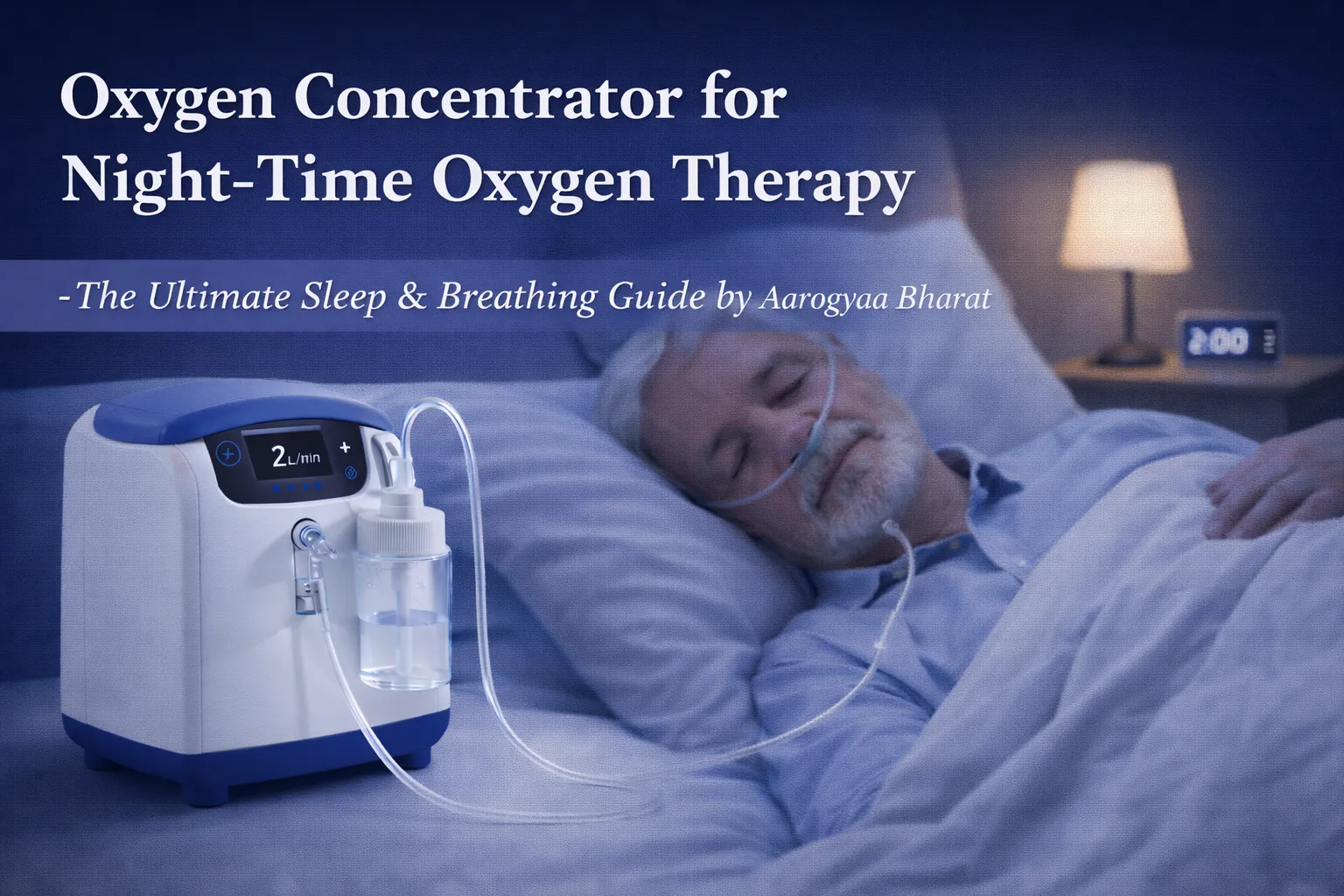
An oxygen concentrator works by pulling in room air,
filtering out nitrogen and other gases, and delivering oxygen-enriched air typically
90% to 96% purity through a nasal cannula or mask. This oxygen is delivered
continuously at a flow rate prescribed by a doctor, usually ranging from 1 to 5
Liters per minute for most home users.
During night-time therapy, the concentrator runs
continuously for 6 to 10 hours or more while the patient sleeps. The nasal
cannula is secured in place with soft tubing that wraps around the ears and
under the chin, allowing oxygen to flow gently into the nostrils without
obstructing normal breathing.
Modern concentrators are equipped with oxygen purity
sensors, flow regulators, and alarm systems that monitor performance throughout
the night. If oxygen purity drops, tubing disconnects, or power fails, audible
alarms are triggered to alert caregivers or sleeping partners.
For patients who move frequently during sleep, longer tubing
and swivel connectors are often used to prevent disconnections. Humidifiers are
also commonly added to night-time setups to prevent nasal dryness, throat
irritation, and sinus discomfort caused by prolonged oxygen flow.
Who Needs Night-Time Oxygen Therapy
Patients with COPD are the most common group requiring
night-time oxygen therapy. As lung damage progresses, oxygen absorption becomes
inefficient, and nocturnal desaturation becomes more pronounced. Many COPD
patients experience severe breathlessness and oxygen drops specifically during
sleep.
Post-COVID lung damage has created a new wave of night-time
oxygen users. Many individuals recover from COVID-19 only to develop long-term
lung fibrosis and reduced oxygen saturation that worsens at night. Night-time
oxygen therapy supports lung healing and reduces night time breathlessness in
these patients.
Patients with pulmonary fibrosis, interstitial lung disease,
and bronchiectasis also commonly require oxygen support during sleep due to
chronic lung scarring and inflammation that impair oxygen exchange.
Heart failure patients may need night-time oxygen therapy
when poor cardiac output leads to inadequate oxygen delivery during sleep.
Supplemental oxygen reduces cardiac strain and improves circulation efficiency
in such cases.
People with sleep apnea combined with hypoxemia, obesity
hypoventilation syndrome, and neuromuscular disorders are other groups that
frequently benefit from night-time oxygen therapy.
Warning Signs That You May Need Night-Time Oxygen
Many patients do not realize they need oxygen therapy at
night because symptoms appear subtle or unrelated. One of the most common signs
is waking up feeling unrested, fatigued, or mentally foggy despite sleeping for
7-9 hours.
Morning headaches are another major warning sign. These
often occur due to carbon dioxide build up and low oxygen levels during sleep,
which increase intracranial pressure overnight.
Frequent night time awakenings, gasping for air, sweating, or
feeling breathless while lying flat can indicate nocturnal hypoxia. Some
patients also experience vivid dreams, nightmares, or panic episodes triggered
by oxygen deprivation.
Family members may notice loud snoring, irregular breathing
patterns, pauses in breathing, or bluish lips during sleep these are all red
flags that require medical evaluation.
If any of these symptoms occur regularly, overnight pulse
oximetry or a sleep study is essential to determine whether night-time oxygen
therapy is needed.
Benefits of Using an Oxygen Concentrator at Night
One of the biggest benefits of night-time oxygen therapy is
improved sleep quality. By stabilizing oxygen levels, the body can enter deeper
sleep stages, leading to better physical recovery and mental clarity.
Night-time oxygen therapy also protects the heart. Chronic
nocturnal hypoxia increases the risk of arrhythmias, pulmonary hypertension,
and heart failure progression. Supplemental oxygen reduces this strain
significantly.
Another major advantage is daytime energy improvement.
Patients who use oxygen at night often report reduced daytime fatigue, fewer
headaches, better appetite, and improved exercise tolerance.
For chronic lung disease patients, night-time oxygen therapy
also slows disease progression and reduces hospital admissions by preventing
repeated hypoxia-related complications.
Key Features to Look for in a Night-Time Oxygen
Concentrator
When selecting an oxygen concentrator for night-time use,
noise level is one of the most critical factors. Loud machines can disturb
sleep and increase anxiety. Modern concentrators designed for night use
typically operate at noise levels between 35-45 decibels, which is comparable
to a quiet fan or whisper.
Alarm systems are another essential feature. The
concentrator should have audible alarms for power failure, low oxygen purity,
and tubing disconnection. For seniors living alone, remote monitoring or
caregiver alert systems add an extra layer of safety.
Flow stability and oxygen purity monitoring are also
crucial. Night-time therapy requires consistent oxygen delivery for several
uninterrupted hours. Devices with built-in purity sensors and auto-adjustment
features ensure stable performance throughout the night.
Battery backup or inverter compatibility is essential in
areas with unreliable electricity. Night-time power cuts are especially
dangerous because patients are asleep and may not notice oxygen interruption.
Stationary vs Portable Oxygen Concentrators for Night Use
Stationary oxygen concentrators are the most commonly used
devices for night-time therapy. They offer higher oxygen flow rates, stable
performance, and long-term durability. These machines are ideal for patients
who spend most of their time at home and require oxygen therapy for several
hours every night.
Portable oxygen concentrators are compact, battery-powered
devices designed for mobility and emergency backup. While they are extremely
useful for travel and daytime outings, most portable models provide lower flow
rates and shorter runtimes, making them less suitable as primary night-time
devices.
For optimal safety, many patients use a stationary
concentrator for night-time therapy and keep a portable concentrator or oxygen
cylinder as an emergency backup in case of power failure.
Humidification and Comfort During Night-Time Oxygen
Therapy
Dry oxygen can irritate nasal passages, sinuses, and throat,
especially during prolonged night-time use. This dryness can cause nosebleeds,
sore throat, coughing, and sinus congestion, reducing therapy compliance.
Adding a humidifier bottle to the oxygen concentrator
significantly improves comfort by moistening the oxygen before it enters the
airways. Distilled water should always be used in humidifiers to prevent
bacterial growth and mineral build up.
Soft, flexible nasal cannulas with foam padding around the
ears improve comfort and reduce skin irritation during long overnight sessions.
Tubing clips and holders help secure the cannula in place and prevent
accidental disconnections during sleep.
Safety Guidelines for Night-Time Oxygen Therapy
Always place the oxygen concentrator in a well-ventilated
area at least 1-2 feet away from walls or furniture. Proper airflow is
essential for oxygen purity and fire safety.
Never allow smoking, candles, incense, or open flames near
the oxygen setup. Oxygen-enriched environments significantly increase fire
risk.
Secure tubing neatly along walls or under rugs to prevent
tripping hazards if the patient wakes up at night.
Use only doctor-prescribed flow rates and never adjust
oxygen levels without medical guidance.
Keep a backup oxygen cylinder or portable concentrator ready
in case of power outages or equipment failure.
Power Backup Planning for Night-Time Therapy
Night-time power cuts are among the most dangerous risks for
oxygen users. A pure sine wave inverter, UPS system, or portable power station
should always be part of a night-time oxygen setup.
A single 150Ah battery can provide approximately 2-3 hours
of backup for a 5 LPM concentrator. For full-night backup, multiple batteries
or a high-capacity power station is recommended.
Solar backup systems offer eco-friendly long-term solutions
for rural areas or regions with frequent outages.
Regularly test backup systems to ensure readiness during
emergencies.
How Doctors Determine If You Need Night-Time Oxygen
Doctors use overnight pulse oximetry, arterial blood gas
(ABG) tests, and sleep studies to assess nocturnal oxygen levels. These tests
reveal oxygen drops that occur specifically during sleep.
Doctors consider symptom severity, lung function tests,
heart health, and daytime oxygen levels before prescribing night-time therapy.
Oxygen flow rates and therapy duration are customized for
each patient based on these assessments.
Night-Time Oxygen Therapy Decision Guide Table
|
Scenario |
Night-Time
Oxygen Needed? |
Typical
Duration |
|
COPD with
nocturnal desaturation |
Yes |
Long-term |
|
Post-COVID
lung damage |
Yes |
Temporary-Long |
|
Pulmonary
fibrosis |
Yes |
Long-term |
|
Mild asthma |
No |
Not usually |
|
Heart failure
with hypoxemia |
Yes |
Long-term |
|
Sleep apnea
without hypoxemia |
No |
CPAP/BiPAP
only |
Conclusion
Night-time oxygen therapy is not just a comfort measure it
is a life-saving intervention for patients who experience oxygen drops during
sleep. From COPD and post-COVID lung damage to heart failure and pulmonary
fibrosis, many conditions require supplemental oxygen specifically at night to
protect vital organs and improve quality of life.
Using the right oxygen concentrator, following strict safety
guidelines, ensuring power backup readiness, and maintaining proper
humidification and comfort measures are essential for safe and effective
night-time therapy.
At Aarogyaa Bharat, we specialize in providing quiet,
reliable oxygen concentrators, backup power solutions, humidification systems,
and expert guidance tailored to night-time oxygen therapy needs. Our mission is
to ensure that every patient sleeps safely, breathes comfortably, and wakes up
healthier every morning.
If you or your loved one is experiencing night time
breathlessness, poor sleep quality, or unexplained fatigue, Aarogyaa Bharat is
always here to help you create a safe and effective night-time oxygen therapy
setup.