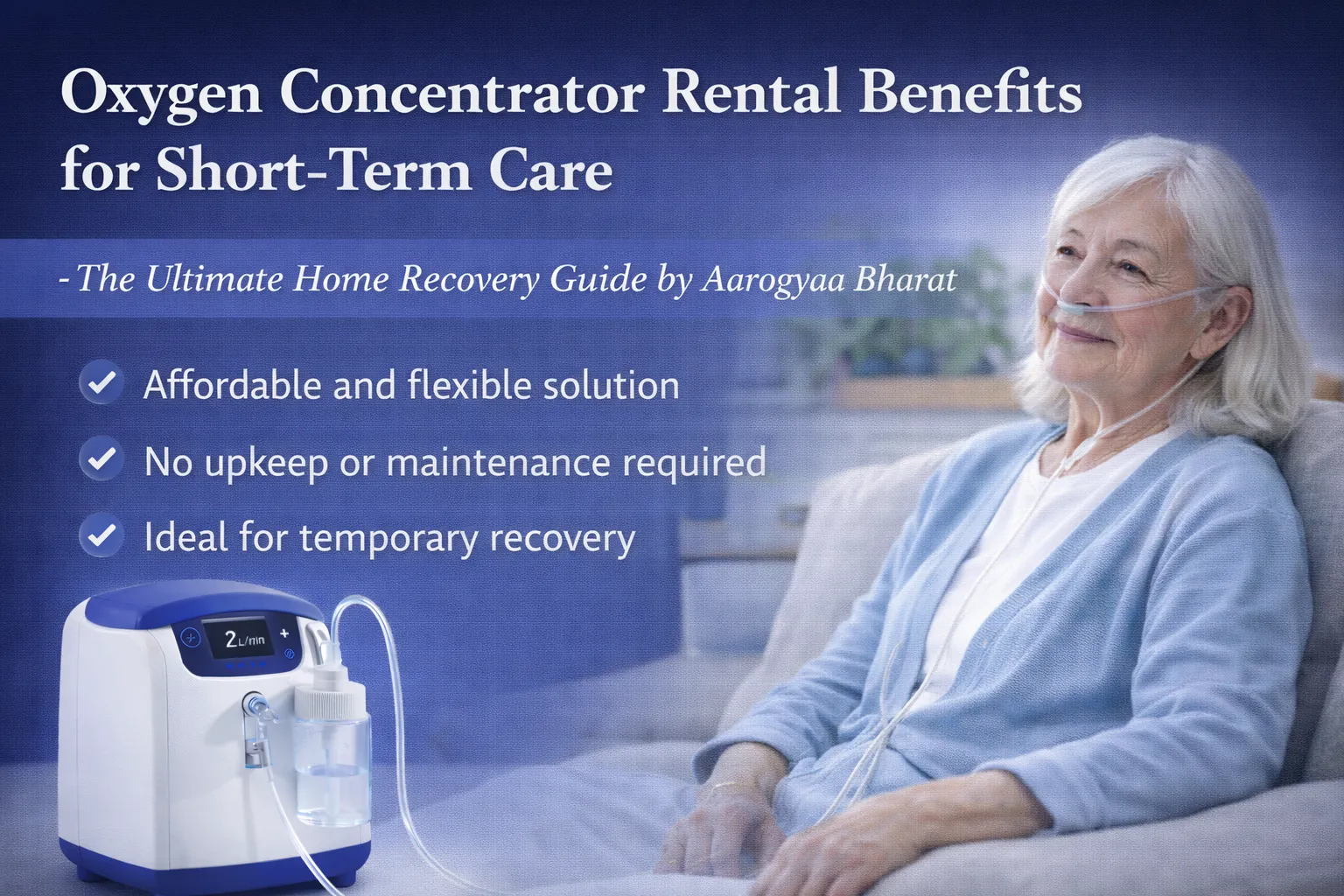
Buying an oxygen concentrator outright can be a heavy
financial burden, especially when the need is only temporary. High-quality
concentrators can cost tens of thousands of rupees, and once recovery is
complete, the machine often ends up unused, taking up storage space and slowly
losing value. This is where oxygen concentrator rental becomes an extremely
practical, economical, and stress-free solution for short-term care needs.
At Aarogyaa Bharat, we have supported thousands of families
who needed oxygen therapy for durations ranging from a few days to a few
months. In most of these cases, rental solutions proved far superior to
outright purchase, both financially and logistically. Families were able to
access hospital-grade equipment without long-term commitments, avoid heavy
upfront costs, and upgrade or return devices as the patient’s condition
changed.
This comprehensive guide explains in maximum depth why
renting an oxygen concentrator is often the smartest choice for short-term
care. It covers real-world use cases, financial benefits, flexibility
advantages, equipment reliability, maintenance convenience, safety assurance,
decision-making factors, and how to choose the right rental provider for
worry-free home oxygen therapy.
What Is Short-Term Oxygen Therapy and Why It Is
Increasing
Short-term oxygen therapy refers to supplemental oxygen
support required for a limited duration, typically ranging from a few days to
several weeks or months, depending on the underlying medical condition. Unlike
long-term oxygen therapy, which is prescribed for chronic lung diseases such as
advanced COPD or pulmonary fibrosis, short-term therapy is used during recovery
phases, acute illness, or temporary respiratory distress.
One of the most common reasons for short-term oxygen use in
recent years has been post-COVID recovery. Many patients recover from COVID-19
but continue to experience breathlessness, lung inflammation, and reduced
oxygen saturation for weeks after discharge. These patients do not need
lifelong oxygen therapy, but they require oxygen support long enough for their
lungs to heal and regain strength.
Another major driver is post-surgical recovery, especially
after chest surgeries, abdominal procedures, or anaesthesia-related
complications. Oxygen support during recovery helps prevent hypoxia, speeds up
healing, and reduces strain on the heart. Elderly patients undergoing surgery
are particularly vulnerable to temporary oxygen drops and benefit greatly from
short-term oxygen therapy at home.
Seasonal respiratory infections, pneumonia, asthma
flare-ups, bronchitis, and heart failure exacerbations also frequently require
temporary oxygen support. In all these situations, renting an oxygen
concentrator provides the perfect balance between medical necessity and
financial practicality.
Why Buying an Oxygen Concentrator Is Often Not Ideal for
Short-Term Needs
Purchasing an oxygen concentrator makes sense only when
oxygen therapy is expected to continue for many months or years. For short-term
needs, buying a machine often results in wasted money and unnecessary
logistical complications. High-quality concentrators are expensive, and budget
models may compromise safety, noise levels, or oxygen purity, making them
unsuitable for serious medical use.
Another major drawback of purchasing is depreciation. Once a
concentrator is bought and used, its resale value drops significantly. Medical
equipment resale markets are limited, and many buyers hesitate to purchase
second-hand respiratory devices due to hygiene concerns and uncertain usage
history. This means families rarely recover even a fraction of the original
cost.
Storage and maintenance also become long-term burdens.
Oxygen concentrators require proper ventilation, periodic servicing, and safe
storage conditions. For families living in small apartments or shared homes,
storing a bulky machine that is no longer in use becomes a daily inconvenience.
Technology also evolves rapidly. A concentrator bought today
may become outdated within a few years as newer, quieter, more efficient models
enter the market. Renting allows patients to benefit from modern equipment
without worrying about long-term obsolescence.
How Oxygen Concentrator Rental Works in Real Life
Oxygen concentrator rental is a simple and patient-friendly
process designed to eliminate stress during medical emergencies or recovery
phases. A rental provider delivers a medically certified concentrator directly
to the patient’s home, installs it properly, and provides a demonstration on
safe usage, maintenance, and emergency procedures.
Most rental plans are offered on daily, weekly, or monthly
billing cycles, allowing families to choose the duration that best matches the
expected recovery period. If the patient improves faster than expected, the
concentrator can be returned early without financial loss. If recovery takes
longer, the rental period can be extended seamlessly without needing to
purchase new equipment.
Rental providers also offer device replacement or upgrades
if the patient’s oxygen requirement changes. For example, if a patient
initially needs a 5 LPM concentrator but later requires a 10 LPM model, the
rental provider can swap the machine without forcing the family to make a new
purchase.
At Aarogyaa Bharat, our rental service includes installation
support, oxygen purity checks, tubing accessories, humidifiers, safety
guidance, and on-call technical assistance. This ensures that families receive
not just a machine, but a complete oxygen therapy solution optimized for
short-term care.
Financial Benefits of Renting an Oxygen Concentrator
One of the most compelling advantages of renting is the
massive reduction in upfront cost. Instead of paying ₹40,000-₹90,000 or more to
buy a concentrator, families can rent one for a fraction of that cost, often
starting from a few hundred rupees per day or a few thousand rupees per month.
This financial flexibility is especially important during
medical emergencies, when families are already facing hospital bills,
medication costs, diagnostic expenses, and caregiving logistics. Renting allows
them to allocate funds more efficiently without compromising patient safety.
Another hidden financial benefit is the elimination of
maintenance and repair costs. Rental providers are responsible for servicing,
filter replacement, internal cleaning, and technical repairs. If a rented
machine develops a fault, it is replaced immediately at no extra cost, ensuring
uninterrupted oxygen therapy.
Renting also protects families from financial loss due to
incorrect device selection. If the patient’s oxygen requirement changes or if a
different model is medically recommended, the rental agreement can be modified
without wasting a large investment on the wrong equipment.
Medical Reliability and Quality Assurance in Rental
Equipment
A common misconception is that rented medical equipment is
inferior to purchased equipment. In reality, reputable rental providers
maintain fleets of hospital-grade oxygen concentrators that undergo rigorous
inspection, servicing, and disinfection protocols after each use.
At Aarogyaa Bharat, every rental concentrator is
professionally cleaned, sanitized, tested for oxygen purity, and serviced
before being redeployed. Filters are replaced regularly, internal components
are inspected, and performance benchmarks are verified to ensure medical-grade
reliability.
Rental providers also tend to stock newer models because
frequent fleet upgrades improve service quality and customer satisfaction. This
means renters often receive more modern, quieter, and more efficient machines
than what they might purchase on their own within a limited budget.
For short-term care, where reliability and safety are more
important than ownership, professionally maintained rental equipment often
outperforms budget retail purchases that lack proper servicing support.
Flexibility Benefits During Recovery and Changing Medical
Needs
Short-term care is inherently unpredictable. Some patients
recover faster than expected, while others require extended therapy. Renting
offers unmatched flexibility in adapting to these changing medical realities
without financial or logistical stress.
If a patient’s oxygen flow requirement increases or
decreases, the rental provider can upgrade or downgrade the machine
accordingly. This ensures that the patient always receives the right level of
oxygen support without overspending on unnecessary equipment capacity.
Rental also allows families to switch between stationary and
portable concentrators as recovery progresses. A patient may start with a
high-capacity stationary unit during bed rest and later transition to a
portable concentrator for mobility and outdoor recovery walks.
This flexibility is particularly valuable for post-COVID
patients, post-surgical patients, and elderly individuals whose oxygen needs
evolve rapidly during recovery.
Convenience and Zero-Maintenance Advantage
One of the most underrated benefits of renting is the
elimination of maintenance responsibility. Oxygen concentrators require regular
filter cleaning, oxygen purity checks, component inspection, and periodic
servicing to ensure safe operation.
For families already overwhelmed with caregiving duties,
managing equipment maintenance can be stressful and error-prone. Rental
providers handle all technical responsibilities, ensuring that machines remain
in optimal working condition throughout the rental period.
If a rented concentrator malfunctions, it is replaced
immediately without arguments or additional charges. This zero-downtime
assurance is critical for patients who cannot afford even brief oxygen
interruptions.
Rental services also typically include emergency support
lines, technician visits, and remote troubleshooting, offering peace of mind
that purchased devices rarely provide.
Ideal Medical Scenarios for Oxygen Concentrator Rental
Post-COVID lung recovery is one of the most common rental
scenarios. Many patients require oxygen support for 2-8 weeks while their lungs
heal, making rental the most logical choice.
Post-surgical recovery, especially for elderly patients or
those undergoing chest and abdominal procedures, often requires short-term
oxygen therapy to prevent hypoxia and complications.
Pneumonia, bronchitis, and seasonal respiratory infections
frequently cause temporary oxygen drops that resolve within weeks, making
rental far more economical than purchase.
Short-term care for visiting elderly parents, travel-related
oxygen needs, or temporary home ICU setups also benefits greatly from rental
flexibility.
Rental vs Purchase Comparison Table
|
Factor |
Renting |
Buying |
|
Upfront Cost |
Very Low |
Very High |
|
Long-Term
Financial Risk |
None |
High |
|
Maintenance
Responsibility |
Rental
Provider |
User |
|
Flexibility |
Very High |
Very Low |
|
Equipment
Upgrade Option |
Easy |
Costly |
|
Storage After
Use |
Not Needed |
Required |
|
Best For
Short-Term Care |
Yes |
No |
How to Choose the Right Oxygen Concentrator Rental
Provider
- When selecting a rental provider, medical certification should be your first priority. Always choose a provider that offers clinically tested equipment and transparent servicing protocols.
- Delivery speed is another critical factor. In emergencies, oxygen therapy cannot wait for days. Reliable providers offer same-day or next-day delivery with professional installation support.
- Customer support quality matters enormously. Look for providers with 24/7 helplines, technician availability, and rapid replacement guarantees in case of device failure.
- Rental pricing transparency is also essential. Avoid providers who hide maintenance charges, installation fees, or security deposits in fine print.
- At Aarogyaa Bharat, we offer medically certified concentrators, same-day delivery, zero-maintenance plans, flexible rental terms, and dedicated respiratory care support teams for complete peace of mind.
Safety Guidelines for Rented Oxygen Concentrators
- Always place the concentrator in a well-ventilated area away from heat sources and direct sunlight to ensure proper airflow and oxygen purity.
- Never allow smoking, candles, incense, or open flames near the oxygen setup, as oxygen-enriched environments significantly increase fire risk.
- Use only the prescribed oxygen flow rate and never modify device settings without medical guidance.
- Keep tubing secured to prevent tripping hazards, especially for elderly patients.
- Ensure backup oxygen availability during power outages, such as a portable concentrator or oxygen cylinder.
Conclusion
For short-term respiratory care, renting an oxygen
concentrator is not just a cost-saving option it is the smartest, safest, and
most flexible solution. From post-COVID recovery and surgical rehabilitation to
temporary respiratory infections and elderly care, rental solutions provide
immediate access to life-saving oxygen support without long-term financial or
logistical burdens.
By choosing rental over purchase, families benefit from
lower upfront costs, zero maintenance responsibility, equipment flexibility,
professional servicing, and stress-free returns. Most importantly, they gain
peace of mind knowing that their loved one is receiving reliable,
hospital-grade oxygen therapy tailored precisely to their temporary medical
needs.
At Aarogyaa Bharat, we specialize in providing medically
certified oxygen concentrator rentals with same-day delivery, expert
installation, flexible plans, and 24/7 support. Our mission is to ensure that
every patient receives safe, affordable, and dignified respiratory care during
their recovery journey.
If you or your loved one need short-term oxygen therapy,
Aarogyaa Bharat is always here to help you breathe easier, recover faster, and
move forward with confidence.