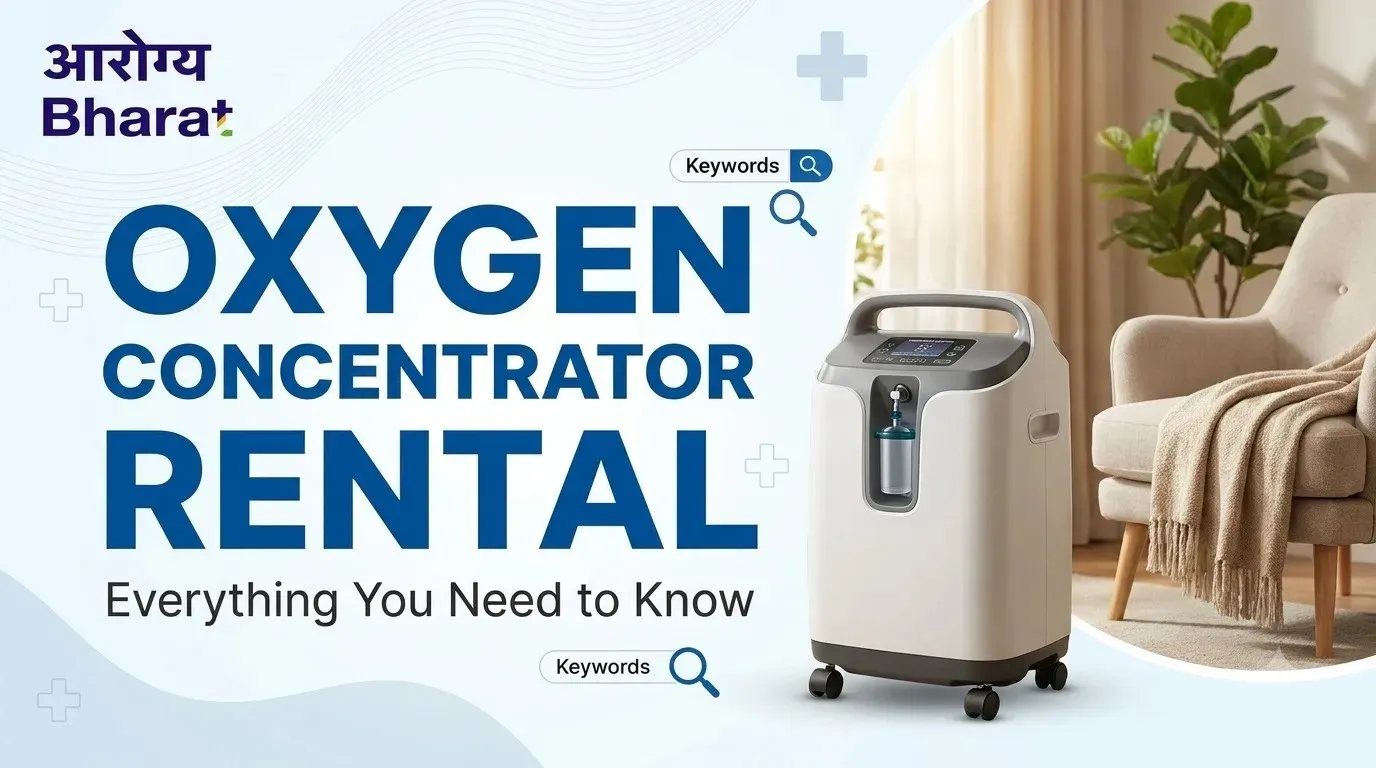
An oxygen concentrator rental can be a practical healthcare
solution for patients who need supplemental oxygen at home for a temporary or
uncertain period. Patients recovering from respiratory illness, surgery,
pneumonia, hospitalization, or other medical conditions may require oxygen
support without needing to purchase an expensive machine permanently. Renting
allows families to access suitable equipment while paying only for the period
during which it is required. Aarogyaa Bharat provides oxygen concentrator
rental services and publishes information about flexible rental periods,
delivery, setup, equipment options, and home oxygen support. However, choosing
an oxygen concentrator should never be based only on rental price. The
prescribed oxygen flow rate, machine capacity, duration of therapy, electricity
requirements, safety features, maintenance, accessories, and technical support
should all be considered before booking. This complete guide explains the
important factors families should understand before renting an oxygen
concentrator.
Medical Disclaimer: Oxygen therapy is a medical
treatment and should only be used according to the advice of a qualified
healthcare professional. Never change the prescribed oxygen flow rate or stop
oxygen therapy without medical guidance.
What Is an Oxygen Concentrator?
An oxygen concentrator is a medical device that takes air
from the surrounding environment, removes a large proportion of nitrogen, and
delivers concentrated oxygen to the patient through an oxygen outlet. Unlike a
traditional oxygen cylinder, a concentrator does not require regular refilling
with compressed oxygen while electricity is available. Oxygen concentrators are
commonly used in hospitals, clinics, rehabilitation environments, and home
healthcare settings. Depending on the model, concentrators may provide
different oxygen flow capacities, such as 3 LPM, 5 LPM, or 10 LPM. The correct
capacity depends on the patient's prescribed oxygen requirement and should be
determined by a healthcare professional. Aarogyaa Bharat provides information
on different oxygen concentrator capacities and their applications for home
oxygen therapy.
What Does Oxygen Concentrator Rental Mean?
Oxygen concentrator rental means using an oxygen
concentrator for a specific period while paying a rental fee rather than
purchasing the equipment. Rental periods may vary depending on the provider and
can include short-term, weekly, fortnightly, or monthly arrangements. This can
be particularly useful when a patient's oxygen requirement is expected to be
temporary or when the family is uncertain about how long therapy will continue.
Aarogyaa Bharat's rental information states that oxygen concentrators can be
rented for different durations and that rental services may include delivery,
installation, accessories, and basic usage guidance depending on the plan.
Families should always confirm the exact rental period, charges, included
accessories, maintenance responsibility, security deposit, and replacement
policy before accepting the equipment.
Why Rent an Oxygen Concentrator Instead of Buying?
Renting an oxygen concentrator can reduce the initial
financial burden when oxygen therapy is required for a limited period.
Purchasing a medical-grade concentrator can involve a significant upfront
expense, while rental allows families to pay according to their immediate
requirement. This can be useful for patients recovering after hospitalization,
surgery, pneumonia, or temporary respiratory problems where oxygen therapy may
eventually be reduced or discontinued under medical supervision. Rental can also
reduce the need for long-term storage and may provide access to maintenance or
replacement support depending on the rental agreement. Aarogyaa Bharat's
published rental guidance highlights affordability, flexible rental periods,
doorstep delivery, and service support as important benefits.
Who May Need an Oxygen Concentrator?
A person may require supplemental oxygen when a qualified
healthcare professional determines that their oxygen level or respiratory
condition requires additional oxygen support. Patients recovering from
respiratory illness, pneumonia, surgery, hospitalization, or certain chronic
conditions may sometimes be prescribed home oxygen therapy. Elderly patients
may also require oxygen support when recommended by their doctor. However,
symptoms such as breathlessness alone should not be used to determine whether
oxygen therapy is required. A healthcare professional may consider oxygen
saturation, symptoms, medical history, diagnosis, and other clinical
information before prescribing oxygen. The flow rate and duration can also vary
significantly between patients. Families should therefore avoid selecting a
machine based on another patient's experience and should first confirm the
required oxygen flow with the treating healthcare professional.
How Does an Oxygen Concentrator Work?
An oxygen concentrator uses a compressor and filtration
system to process room air and separate nitrogen from oxygen. The machine then
delivers concentrated oxygen through tubing connected to a nasal cannula or
another prescribed oxygen-delivery interface. The device continues this process
while connected to a suitable electrical supply. Because it obtains oxygen from
surrounding air, a concentrator does not need the same type of refilling
process as a compressed oxygen cylinder. However, it depends on electricity and
therefore requires appropriate power planning. Aarogyaa Bharat's educational
guide explains the operating principle, types, uses, benefits, and maintenance
considerations of oxygen concentrators. The machine should always be operated
according to the manufacturer's instructions and the patient's prescribed
oxygen settings.
Understanding Oxygen Flow Rate and LPM
Oxygen concentrator capacity is commonly described in litres
per minute, or LPM. Models may be available in capacities such as 3 LPM, 5 LPM,
and 10 LPM, but the highest-capacity machine is not automatically the best
choice. The correct concentrator depends on the oxygen flow rate prescribed for
the individual patient. A machine that does not meet the prescribed requirement
may not provide appropriate support, while selecting a higher-capacity device
without medical guidance is also unnecessary. Aarogyaa Bharat provides rental
information for different concentrator capacities and notes that machine
selection should be based on the patient's oxygen requirements. Before renting,
families should confirm the prescribed flow rate and whether oxygen is required
continuously, during sleep, during activity, or according to another medical
schedule.
Oxygen Concentrator Rental Cost in India
Oxygen concentrator rental prices vary according to machine
capacity, brand, rental duration, location, availability, included services,
and equipment condition. Aarogyaa Bharat's published 2026 price guide gives
indicative monthly rental ranges of approximately ₹2,500–₹12,000 depending on
machine type and capacity, while its Pune rental information lists specific
examples such as Longfian and Aupo concentrators at different rental durations.
These prices are indicative and can change according to availability, location,
rental duration, and service arrangements. Families should ask whether GST,
delivery, installation, accessories, maintenance, replacement, and security
deposits are included before comparing prices. The cheapest advertised rental
price may not necessarily represent the lowest total cost if important services
are charged separately.
|
Oxygen
Concentrator |
Indicative
Monthly Rental Range |
|
3 LPM |
₹2,500-₹4,500 |
|
5 LPM |
₹4,000-₹7,000 |
|
10 LPM |
₹7,000-₹12,000 |
|
Portable
Concentrator |
₹6,000-₹15,000 |
Indicative ranges based on Aarogyaa Bharat's published
2026 rental guide; actual prices may vary by model, city, duration, and
availability.
Factors That Affect Oxygen Concentrator Rental Cost
Several factors can influence the final rental price of an
oxygen concentrator. Machine capacity is one major factor because higher-output
equipment can have different technical specifications and operating
requirements. Rental duration also affects pricing, with longer rental periods
sometimes offering lower effective monthly rates compared with very short-term
rentals. Brand, model, oxygen concentration performance, noise level, power
consumption, portability, and included alarms can also affect the price.
Location and delivery distance may influence logistics and servicing costs.
Additional services such as installation, accessories, maintenance, replacement
support, and technical assistance may also be included or charged separately.
Aarogyaa Bharat's rental-cost guide identifies capacity, rental duration,
brand, city, and included services as important pricing factors.
Short-Term Oxygen Concentrator Rental
Short-term rental can be useful when a patient requires
oxygen support for a limited period during recovery. Patients discharged after
hospitalization or recovering from pneumonia, surgery, respiratory illness, or
another temporary condition may sometimes require oxygen for days or weeks.
Renting can allow families to obtain equipment without committing to permanent
ownership before the patient's long-term requirement is known. Aarogyaa
Bharat's short-term oxygen therapy information explains that concentrators may
be used for several hours per day, overnight support, or temporary full-day
therapy depending on the patient's prescription. The expected duration should
always be discussed with the treating healthcare professional, because the
length of oxygen therapy depends on the patient's medical condition and
recovery.
Long-Term Oxygen Concentrator Rental
Long-term rental may be considered when a patient needs
oxygen for several months but the family does not immediately want to purchase
a machine. It can provide flexibility while the patient's medical situation
develops and may allow families to evaluate the practicality of a particular
machine. However, if oxygen therapy is expected to continue for many months or
indefinitely, purchasing may eventually become more economical than continuing
to pay monthly rental charges. Aarogyaa Bharat's long-term oxygen therapy
guidance suggests that buying can provide better long-term value when oxygen
therapy continues for an extended period, while rental can be useful for
shorter or uncertain requirements. Families should compare the expected total
rental cost with the purchase price, servicing, warranty, and long-term
equipment requirements before making a decision.
Oxygen Concentrator Rental vs Buying
The choice between renting and buying depends primarily on
the expected duration of oxygen therapy, budget, equipment requirements, and
service considerations. Renting generally involves lower initial expenditure
and provides greater flexibility when the requirement is temporary or
uncertain. Buying requires a larger upfront investment but may become more
economical when the equipment will be used for a long period. Ownership also
means that the customer is responsible for maintenance and servicing after applicable
warranty coverage. Aarogyaa Bharat's published long-term oxygen therapy guide
compares rental and purchase options and indicates that longer-term use may
make purchasing more financially attractive. Families should calculate the
expected total rental expense rather than comparing only the first month's
rental price with the purchase price.
Oxygen Concentrator Rental vs Oxygen Cylinder
Oxygen concentrators and oxygen cylinders both provide
supplemental oxygen, but they operate differently. A concentrator continuously
processes surrounding air while connected to electricity, whereas a cylinder
stores a limited amount of compressed oxygen and requires refilling after the
supply is used. A concentrator can therefore be convenient for regular home
oxygen therapy, while a cylinder may be useful when electricity is unavailable
or as an emergency backup depending on medical advice. Aarogyaa Bharat's
comparison guide highlights the concentrator's convenience and continuous
supply with electricity while noting that cylinders do not depend on
electricity but require refilling. The most suitable option depends on the
patient's prescription, duration of use, mobility requirements, electricity
reliability, and emergency planning.
Stationary vs Portable Oxygen Concentrator
Stationary oxygen concentrators are generally designed for
regular home use and are usually connected to a mains electrical supply.
Portable oxygen concentrators are designed to provide greater mobility and may
operate using rechargeable batteries, depending on the model. Portable devices
can be useful for patients who need oxygen while moving around or travelling,
but not every portable concentrator provides the same flow mode or oxygen
capacity as a stationary model. Aarogyaa Bharat's portable oxygen concentrator
guide discusses portability, battery operation, flow settings, weight, and
travel considerations. Patients should never assume that a portable
concentrator is automatically suitable for their medical requirement. The
patient's prescribed oxygen delivery method should determine whether a
stationary or portable device is appropriate.
What Is Included in an Oxygen Concentrator Rental?
Rental packages vary between providers, but an oxygen
concentrator rental may include the main machine, oxygen tubing, nasal cannula,
humidifier bottle, delivery, setup assistance, basic usage guidance, and
technical support depending on the rental agreement. Aarogyaa Bharat's
published rental-cost information lists medical-grade concentrators, doorstep
delivery and installation, basic accessories, usage training, replacement
support, and optional power-backup solutions among its rental offerings. Families
should confirm exactly what is included before booking because accessories,
delivery, installation, maintenance, and replacement policies can vary
according to location and rental plan. Clear information about inclusions can
help prevent unexpected expenses during the rental period.
How to Choose the Right Oxygen Concentrator for Rental
Choosing the correct oxygen concentrator should begin with
the patient's prescribed oxygen requirement. Once the required flow rate is
confirmed, families can compare suitable machines based on capacity, oxygen
concentration, operating noise, size, power consumption, portability, alarms,
maintenance, and service support. The machine should also be appropriate for
the intended environment and duration of use. A reliable rental provider should
explain the machine's basic operation and provide appropriate setup assistance.
Families should also ask about equipment replacement if the machine develops a
technical problem. The right machine is not necessarily the largest or cheapest
option; it is the one that meets the patient's prescribed oxygen requirement
and can be used safely and reliably in the home environment.
Important Features to Check Before Renting
Before accepting a rental machine, families should check the
oxygen flow range, machine condition, oxygen concentration specifications,
noise level, power consumption, alarm functions, operating controls, and
included accessories. The machine should be clean, properly maintained, and
suitable for the intended duration of use. Users should also ask about
delivery, installation, technical support, maintenance, replacement procedures,
rental extension, and return conditions. For powered equipment, families should
understand the electrical requirements and plan for possible power
interruptions. A provider that clearly explains these factors can make the
rental experience easier for patients and caregivers. Comparing complete rental
packages rather than only monthly prices can help families make a more informed
decision.
Power Backup for an Oxygen Concentrator
A standard stationary oxygen concentrator requires
electricity to operate, making power backup an important consideration for
patients who depend on continuous oxygen therapy. Families should understand
the concentrator's electrical requirements and discuss appropriate backup
options with the equipment provider and healthcare professional. Depending on
the situation, an appropriate inverter, UPS, generator, or medically suitable
backup oxygen arrangement may be considered. Aarogyaa Bharat's electricity-consumption
guide highlights the importance of understanding machine wattage, power
requirements, and backup planning. Families should never assume that every
inverter or battery system can safely operate medical equipment. A reliable
emergency plan should be established before the patient depends on the
concentrator at home.
Oxygen Concentrator Safety at Home
Oxygen should be handled carefully because it supports
combustion and can increase fire risk. Smoking, candles, open flames, gas
flames, and other ignition sources should be kept away from oxygen equipment
and the area where oxygen is being administered. The concentrator should be
placed on a stable surface with sufficient airflow and should not have its
ventilation openings blocked. Equipment should also be protected from excessive
moisture, heat, and physical damage. Tubing should be arranged carefully to
reduce unnecessary trip hazards, particularly when the patient walks around the
home. Users should follow the manufacturer's safety instructions and the
healthcare professional's oxygen prescription. Oxygen equipment should never be
modified or repaired using unauthorized parts or methods.
Oxygen Safety Disclaimer: Never smoke or allow an
open flame near oxygen equipment. Oxygen can significantly increase the risk
and intensity of fire.
Oxygen Concentrator Maintenance
Regular maintenance helps keep an oxygen concentrator
operating reliably throughout the rental period. The exterior should be kept
clean and dry, ventilation openings should remain unobstructed, and accessories
should be cleaned or replaced according to manufacturer instructions. Filters,
tubing, nasal cannulas, and humidifier bottles may require specific maintenance
depending on the machine model. Users should report unusual sounds, alarms,
physical damage, reduced performance, or other problems to the rental provider
rather than attempting unauthorized repairs. Aarogyaa Bharat's oxygen
concentrator guidance also highlights maintenance as an important part of
reliable home oxygen equipment use. A rental provider should clearly explain
which maintenance responsibilities belong to the customer and which are handled
by the service team.
What to Do During a Power Cut
If the power goes out while a patient is using an oxygen
concentrator, the appropriate response depends on the patient's medical plan
and available backup equipment. Families should already have a power-backup or
emergency oxygen strategy in place if continuous oxygen is required. The
concentrator should not be connected to an unsuitable electrical source simply
to restore operation quickly. If the patient becomes seriously unwell or
develops worsening breathing difficulty, emergency medical care should be sought
immediately. A backup oxygen cylinder may sometimes be considered as part of an
emergency plan, but this should be discussed with the healthcare provider.
Aarogyaa Bharat's comparison and electricity guides both highlight electricity
dependence and the importance of backup planning for concentrator users.
Common Mistakes to Avoid During Oxygen Concentrator
Rental
Families can avoid many rental and safety problems by
planning before the machine arrives. Common mistakes include selecting a
concentrator without confirming the prescribed flow rate, choosing a machine
only because it has the lowest rental price, ignoring power-backup
requirements, failing to ask about maintenance, and not checking the return or
extension policy. Users may also place the machine too close to walls, block
ventilation openings, smoke near the equipment, change the oxygen flow without
medical advice, or ignore alarms. Another common mistake is assuming that a
portable concentrator is suitable for every patient simply because it is easier
to carry. Proper education, professional guidance, clear rental terms, and
careful equipment handling can significantly improve the overall home oxygen
experience.
Before renting, check these important points:
- Confirm
the doctor's prescribed oxygen flow rate.
- Check
whether the required LPM machine is available.
- Ask
about rental duration and extension charges.
- Confirm
delivery and installation charges.
- Ask
which accessories are included.
- Check
maintenance and replacement support.
- Understand
the electricity requirement.
- Arrange
suitable power backup if required.
- Ask
about security deposit and damage terms.
- Confirm
the return procedure.
- Keep
emergency medical instructions available.
- Follow
the manufacturer's safety instructions.
Oxygen Concentrator Rental for Elderly Patients
Elderly patients may benefit from home oxygen support when
it has been prescribed by a qualified healthcare professional, but caregivers
may need to provide additional assistance with operating and monitoring the
equipment. Vision problems, reduced hand strength, memory difficulties, or
limited mobility can make medical equipment harder to operate independently.
The concentrator should therefore be placed somewhere accessible to the
caregiver but away from water, heat, flames, and blocked ventilation. Oxygen
tubing should also be arranged carefully so that it does not create an
unnecessary trip hazard. Families managing elderly care may combine oxygen
therapy with other Elderly Care Products and home-care equipment
depending on the patient's needs. Any significant change in breathing, oxygen
requirement, or general health should be discussed with the treating healthcare
professional.
Additional Equipment for Home Oxygen Care
Patients receiving oxygen therapy at home may sometimes
require additional equipment depending on their overall medical and mobility
needs. Families caring for patients recovering after hospitalization may need
equipment that supports positioning, mobility, hygiene, and daily care.
Aarogyaa Bharat provides a range of healthcare solutions that can be used
alongside respiratory equipment, including Patient Care Equipment, Mobility
Aids, Hospital Bed for Home Care, and other home healthcare
products. The exact combination should depend on the patient's condition and
recommendations from healthcare professionals. Families should avoid purchasing
unnecessary equipment and should focus on products that address the patient's
actual care requirements.
Oxygen Concentrator Rental in Pune and Other Cities
Oxygen concentrator availability, rental pricing, delivery
times, and technical support can vary by city. Aarogyaa Bharat publishes
specific oxygen concentrator rental information for Pune and lists rental
options for machines such as Longfian and Aupo with different rental durations.
Its general rental information also states that selected medical equipment,
including oxygen concentrators, is available for rent. Customers outside Pune
should confirm current availability and delivery coverage before booking.
Location-specific Aarogyaa Bharat City Pages can also be useful for
finding healthcare products and services relevant to a particular city.
Why Choose Aarogyaa Bharat for Oxygen Concentrator
Rental?
Choosing a reliable rental provider is important because an
oxygen concentrator is medical equipment that may be required for essential
daily therapy. Families should look for properly maintained equipment,
transparent rental terms, appropriate accessories, delivery assistance, basic
usage guidance, and a clear process for technical support or replacement.
Aarogyaa Bharat offers oxygen concentrator rentals and other Medical
Equipment on Rent, with published information covering flexible rental
durations, delivery, setup, accessories, maintenance, and replacement support.
Aarogyaa Bharat also provides healthcare solutions for home care, respiratory
support, mobility, rehabilitation, and patient needs, allowing families to
explore different healthcare requirements through one provider.
How to Book an Oxygen Concentrator on Rent
The rental process can be straightforward when the patient's
requirements are known in advance. First, confirm the oxygen flow rate and
expected duration of therapy with the healthcare professional. Next, select a
rental provider and check the availability of the appropriate machine capacity.
Confirm the rental price, duration, delivery charges, accessories, maintenance,
replacement policy, and security deposit before placing the order. Once the
machine is delivered, the caregiver should understand the basic controls,
prescribed settings, safety instructions, and emergency contact process.
Aarogyaa Bharat's Pune rental guide describes a process involving selection of
the required equipment, choosing the rental duration, and receiving doorstep
delivery and setup assistance.
Oxygen Concentrator Rental and Home Healthcare Planning
Home oxygen therapy should be considered as part of the
patient's broader care plan rather than as an isolated equipment purchase.
Families may need to organize medication schedules, doctor appointments,
mobility support, safe sleeping arrangements, emergency contacts, power backup,
and appropriate medical equipment. Healthcare information tools such as the Healthcare
Calculator can be useful for general health-related calculations, while
patients requiring clinical evaluation should consult qualified professionals.
Families can also explore the Aarogyaa Bharat Hospital Page for relevant
healthcare information and services. The objective should be to create a safe
and practical home environment that supports the patient's medical needs while
reducing avoidable equipment and safety problems.
When Should You Rent or Buy an Oxygen Concentrator?
Renting is generally worth considering when oxygen therapy
is expected to be temporary, when the duration of treatment is uncertain, or
when the family wants to avoid a large initial purchase expense. Buying may
become more practical when a patient is expected to require oxygen for a long
period because repeated rental payments can eventually exceed the cost of
ownership. Aarogyaa Bharat's long-term oxygen therapy guidance indicates that
purchasing may offer better long-term value when therapy continues beyond
several months, while rental remains useful for short-term or uncertain
requirements. Families should compare total expected rental costs, purchase
price, warranty, maintenance, electricity, servicing, and future usage before
deciding. The medical requirement should remain the primary consideration.
Conclusion
Oxygen concentrator rental can be a convenient and flexible option for patients who require supplemental oxygen at home for a temporary or uncertain period. Renting can reduce upfront costs while providing access to suitable equipment, delivery, setup, and support depending on the rental plan. However, families should first confirm the prescribed oxygen flow rate and then compare machine capacity, rental duration, total cost, accessories, maintenance, power requirements, safety, and replacement support. With the right equipment and professional medical guidance, an oxygen concentrator can support home oxygen therapy while giving families greater flexibility during recovery and long-term care.
Medical Disclaimer
This article is intended for general educational and informational purposes only and should not be considered medical advice. Oxygen therapy should only be started, stopped, or adjusted according to the advice of a qualified healthcare professional. Do not change the prescribed oxygen flow rate because of personal preference or advice from an unqualified source. Oxygen supports combustion and can significantly increase fire risk, so smoking, flames, candles, and other ignition sources must be kept away from oxygen equipment. If a patient develops severe breathing difficulty, chest pain, confusion, bluish or grey lips or skin, loss of consciousness, or rapidly worsening symptoms, seek emergency medical attention immediately. Always follow the manufacturer's instructions and the healthcare professional's recommendations when using an oxygen concentrator.