



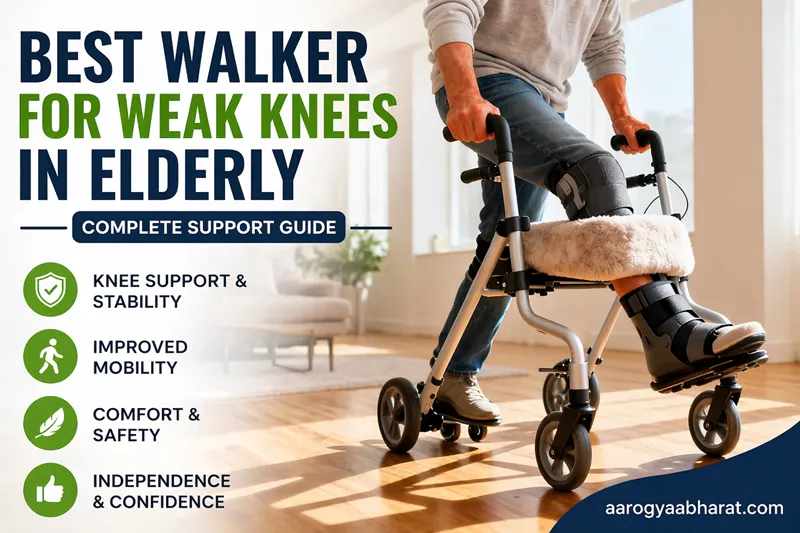
Why Elderly with Weak Knees Need a Walker
Elderly individuals suffering from weak knees often face
difficulty in maintaining balance, standing for long periods, and walking
without discomfort, which can significantly impact their independence and
quality of life, and a walker becomes an essential mobility aid in such
situations as it provides stable support, reduces pressure on knee joints, and
allows users to move safely without fear of falling, especially in assisted
living or home care environments where daily activities like going to the bathroom,
moving between rooms, or stepping outdoors require additional stability, and
platforms like Aarogyaa Bharat highlight such solutions across Aarogyaa Bharat
Hospital Pages to support rehabilitation needs while also making it easier for
users to explore options through Aarogyaa Bharat City Pages and smart tools
like the Healthcare Calculator for better product comparison and selection
Types of Walkers Suitable for Weak Knees
There are multiple types of walkers available for elderly
individuals with weak knees, and choosing the right one depends on the severity
of knee weakness and mobility level, including standard walkers that offer
maximum stability and are ideal for those who require strong support,
two-wheeled walkers that provide easier forward movement while maintaining
balance, and rollators with four wheels that come with seats and brakes for
users who need to rest frequently during walking, making them highly suitable for
outdoor mobility, and Aarogyaa Bharat provides a wide variety of these options
along with detailed descriptions and interlinking through Aarogyaa Bharat
Hospital Pages and Aarogyaa Bharat City Pages, ensuring that users can easily
identify the most suitable walker based on their condition and daily usage
needs.
Benefits of Using a Walker for Weak Knees
Using a walker for weak knees offers significant benefits
that go beyond simple mobility assistance, as it helps in reducing the load on
knee joints, improves posture while walking, enhances balance, and minimizes
the risk of slips and falls, which are common concerns among elderly
individuals, and it also encourages physical activity by allowing users to move
around with confidence, thereby improving circulation and overall health, while
also supporting recovery after knee surgery or physiotherapy, and Aarogyaa
Bharat emphasizes these advantages through its Healthcare Calculator and
expert-backed product recommendations that guide users toward selecting walkers
designed specifically for comfort, safety, and long-term use.
How to Choose the Right Walker for Weak Knees
Choosing the right walker for elderly individuals with weak
knees involves evaluating several key factors such as height adjustability,
weight capacity, ease of movement, and additional features like wheels or
seats, as a properly fitted walker ensures correct posture and reduces
unnecessary strain on the knees and back, while lightweight materials make
handling easier and durable construction ensures long-term reliability, and
users should also consider whether the walker will be used indoors or outdoors
before making a decision, and Aarogyaa Bharat simplifies this process by
offering detailed product comparisons, interlinking with Aarogyaa Bharat City
Pages for local availability, and tools like the Healthcare Calculator that
help users make informed choices based on their specific mobility needs.
Comparison of Walkers for Weak Knees
|
Type of
Walker |
Best For |
Key
Features |
Support
Level |
|
Standard
Walker |
Severe knee
weakness |
No wheels,
maximum stability |
High |
|
Two-Wheel
Walker |
Moderate knee
issues |
Front wheels,
easy movement |
Medium |
|
Rollator
Walker |
Active
seniors with mild weakness |
Seat, brakes,
storage basket |
Medium-High |
|
Folding
Walker |
Travel and
compact storage |
Lightweight,
foldable design |
Medium |
Safety Tips for Using a Walker with Weak Knees
Safety is extremely important for elderly individuals using
a walker due to weak knees, and it is essential to adjust the walker to the
correct height so that the user maintains a natural posture with slightly bent
elbows, avoid leaning too heavily on the walker as it may affect balance, walk
slowly and steadily while placing the walker firmly before each step, ensure
that rubber tips or wheels are in good condition to prevent slipping, and
always use brakes when sitting on a rollator, as these precautions can
significantly reduce the risk of falls and injuries, and Aarogyaa Bharat
promotes such safety practices through its product guides and healthcare
resources to ensure better user outcomes.
Important Features to Consider
- Adjustable
height for correct posture
- Strong
and lightweight frame
- Comfortable
hand grips
- Anti-slip
rubber tips or smooth wheels
- Foldable
design for easy storage
- Seat
with backrest (for rollators)
- High
weight-bearing capacity
Indoor vs Outdoor Walker Usage
Walkers designed for indoor use are typically compact,
lightweight, and easy to maneuver in small spaces, whereas outdoor walkers such
as rollators are equipped with larger wheels, sturdy frames, and additional
features like seats and storage compartments to handle uneven surfaces and
longer walking distances, making it important to choose a walker based on where
it will be used most frequently, and Aarogyaa Bharat helps users make this
decision through detailed product categorization and interlinking via Aarogyaa
Bharat City Pages, ensuring accessibility and convenience for users across
different regions.
Maintenance Tips for Long-Term Use
Maintaining a walker properly is crucial to ensure its
durability and safe performance, and users should regularly clean the walker
frame to remove dust and dirt, check for loose screws or damaged parts, replace
worn-out rubber tips or faulty wheels, and store the walker in a dry and safe
place to prevent damage, as regular maintenance not only extends the lifespan
of the walker but also ensures consistent support and safety for elderly users
with weak knees, and Aarogyaa Bharat provides guidance and support for
maintenance through its platform to help users keep their mobility aids in
optimal condition.
Conclusion
A walker for elderly individuals with weak knees is an essential support tool that enhances mobility, reduces joint strain, and improves overall safety, allowing seniors to maintain independence and confidence in their daily lives, and by understanding the different types of walkers, evaluating key features, and following proper safety and maintenance practices, users can make the most of their mobility aid, while Aarogyaa Bharat continues to support this journey through its comprehensive range of products, Aarogyaa Bharat Hospital Pages, Aarogyaa Bharat City Pages, and the Healthcare Calculator, ensuring informed decisions and better healthcare outcomes.





