Many people using oxygen therapy for the first time are unsure about how refilling works, where to get it done, how long it takes, and what safety precautions they should follow during the process. Lack of awareness can lead to last-minute emergencies, running out of oxygen unexpectedly, or accepting unsafe refilled cylinders from unverified suppliers. This can create unnecessary stress and even serious health risks for patients who need uninterrupted oxygen support.
At Aarogyaa Bharat, we regularly guide families across India who are confused about the oxygen cylinder refill process and want a clear, step-by-step explanation. This detailed guide explains how oxygen cylinders are refilled, how to check if your cylinder needs a refill, what safety checks are performed, and how to ensure you always have a reliable oxygen backup at home.
What Is an Oxygen Cylinder Refill and How Does It Work?
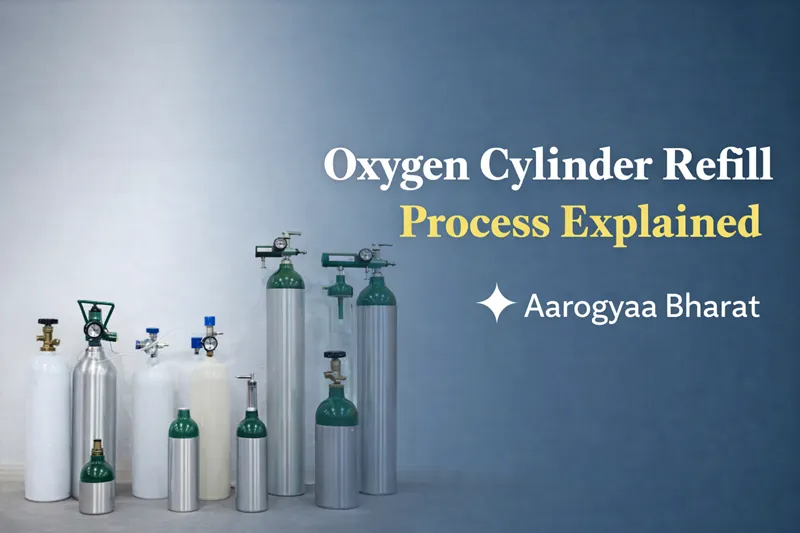
An oxygen cylinder refill is the process of replenishing medical-grade oxygen inside an empty or partially used cylinder. Oxygen refilling is not a simple air-filling operation it is a controlled medical procedure carried out at certified oxygen filling plants that follow strict safety and quality standards. These plants use industrial compressors and purification systems to fill cylinders with high-purity medical oxygen suitable for patient use.
The refill process begins when an empty cylinder is collected from a home, hospital, or medical supplier and transported to an authorized oxygen filling station. At the plant, technicians first inspect the cylinder for physical damage, rust, valve defects, and expiration dates. Cylinders that fail safety inspections are rejected and not refilled to prevent accidents or leaks during usage.
Once a cylinder passes inspection, it is connected to a high-pressure oxygen filling system. The oxygen is compressed and transferred into the cylinder through the valve at a carefully controlled pressure level. The cylinder is gradually filled to its rated capacity, ensuring that internal pressure stays within safe limits to prevent overfilling or structural damage.
After filling, the cylinder undergoes pressure stabilization and leak testing. Technicians check the valve, regulator connection, and body of the cylinder for any signs of leakage. Only cylinders that pass these final safety checks are approved for medical use and dispatched back to suppliers or directly to patients.
How to Know When Your Oxygen Cylinder Needs a Refill
One of the most common mistakes families make is waiting until the oxygen cylinder is completely empty before arranging a refill. This can lead to panic situations where the patient suddenly runs out of oxygen while waiting for a delivery. Understanding how to monitor oxygen levels helps prevent these emergencies and ensures uninterrupted therapy.
Most oxygen cylinders come with a pressure gauge attached to the regulator. This gauge shows the remaining pressure inside the cylinder, usually measured in bars or PSI. When the pressure drops below a safe operating level typically around 200–300 PSI or as advised by your supplier it is time to arrange a refill. Waiting until the gauge reaches zero is not recommended because oxygen flow may become unstable at very low pressures.
Another way to estimate refill timing is by tracking daily oxygen usage. If a patient uses oxygen at a specific flow rate for a fixed number of hours each day, caregivers can calculate how long a full cylinder usually lasts. Maintaining a simple usage log helps predict refill needs and avoid last-minute emergencies.
At Aarogyaa Bharat, we advise families to schedule refills when the cylinder reaches 25–30% capacity. This ensures you always have a buffer period in case of delivery delays, power outages, or unexpected increases in oxygen usage.
Step-by-Step Oxygen Cylinder Refill Process
Understanding the refill process step by step can help families feel more confident and informed when arranging oxygen refills for home use.
Step 1: Cylinder Collection or Drop-Off
The refill process begins when an empty or partially used cylinder is either picked up from the patient’s home by a medical supplier or dropped off at an authorized refill center. Most professional suppliers offer doorstep pickup and delivery services for convenience.
Step 2: Initial Inspection and Safety Check
At the oxygen filling plant, trained technicians inspect the cylinder for dents, rust, valve damage, and hydrostatic test validity. Cylinders that fail these checks are rejected to ensure patient safety.
Step 3: Valve Cleaning and Purging
Before refilling, the cylinder valve is cleaned and purged to remove any moisture, dust, or residual gases. This prevents contamination of medical oxygen and ensures high purity levels.
Step 4: Oxygen Filling Under Controlled Pressure
The cylinder is connected to a high-pressure oxygen compressor system. Medical-grade oxygen is gradually filled into the cylinder while technicians monitor pressure levels to prevent overfilling.
Step 5: Leak Testing and Pressure Stabilization
After filling, the cylinder is allowed to stabilize. Technicians check for leaks using soap-water solutions or electronic sensors and ensure the valve is properly sealed.
Step 6: Final Labeling and Dispatch
Once the cylinder passes all safety checks, it is labeled with refill date, oxygen purity details, and safety markings. It is then dispatched back to the supplier or delivered directly to the patient.
How Long Does the Oxygen Cylinder Refill Process Take?
The time required for refilling an oxygen cylinder depends on several factors, including supplier availability, location, cylinder size, and demand levels. In most cities, refilling a standard medical oxygen cylinder typically takes anywhere between a few hours to 24 hours.
For urgent medical needs, many suppliers offer express refill services where cylinders can be refilled and delivered within a few hours. However, express services may come at a higher cost compared to standard refill schedules.
Delivery time also plays a major role in overall refill turnaround. In metro cities, same-day or next-day delivery is common, while in rural or semi-urban areas, it may take one to two days depending on transportation logistics.
At Aarogyaa Bharat, we work with verified oxygen suppliers across India to ensure timely refills and emergency oxygen support for home-care patients whenever possible.
Cost of Oxygen Cylinder Refill in India
The cost of oxygen cylinder refills in India varies based on location, cylinder size, supplier policies, and transportation charges. On average, refilling a small or medium medical oxygen cylinder may cost anywhere between ₹300 and ₹1,200 per refill.
Larger industrial-style cylinders used for long-term therapy usually cost more to refill due to higher oxygen volume and transportation weight. Emergency or express refill services may carry additional charges, especially during peak demand periods such as flu seasons or medical emergencies.
It is important to compare refill prices from multiple authorized suppliers to ensure you are not being overcharged. However, choosing the cheapest supplier is not always the safest option. Always prioritize certified suppliers who follow proper safety and quality standards.
At Aarogyaa Bharat, we help families connect with reliable oxygen refill partners who offer transparent pricing, certified oxygen quality, and safe delivery practices.
Safety Precautions During the Refill Process
Safety should always be the top priority when refilling oxygen cylinders. Never attempt to refill an oxygen cylinder yourself using unauthorized equipment or compressed air sources. This is extremely dangerous and can lead to serious accidents or contamination of medical oxygen.
Always use certified oxygen suppliers and authorized filling plants that follow government-approved safety standards. Make sure your cylinder has a valid hydrostatic test date before sending it for refill. Cylinders that are past their testing date should not be refilled.
Before reconnecting a refilled cylinder at home, inspect the valve, regulator, and body for any signs of damage or leaks. Perform a quick soap-water test around the valve area to check for gas leaks before starting oxygen therapy.
At Aarogyaa Bharat, we strongly recommend keeping a backup oxygen cylinder or concentrator available at home to ensure uninterrupted oxygen supply during refill delays or emergencies.
Oxygen Cylinder Refill vs Oxygen Concentrator: Which Is More Convenient?
For patients who require long-term oxygen therapy, relying solely on cylinder refills can become expensive and logistically challenging. Frequent refills, delivery scheduling, and rising refill costs often create stress for families and caregivers.
Oxygen concentrators, on the other hand, generate oxygen from room air and eliminate the need for refills. While concentrators have a higher upfront cost, they are far more economical in the long run and provide continuous oxygen supply without refill dependency.
Many doctors recommend a hybrid approach where patients use an oxygen concentrator for daily therapy and keep a small oxygen cylinder as a backup during power outages or machine failures. This combination offers maximum safety, convenience, and cost efficiency.
At Aarogyaa Bharat, we help families choose the right combination of oxygen solutions based on medical needs, budget constraints, and home setup conditions.
Conclusion: Plan Ahead for Stress-Free Oxygen Refills
Understanding the oxygen cylinder refill process empowers families and caregivers to manage home oxygen therapy safely and confidently. From monitoring pressure levels and scheduling timely refills to choosing certified suppliers and following safety precautions, every step plays a critical role in ensuring uninterrupted oxygen support.
Running out of oxygen unexpectedly can be frightening and medically dangerous, especially for patients who rely on continuous therapy. By planning refills in advance and maintaining a backup oxygen source, families can avoid panic situations and focus on patient comfort and recovery.
At Aarogyaa Bharat, we are committed to providing not just high-quality oxygen cylinders and concentrators, but also complete guidance for safe and reliable oxygen management at home. Whether you need oxygen cylinder refills, concentrators, accessories, or expert advice, our team is always here to support your respiratory health journey.