Why Choosing the Right Wheelchair Matters
A wheelchair is not just a mobility aid it directly affects comfort, safety, independence, and recovery speed. The wrong wheelchair can cause:
Discomfort or back pain
Difficulty moving indoors
Increased dependence on caregivers
Risk of falls or injuries
Choosing the right type makes daily life easier for both the user and the caregiver.
Key Factors to Consider Before Choosing a Wheelchair
Before exploring types, ask these simple questions:
Is the wheelchair needed temporarily or long-term?
Can the user move the wheelchair on their own?
Will it be used mostly indoors or outdoors?
Does the user need toilet assistance?
How much space is available at home?
Once you answer these, choosing becomes much easier.
1. Standard Manual Wheelchair
What It Is
A basic wheelchair operated either by the user or a caregiver using push handles.
Best For
Short-term home use
Users with some upper body strength
Indoor movement
Pros
Affordable
Easy to use
Widely available
Cons
Can be heavy
Not ideal for long hours
Ideal choice for: Post-surgery recovery or temporary mobility support.
2. Foldable Wheelchair
What It Is
A wheelchair that folds easily for storage and transport.
Best For
Homes with limited space
Families who need portability
Occasional outdoor use
Pros
Easy to store
Lightweight compared to standard models
Travel-friendly
Cons
Slightly less sturdy than fixed frames
Ideal choice for: Home use with occasional travel or hospital visits.
3. Lightweight Wheelchair
What It Is
Designed using lighter materials like aluminum to reduce overall weight.
Best For
Elderly users
Frequent movement indoors
Caregivers who lift or push the chair often
Pros
Easier to move
Less strain on caregivers
Better comfort
Cons
Slightly higher cost
Ideal choice for: Seniors or patients needing daily indoor mobility.
4. Transit Wheelchair
What It Is
A compact wheelchair designed to be pushed by a caregiver (small rear wheels).
Best For
Short distances
Elderly users with very limited strength
Hospital visits and indoor movement
Pros
Very compact
Easy to manoeuvre
Lightweight
Cons
User cannot self-propel
Ideal choice for: Elderly parents who are always assisted.
5. Reclining Wheelchair
What It Is
Allows the backrest to recline, supporting users who need posture adjustment.
Best For
Patients who must lie back
Long sitting hours
Spinal or neurological conditions
Pros
High comfort
Reduces pressure points
Supports medical needs
Cons
Bulky
Higher cost
Ideal choice for: Long-term care or serious medical conditions.
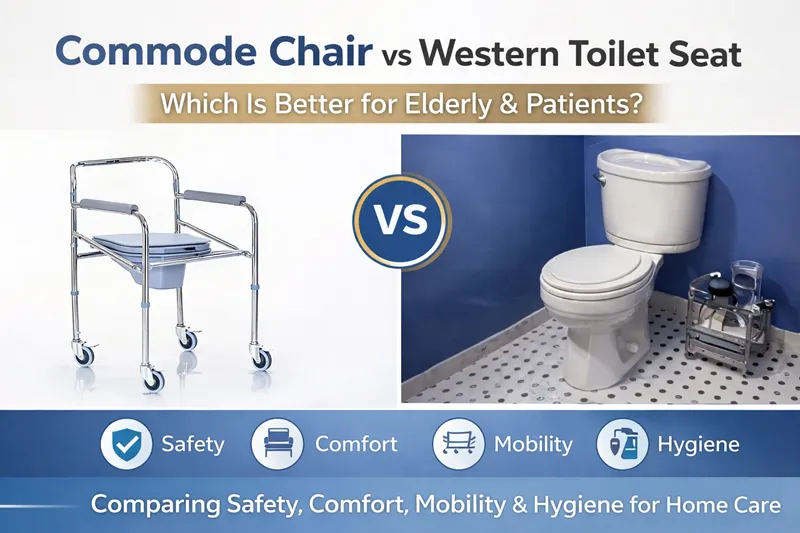
6. Commode Wheelchair
What It Is
A wheelchair with an inbuilt toilet seat for hygiene needs.
Best For
Users who cannot walk to the bathroom
Elderly or bedridden patients
Pros
Reduces bathroom trips
Improves hygiene
Saves caregiver effort
Cons
Slightly heavier
Requires regular cleaning
Ideal choice for: Elderly care and post-surgery recovery at home.
7. Heavy-Duty Wheelchair
What It Is
Designed for higher weight capacity and extra durability.
Best For
Overweight users
Long daily usage
Pros
Strong frame
Better stability
Cons
Heavy
Less portable
Ideal choice for: Users needing additional support and durability.
8. Pediatric Wheelchair
What It Is
Wheelchairs specially designed for children.
Best For
Children with mobility challenges
Pros
Proper sizing
Child-safe design
Cons
Limited lifespan as child grows
Rent or Buy: Which Is Better for Home Use?
Rent if the need is temporary (post-surgery, fracture, illness)
Buy if the wheelchair is needed long-term or daily
Renting is often more economical and stress-free for short-term needs.
Common Mistakes to Avoid
Buying without measuring door width
Choosing heavy models for elderly users
Ignoring caregiver convenience
Overpaying for features not required
Final Thoughts
Choosing the right wheelchair for home use isn’t about picking the most expensive model it’s about selecting what fits the user’s needs, comfort, and lifestyle.
When chosen correctly, a wheelchair can restore independence, speed up recovery, and reduce caregiver stress.
Frequently Asked Questions (FAQs)
Which wheelchair is best for home use?
Foldable or lightweight wheelchairs are usually best for home use due to ease of movement and storage.
Is a wheelchair with commode better for elderly users?
Yes. Commode wheelchairs are very helpful for seniors with limited mobility or bathroom access issues.
Should I rent or buy a wheelchair for recovery?
Renting is ideal for short-term recovery. Buying is better for long-term or permanent use.
Are lightweight wheelchairs safe?
Yes, they are safe, durable, and easier to handle especially for elderly users.
Can a wheelchair fit through normal home doors?
Most standard and foldable wheelchairs fit through typical doorways, but measuring door width is recommended.
Do wheelchairs require maintenance?
Basic cleaning and occasional checks are enough. Rental services usually handle maintenance.
Can I change wheelchair type later?
If renting, yes. Buying requires replacement if needs change.