Understanding the Role of Walkers in Paraplegia
Physiotherapy
Paraplegia rehabilitation focuses on restoring functional
ability through structured physiotherapy, neurological adaptation, and gradual
mobility training. After spinal cord injury, the body undergoes significant
physical and psychological changes, including reduced muscle control, impaired
balance, and decreased circulation. Walkers designed for paraplegia are not
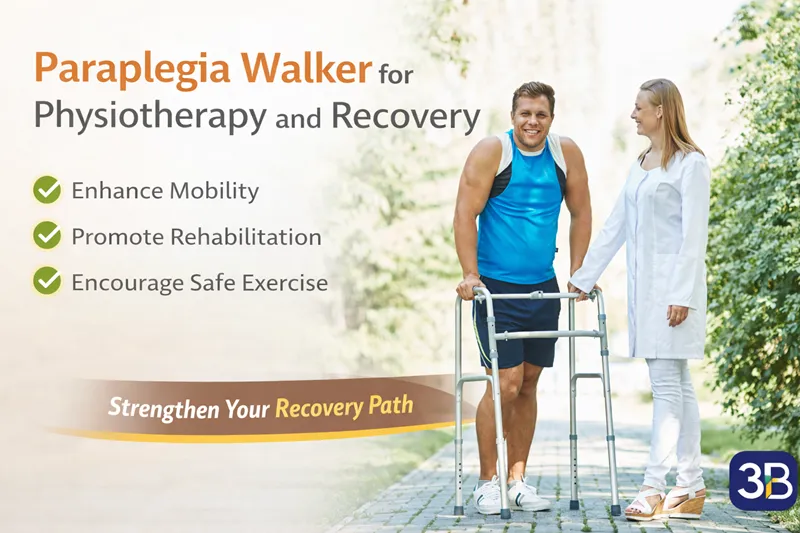
simply mobility aids; they act as therapeutic frameworks that allow patients to
practice standing and stepping safely while redistributing body weight through
the upper limbs. During physiotherapy sessions, walkers help patients maintain
alignment of the spine, shoulders, and hips, preventing compensatory movements
that could lead to long-term discomfort. Aarogyaa Bharat emphasizes that
walker-based rehabilitation is about rebuilding movement patterns gradually,
allowing the nervous system to adapt while strengthening remaining functional
muscles. When used consistently under physiotherapist guidance, walkers become
essential tools for improving endurance, posture, and overall recovery
outcomes.
How Paraplegia Walkers Support Neurological Recovery
Neurological recovery relies on repetitive movement and
sensory feedback, and walker-assisted physiotherapy plays a vital role in
activating these processes. Even when lower-limb movement is limited, supported
standing stimulates circulation and engages core muscles, which helps maintain
bone density and cardiovascular health. Walkers allow patients to shift weight
safely, creating sensory input that encourages neural pathways to remain
active. Over time, repetitive practice can improve coordination and enhance
functional mobility, even if full walking independence is not achieved.
Aarogyaa Bharat highlights that the psychological impact of being upright again
often motivates patients to participate more actively in therapy, which
accelerates recovery progress.
Types of Walkers Used in Physiotherapy for Paraplegia
Different walker designs address different rehabilitation
needs depending on injury severity and therapy goals. Standard walkers provide
stable support during early recovery when patients focus primarily on standing
tolerance. Reciprocal walkers allow alternating movement patterns that help
simulate natural gait cycles during advanced physiotherapy. Gait trainers offer
additional harness or pelvic stabilization for individuals requiring maximum
support during stepping exercises. Posterior walkers encourage upright posture
by positioning the frame behind the patient, promoting natural alignment during
advanced recovery stages. Aarogyaa Bharat recommends evaluating the patient’s
trunk control, upper-body strength, and therapy objectives before selecting a
walker, as the right device significantly influences rehabilitation success.
Table: Walker Types for Physiotherapy and Recovery
|
Walker
Type |
Rehabilitation
Stage |
Support
Level |
Key
Physiotherapy Benefit |
|
Standard
Walker |
Early
recovery |
Moderate |
Stable
standing practice |
|
Reciprocal
Walker |
Mid-stage
rehab |
High |
Controlled
stepping |
|
Intensive
therapy |
Very High |
Full-body
support |
|
|
Posterior
Walker |
Advanced
recovery |
Moderate |
Posture
correction |
Physiotherapy Techniques Using Paraplegia Walkers
Physiotherapists often incorporate walkers into structured
exercise programs that focus on weight shifting, balance control, and assisted
stepping. During early sessions, patients may practice static standing with
therapist support to build endurance and reduce fear of falling. As strength
improves, exercises progress to controlled stepping and directional movement,
helping patients develop coordination and spatial awareness. Walker-assisted
exercises also encourage engagement of core muscles, which stabilizes the spine
and reduces the risk of secondary complications such as scoliosis or muscle
imbalance. Aarogyaa Bharat emphasizes that consistent physiotherapy combined
with proper walker usage helps create a sustainable recovery pathway tailored
to each patient’s abilities.
Early Recovery Phase: Standing Training and Circulation
Improvement
In the initial stages of rehabilitation, the primary goal is
often to help patients tolerate upright positioning safely. Walkers provide a
secure framework that allows gradual weight-bearing, which stimulates
circulation and prevents complications such as pressure ulcers or deep vein
thrombosis. Standing practice also helps maintain joint flexibility and reduces
stiffness caused by prolonged sitting. Physiotherapists typically begin with
short sessions and gradually increase duration as the patient’s endurance
improves. Aarogyaa Bharat highlights that patience and consistency are
essential during this phase, as small progress milestones contribute
significantly to long-term recovery.
Intermediate Recovery Phase: Gait Training and Functional
Mobility
As patients gain strength and confidence, physiotherapy
shifts toward functional mobility exercises that simulate real-life movement.
Reciprocal walkers are particularly effective during this stage because they
encourage alternating arm and leg coordination, mimicking natural walking
patterns. Therapists may introduce exercises such as turning, stepping over
small obstacles, or navigating indoor spaces to build confidence. Aarogyaa
Bharat stresses that intermediate recovery requires careful monitoring to prevent
fatigue, ensuring that rehabilitation remains safe and effective.
Table: Physiotherapy Exercises with Paraplegia Walkers
|
Exercise
Type |
Purpose |
Safety Tip |
Recovery
Benefit |
|
Static
Standing |
Improve
endurance |
Therapist
supervision |
Circulation
boost |
|
Weight
Shifting |
Balance
training |
Slow
movements |
Core
activation |
|
Assisted
Stepping |
Gait practice |
Maintain
posture |
Coordination
improvement |
|
Indoor
Navigation |
Functional
mobility |
Clear
obstacles |
Independence
building |
Advanced Recovery Phase: Independence and Real-World
Mobility
During advanced rehabilitation, walkers help patients
transition from therapy environments to real-world mobility scenarios.
Practicing on smooth outdoor surfaces introduces environmental challenges while
maintaining safety. Posterior walkers may be introduced to encourage upright
posture and reduce forward leaning. Aarogyaa Bharat recommends gradual
progression and continuous physiotherapist guidance to ensure that mobility
improvements remain sustainable.
Psychological and Emotional Benefits of Walker-Assisted
Recovery
Recovery from paraplegia involves significant emotional
challenges, and walker-based mobility can play a powerful role in rebuilding
confidence. Standing and moving again often improves mood and reduces anxiety
associated with dependency. Achieving small milestones, such as standing longer
or taking assisted steps, provides motivation that encourages continued
participation in therapy. Aarogyaa Bharat believes that emotional support and
encouragement are essential components of rehabilitation success.
Caregiver Role in Walker-Based Physiotherapy
Caregivers play an important role in ensuring safe walker
usage at home. Supporting patients from the side rather than pulling from
behind helps maintain natural movement patterns. Clear communication and
patience help reduce anxiety during exercises, while regular monitoring ensures
that fatigue or discomfort is addressed promptly. Aarogyaa Bharat encourages
caregivers to learn proper assistance techniques from physiotherapists to
prevent injury and maintain long-term sustainability of care.
Safety Guidelines and Common Mistakes to Avoid
Incorrect walker height, excessive forward leaning, and
rushed movements are common mistakes that can increase fall risk. Patients
should focus on slow, controlled movements while maintaining upright posture.
Regular inspection of walker components such as rubber tips and locking
mechanisms ensures stability during rehabilitation. Aarogyaa Bharat advises
creating a clutter-free home environment to reduce obstacles and improve safety
during mobility training.
Maintenance and Long-Term Durability of Rehabilitation
Walkers
Rehabilitation walkers must withstand daily use, making
regular maintenance essential. Cleaning frames, tightening screws, and checking
adjustable parts help prevent mechanical issues. Lightweight aluminium designs
resist corrosion and provide long-term durability, making them suitable for
home-based physiotherapy programs. Aarogyaa Bharat recommends periodic
professional inspections to ensure continued safety and performance.
Conclusion
Paraplegia walkers are powerful rehabilitation tools that
support physiotherapy, improve circulation, and encourage functional recovery
after spinal cord injury or neurological impairment. By providing structured
stability and enabling controlled movement, these walkers help patients rebuild
strength, confidence, and independence over time. Aarogyaa Bharat encourages
families and caregivers to approach walker selection as part of a comprehensive
rehabilitation strategy that integrates physiotherapy, emotional support, and
adaptive mobility solutions to enhance long-term quality of life.