Why Anti-Slip Features Are Essential in Commode Chairs
Toileting requires a series of movements that place stress
on the body, including standing up, shifting weight, balancing, turning,
sitting down, and standing again. For individuals with weak muscles, joint
pain, neurological conditions, or age-related balance decline, even a small
loss of grip can result in a serious fall. Anti-slip features in commode chairs
are designed to prevent movement at critical moments when the user is most
vulnerable. Rubberized legs prevent the chair from sliding on wet or smooth
floors, textured seating surfaces prevent the user from slipping while seated,
and grip-enhanced armrests provide stable hand support during transfers. These
combined features create a predictable and secure toileting experience,
reducing fear, improving confidence, and encouraging regular bathroom use
without hesitation or anxiety.
Common Causes of Slips and Falls During Toileting at Home
Most toileting accidents occur due to a combination of
environmental and physical factors rather than a single cause. Bathrooms often
have water splashes, soap residue, or uneven surfaces that reduce friction.
Physically, users may experience muscle weakness, dizziness, tremors, delayed
reactions, or poor coordination. Medication side effects, low blood pressure,
and night-time urgency further increase risk. Standard toilet seats and low
stools provide no grip or support, forcing users to rely solely on their
unstable body strength. A commode chair with anti-slip features directly
counteracts these risks by offering a stable, non-moving surface that supports
controlled movement, even in less-than-ideal conditions.
What Is a Commode Chair with Anti-Slip Features
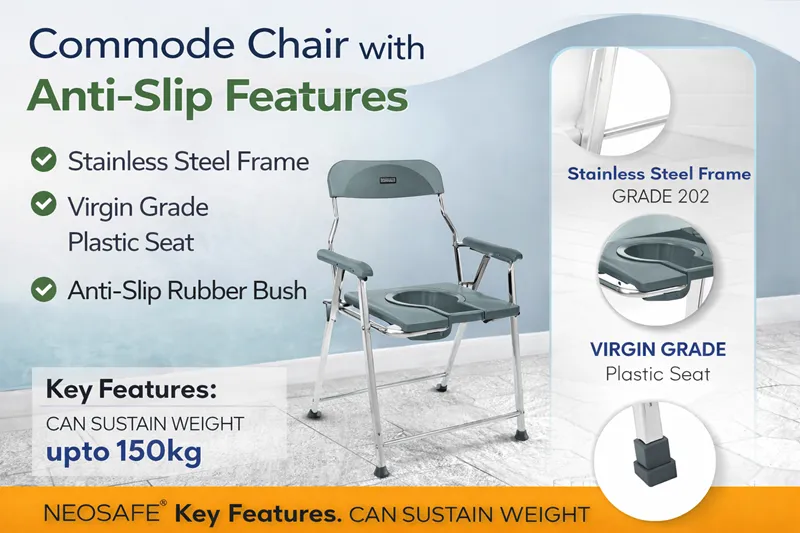
A commode chair with anti-slip features is a specially
designed portable toileting chair that incorporates multiple safety mechanisms
to prevent sliding, skidding, or tipping during use. In addition to the
standard commode chair components such as a sturdy frame, toilet seat opening,
backrest, armrests, and removable waste bucket, these chairs include anti-skid
rubber tips on the legs, non-slip seat textures, wide base designs for better
weight distribution, and sometimes locking mechanisms or reinforced balance
points. These features work together to ensure that the chair remains firmly in
place and the user remains securely positioned throughout the toileting
process, even when strength or balance is compromised.
Who Benefits Most from Anti-Slip Commode Chairs
Anti-slip commode chairs are particularly beneficial for
elderly individuals, stroke survivors, Parkinson’s patients, spinal injury
patients, post-surgery recovery patients, and people with arthritis or chronic
weakness. They are also highly recommended for individuals who experience
frequent dizziness, muscle fatigue, or a history of falls. In homes where
caregivers may not always be physically present or professionally trained,
anti-slip features add a critical layer of safety that protects users even during
unsupervised or night-time toileting.
Importance of Anti-Slip Design in Elderly Home Care
As people age, natural physiological changes such as reduced
muscle strength, slower reflexes, and impaired balance make daily activities
increasingly challenging. Toileting becomes particularly risky due to repeated
movements and bathroom conditions. A commode chair with anti-slip features
allows elderly users to sit and stand with confidence, knowing the chair will
not shift unexpectedly. This stability reduces fear of falling, encourages
regular bathroom use, and supports independence for longer periods. For
families caring for elderly members, anti-slip commode chairs provide
reassurance that loved ones are protected during one of the most vulnerable
daily activities.
Role of Anti-Slip Commode Chairs in Post-Surgery Recovery
After surgeries such as knee replacement, hip replacement,
spinal surgery, or fracture repair, patients are advised to avoid sudden
movements, twisting, or excessive pressure on healing joints. Slipping during
toileting can reverse surgical progress and cause serious complications.
Anti-slip commode chairs support safe recovery by ensuring that the chair
remains firmly grounded during transfers. Stable armrests and secure seating
allow patients to control movement without straining surgical sites, making these
chairs an essential part of home rehabilitation setups.
Key Anti-Slip Features to Look for in a Commode Chair
|
Anti-Slip
Feature |
Purpose |
Safety
Benefit |
|
Rubberized
Anti-Slip Legs |
Prevents
chair movement on smooth or wet floors |
Reduces fall
risk |
|
Non-Skid Seat
Surface |
Prevents
sliding while seated |
Improves
stability |
|
Textured
Armrests |
Enhances hand
grip during transfers |
Safer sitting
and standing |
|
Wide Base
Frame |
Distributes
weight evenly |
Prevents
tipping |
|
Locking
Mechanisms (if applicable) |
Restricts
unwanted movement |
Added safety |
Fixed vs Wheeled Commode Chairs with Anti-Slip Features
|
Type of
Chair |
Anti-Slip
Advantage |
Best Use
Case |
|
Strong floor
grip |
Elderly and
semi-independent users |
|
|
Wheel locks
prevent rolling |
Fully
assisted patients |
|
|
Height
Adjustable Chair |
Maintains
correct posture |
Post-surgery
and rehab care |
Steel vs Plastic Commode Chairs with Anti-Slip Technology
|
Feature |
Steel
Commode Chair |
Plastic
Commode Chair |
|
Structural
stability |
Very high |
Moderate |
|
Anti-slip
effectiveness |
Excellent |
Good |
|
Weight
capacity |
High |
Limited |
|
Durability |
Long-term |
Short-term |
|
Best suited
for |
Chronic and
elderly care |
Temporary
recovery |
Proper Placement of Anti-Slip Commode Chairs at Home
Even the best anti-slip features work optimally when the
chair is placed correctly. The chair should be positioned on a flat, clean,
non-slippery surface with adequate lighting. It should be placed close to the
bed or living area to reduce walking distance. Loose rugs, wires, and obstacles
should be removed from the surrounding space. Proper placement ensures that the
anti-slip features function effectively and provide maximum protection during
use.
Hygiene and Maintenance of Anti-Slip Commode Chairs
Anti-slip commode chairs require regular cleaning to
maintain both hygiene and grip effectiveness. Rubber tips and textured surfaces
should be wiped daily to remove moisture, soap residue, or dust that can reduce
friction. The commode bucket should be cleaned after every use, while the seat
and armrests should be disinfected daily. Proper maintenance ensures long-term
safety, prevents infections, and preserves the anti-slip properties of the
chair.
What an Anti-Slip Commode Chairs Reduce Caregiver Stress
Caregivers often worry about patients slipping during
toileting, especially when assisting alone. Anti-slip commode chairs reduce
this stress by providing predictable stability and reducing the physical effort
required during transfers. This not only protects the patient but also prevents
caregiver injuries such as back strain and fatigue. Over time, this makes home
care more sustainable and less emotionally exhausting.
Why Aarogyaa Bharat Emphasizes Anti-Slip Safety in Home
Care
Aarogyaa Bharat understands that preventable accidents are
one of the biggest threats to home-care success. Our anti-slip commode chairs
are selected with Indian home environments, long-term use, and caregiver
realities in mind. By prioritizing stability, durability, hygiene, and comfort,
Aarogyaa Bharat ensures that families receive dependable solutions that protect
both patients and caregivers while preserving dignity and independence.
Conclusion
A commode chair with anti-slip features is one of the most
effective safety investments in home healthcare. By minimizing the risk of
slips and falls, these chairs protect users from injuries that can lead to
hospitalization, long-term disability, or loss of independence. Whether used
for elderly care, chronic illness management, post-surgery recovery, or
long-term disability support, anti-slip commode chairs create a safer, more
confident toileting experience. Aarogyaa Bharat remains committed to providing
thoughtfully designed, safety-focused home healthcare solutions that improve
daily living and safeguard what matters most.