If you have scrolled through e-commerce platforms, you have
likely seen devices priced as low as ₹200. While tempting, these ultra-cheap
devices often use inferior sensors and lack proper calibration, leading to
dangerously inaccurate readings. On the other end of the spectrum, professional
surgical-grade oximeters can cost upwards of ₹10,000. For the average
household, fitness enthusiast, or caregiver managing a chronic illness at home,
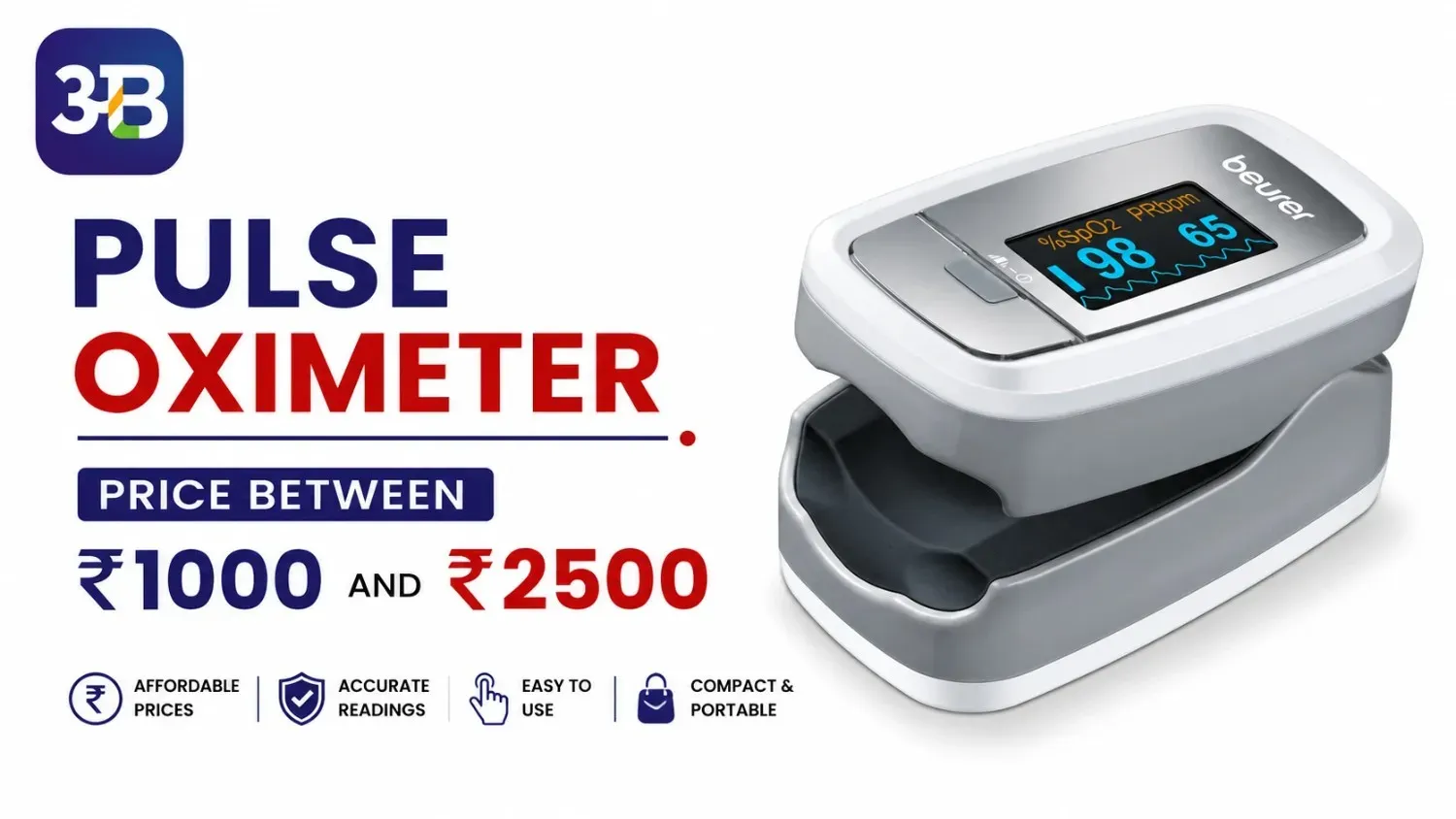
the ₹1000 to ₹2500 range represents the ultimate "sweet spot." It is
the perfect intersection of clinical-grade accuracy, durable build quality, and
advanced features without paying for unnecessary professional specifications.
Why This Price Bracket is the Sweet Spot
Investing in SpO2 monitoring devices within
this specific price range ensures that you are getting a product backed by
reputable manufacturing standards. When you pay between ₹1000 and ₹2500, you
are primarily paying for the sensor quality and the microprocessor inside the
device.
Cheap oximeters under ₹500 often use older, single-beam
infrared technology that can be easily confused by motion or low blood flow.
However, devices in the 1k to 2.5k range typically utilize dual-beam infrared
and red light sensors. This technology precisely differentiates between
oxygenated and deoxygenated hemoglobin, ensuring the reading you see on the
screen is a true reflection of your body's current state. Furthermore, this
price tier guarantees compliance with basic medical device accuracy
standards, giving you the peace of mind that the device has undergone
rigorous factory calibration and quality assurance testing before reaching your
doorstep.
Key Features You Can Expect in the ₹1000 - ₹2500 Range
When you elevate your budget away from the cheapest options,
the feature set of the pulse oximeter improves dramatically. Here is what you
should expect and demand when shopping in this tier:
- High-Resolution
OLED Displays: Unlike basic LED screens that are hard to read in
the dark, devices in this range feature bright OLED screens. Many offer
multi-directional display options, allowing you to rotate the reading 360
degrees so you can easily view it from any angle.
- Perfusion
Index (PI): This is a crucial feature that is rarely found on
cheaper models. The perfusion index (PI) is a numerical
value that indicates the strength of the blood flow at the sensor site. A
low PI warns you that the reading might be inaccurate due to poor
circulation, cold hands, or improper placement.
- Alarm
Functions and Visual Alerts: For patients with chronic
conditions, an alarm system is vital. In this price range, oximeters will
visually and audibly beep if the SpO2 drops below a certain threshold
(usually customizable, like 90%) or if the heart rate becomes abnormally
high or low.
- Advanced
Motion Tolerance: Cheaper oximeters fail if your hand trembles
slightly. Mid-range devices feature advanced algorithms that filter out
"noise" caused by minor movements, providing a stable and
accurate reading even if the patient is restless.
- Battery
Efficiency and Auto-Shutoff: Expect these devices to run
flawlessly on standard AAA batteries for dozens of hours of continuous
use. They also feature smart auto-shutoff technology to conserve battery
life if you accidentally leave the device clipped on your finger.
Top Brands to Consider
When navigating the best pulse oximeters in India,
sticking to established healthcare brands is the safest way to ensure you get a
genuine, accurate device within your budget. In the ₹1000 to ₹2500 bracket,
several trusted names dominate the market:
- Accusure: Known
for highly reliable, no-nonsense medical devices. Their oximeters in this
range often feature bright OLED screens and excellent PI readings, making
them a favorite among home caregivers.
- Dr.
Morepen: A household name in Indian healthcare, Dr. Morepen
offers sleek, ergonomically designed oximeters that are FDA-approved and
come with strong warranties, typically falling right in the middle of this
price range.
- BPL
Medical Technologies: BPL is synonymous with clinical trust in
India. Their home-use oximeters bring hospital-grade sensor technology to
the consumer market, ensuring unparalleled accuracy.
- HealthSense: This
brand focuses heavily on user experience. Their devices in this tier are
incredibly lightweight, feature antimicrobial silicon coatings, and offer
very fast reading times.
- Beurer: A
premium German brand that has a strong presence in India. While their
devices might sit at the higher end of the ₹2500 spectrum, they offer
superior build quality, aesthetic design, and highly sensitive sensors.
Who Should Buy a Pulse Oximeter in This Range?
While anyone can benefit from monitoring their oxygen
levels, this specific price tier is highly recommended for specific
demographics. Individuals managing chronic obstructive pulmonary
disease (COPD), asthma, or heart failure require precise data to adjust
their daily activities or medications. A ₹200 device can give a falsely
elevated reading, leading to a false sense of security. Patients in this
category need the accuracy that the ₹1000-₹2500 bracket provides.
Furthermore, this range is ideal for respiratory
health tracking in elderly patients. As we age, our peripheral
circulation decreases. Cheap sensors struggle to read through poor circulation,
but the sensitive dual-beam sensors in mid-range oximeters penetrate deeper to
get an accurate reading. Additionally, athletes, mountaineers, and pilots who
frequently experience rapid altitude changes should invest in this tier to
accurately monitor their body's adaptation to hypoxic environments.
How to Spot Fakes Even in the Mid-Range
Unfortunately, the prevalence of counterfeit medical devices
is a significant issue. Even if a device is listed at ₹1500, it might still be
a fake masquerading as a premium brand. To ensure you are getting
authentic home medical devices, always check the seller's
credentials. Purchasing directly from Aarogyaa Bharat with high ratings mitigates this risk.
Examine the packaging closely; authentic brands use high-quality printing, have
proper holographic seals, and include detailed instruction manuals with
customer care numbers. If the device feels incredibly light, has misspelled
words on the screen, or gives fluctuating readings even when your hand is
perfectly still, return it immediately.
Medical Grade vs. Consumer Grade
It is important to clarify what you are buying. A pulse
oximeter priced between ₹1000 and ₹2500 is a "clinical-grade consumer
device." It is highly accurate for home monitoring, spot-checking, and
managing chronic illnesses. However, it is not the same as the ₹15,000 tabletop
oximeters used in ICUs during anesthesia. Medical-grade surgical devices have
extreme tolerances for hypothermia, severe hypoxia, and invasive monitoring.
For 99% of home users, the accuracy of a mid-range fingertip oximeter (usually
+/- 2% for SpO2) is more than sufficient for daily health and wellness
monitoring.
Tips for Getting the Most Accurate Reading
Even the most expensive pulse oximeter will provide an inaccurate reading if used incorrectly. To ensure you are getting the most out of your device, make sure your hands are warm. Cold fingers constrict blood vessels, lowering the perfusion index. Remove any nail polish, especially dark colors or glitter, as these can block the light sensor. Sit still for at least 10 seconds before taking a reading, and ensure the device is clipped snugly but not painfully tight to your finger. For continuous monitoring, switch fingers every few hours to prevent skin irritation.
Disclaimer: The information provided in this
blog is for educational and informational purposes only and is not intended as
a substitute for professional medical advice, diagnosis, or treatment. Always
seek the advice of your physician or other qualified health provider with any
questions you may have regarding a medical condition or the use of medical
devices. Never disregard professional medical advice or delay in seeking it
because of something you have read on this website. Product prices and
availability are subject to change based