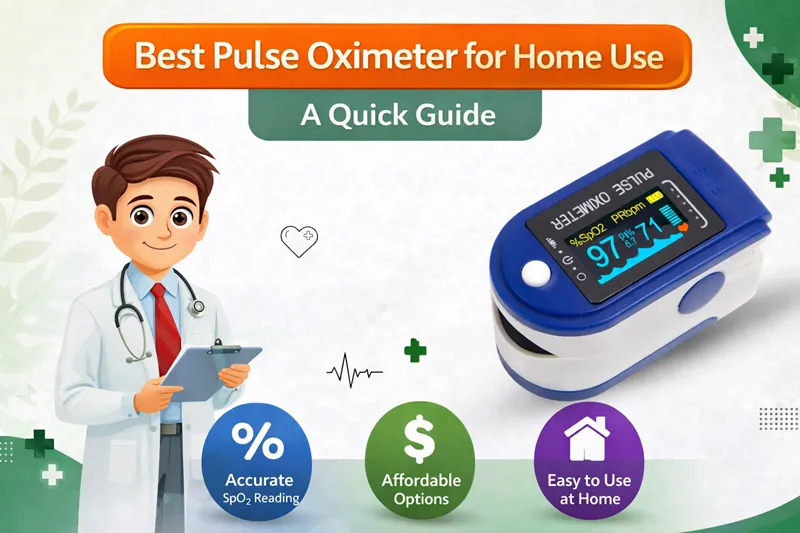
A Complete Buyer’s Guide for Accurate Oxygen Monitoring
and Heart Health at Home
During the COVID-19 pandemic, pulse oximeters became
must-have medical devices almost overnight. Families used them to detect
falling oxygen levels early and monitor silent hypoxia before symptoms became
severe. Even after the pandemic, doctors continue to recommend pulse oximeters
for elderly individuals, respiratory patients, heart patients, and people
recovering from infections or surgery. The ability to monitor oxygen saturation
and pulse rate at home provides peace of mind and helps prevent medical emergencies.
However, with hundreds of pulse oximeter brands and models
available in the Indian market today, choosing the best pulse oximeter for home
use can feel overwhelming. Some devices are cheap but inaccurate, while others
are expensive but packed with unnecessary features. Many users end up buying
unreliable products that show inconsistent readings, leading to confusion,
anxiety, and delayed medical care.
At Aarogyaa Bharat - Live Healthy, Live Better, we regularly
guide families on selecting accurate, reliable, and medically certified pulse
oximeters for home use. In this detailed guide, you will learn why a pulse
oximeter is important, what features truly matter, who should use it, how to
choose the best model in India, a comparison table of top options, common
mistakes to avoid, and how to use a pulse oximeter correctly for long-term home
health monitoring.
Why Every Home Should Have a Pulse Oximeter
A pulse oximeter is not just for sick people it is a
preventive health monitoring device that can benefit every household. Oxygen
saturation and pulse rate are two of the most critical vital signs that
indicate how well your lungs and heart are functioning. A sudden drop in oxygen
levels can signal serious health issues such as pneumonia, asthma attacks, COPD
flare-ups, heart failure, blood clots, or COVID-19 complications.
One of the biggest dangers of low oxygen levels is silent
hypoxia, a condition where oxygen saturation falls dangerously low without
noticeable symptoms. Patients may feel “normal” while their organs are actually
being starved of oxygen. Without a pulse oximeter, such cases often go
undetected until the condition becomes life-threatening.
For elderly individuals and people with chronic respiratory
or heart conditions, daily oxygen monitoring provides early warning signs that
allow timely medical intervention. Pulse oximeters are also invaluable for
monitoring recovery after surgery, respiratory infections, or hospital
discharge.
In Indian households, where pollution levels are high and
access to hospitals may be delayed due to traffic or distance, owning a
reliable pulse oximeter can literally save lives. It empowers families to take
proactive control of their health rather than reacting to emergencies.
What Is a Pulse Oximeter and How Does It Work?
A pulse oximeter is a small, non-invasive medical device
that measures the oxygen saturation level (SpO₂) in your blood and your pulse
rate. It is usually clipped onto a fingertip and provides instant digital
readings within a few seconds. This painless test does not require blood
samples or needles, making it ideal for frequent home use.
Pulse oximeters work using a technology called
photoplethysmography. The device emits two different wavelengths of light red
and infrared through your fingertip. These light beams pass through your blood
and are partially absorbed by oxygenated and deoxygenated haemoglobin. By
analysing how much light is absorbed at each wavelength, the device calculates
your oxygen saturation level.
Pulse rate is measured by detecting tiny changes in blood
volume that occur with each heartbeat. These changes are captured by the light
sensor and converted into a pulse waveform, which is then translated into beats
per minute (BPM).
This entire process happens in seconds, making pulse
oximeters incredibly fast, convenient, and non-invasive for real-time health
monitoring at home.
Who Should Use a Pulse Oximeter at Home?
Pulse oximeters are beneficial for a wide range of people,
not just those with serious illnesses. Asthma and COPD patients use them to
monitor breathing efficiency and detect early flare-ups. COVID-19 and
post-COVID patients rely on pulse oximeters to track oxygen recovery and
identify complications.
Heart patients use pulse oximeters to monitor circulation
efficiency and detect worsening heart failure. Elderly individuals benefit from
regular monitoring due to age-related decline in lung and heart function.
Sleep apnea patients use pulse oximeters to detect night time
oxygen drops. Athletes and fitness enthusiasts monitor oxygen levels during
intense training and high-altitude activities.
Smokers and people exposed to air pollution also benefit
from periodic oxygen monitoring to assess long-term lung health.
What Makes a Pulse Oximeter “Best” for Home Use?
Not all pulse oximeters are created equal. The best pulse
oximeter for home use should combine accuracy, reliability, ease of use, and
durability. Many cheap, unbranded devices show inconsistent readings, which can
cause unnecessary panic or false reassurance.
Accuracy is the most critical factor. A good pulse oximeter
should provide consistent SpO₂ and pulse rate readings that closely match
hospital-grade devices. Look for models with medical certification and proven
sensor quality.
Display quality also matters. A bright OLED or LED screen
with large, clear digits ensures easy reading for elderly users and people with
poor eyesight. Multi-directional display rotation further enhances usability.
Battery life, automatic shut-off, and low-battery indicators
are essential features for long-term home use. Advanced features such as
plethysmograph waveform, perfusion index (PI), alarm alerts, and Bluetooth
connectivity add value for high-risk patients.
Key Features to Look for in the Best Pulse Oximeter
When choosing the best pulse oximeter for home use in India,
buyers should focus on performance and safety rather than just price or brand
name. One of the most important features is measurement accuracy. Look for
models that are clinically tested and certified by medical authorities.
Display quality is another critical factor. A good pulse
oximeter should have a bright OLED or LED display that is easy to read in both
daylight and low-light conditions. Multi-directional display rotation allows
users to view readings comfortably from different angles.
Battery performance matters greatly for daily monitoring.
Choose devices with long battery life, low-battery indicators, and automatic
shut-off features to conserve power. Rechargeable models offer additional
convenience and cost savings.
Build quality and durability are also important. A sturdy
device made from medical-grade plastic will last longer and withstand
accidental drops. Accessories such as a carrying case, lanyard, and warranty
coverage further enhance long-term value.
Advanced features such as plethysmograph waveform, perfusion
index (PI), alarm alerts, and Bluetooth connectivity are useful for high-risk
patients and long-term monitoring but are not essential for everyone.
Best Pulse Oximeter for Home Use: Comparison Table
|
Feature |
Basic
Model |
Mid-Range
Model |
Premium
Model |
|
Accuracy |
Good |
Very Good |
Excellent |
|
Display |
LED |
OLED |
OLED HD |
|
Battery Type |
AAA |
AAA /
Rechargeable |
Rechargeable |
|
Alarm Alerts |
No |
Optional |
Yes |
|
Bluetooth |
No |
Optional |
Yes |
|
Build Quality |
Basic |
Good |
Premium |
|
Best For |
Occasional
use |
Daily home
monitoring |
High-risk
patients |
|
Price Range
(₹) |
800 - 1,500 |
1,500 - 3,000 |
3,000 -
6,000+ |
This table highlights that while basic models are suitable
for occasional use, premium models offer advanced monitoring features for
high-risk patients who require continuous tracking.
Best Pulse Oximeter Brands in India (General Buyer
Insight)
While Aarogyaa Bharat does not promote third-party brands
directly, some commonly trusted categories include:
- Clinically
certified hospital-grade models
- Rechargeable
OLED display models
- Bluetooth-enabled
smart pulse oximeters
When buying any brand, always verify medical certification,
warranty coverage, and after-sales support rather than relying only on online
reviews or low prices.
How to Use a Pulse Oximeter Correctly at Home
Using a pulse oximeter correctly ensures accurate and
reliable readings. Start by sitting calmly and resting for at least 5 minutes
before measurement. Remove nail polish, artificial nails, or henna, as these
can interfere with light transmission.
Place the device on a clean, warm fingertip and keep your
hand still at heart level. Avoid talking or moving during measurement. Wait for
the reading to stabilize before recording it.
Take multiple readings at different times of the day to
identify trends rather than relying on a single value. If readings are
consistently low or fluctuate significantly, consult a doctor immediately.
Common Mistakes to Avoid When Buying or Using a Pulse
Oximeter
Many users buy cheap, unbranded pulse oximeters that show
inconsistent readings. This leads to confusion, anxiety, and delayed medical
care. Always choose certified medical devices from trusted sellers.
Taking readings immediately after physical activity,
smoking, or exposure to cold can result in inaccurate measurements. Always rest
for a few minutes before checking oxygen levels.
Relying on a single low reading without rechecking can cause
unnecessary panic. Always take 2-3 readings and look for consistent patterns.
Ignoring battery health and device maintenance can also lead
to faulty readings. Replace batteries regularly and keep the device clean.
How Much Does a Good Pulse Oximeter Cost in India?
|
Type |
Price
Range (₹) |
|
Basic
Home-Use Model |
800 - 1,500 |
|
Mid-Range
Model |
1,500 - 3,000 |
|
Premium Smart
Model |
3,000 -
6,000+ |
While basic models are affordable and sufficient for most
households, investing in a mid-range or premium model offers better accuracy,
durability, and long-term value for high-risk patients.
Is It Worth Buying a Premium Pulse Oximeter?
A premium pulse oximeter is worth buying if you or a family
member has a chronic respiratory or heart condition, requires daily monitoring,
or needs advanced features such as alarm alerts and Bluetooth tracking. These
devices provide more reliable data and long-term durability.
For occasional use or basic monitoring, a mid-range model is
usually sufficient and more cost-effective.
At Aarogyaa Bharat, we help families choose the most
suitable pulse oximeter based on medical needs, lifestyle, and budget rather
than pushing the most expensive option.
Conclusion
The best pulse oximeter for home use is one that combines accuracy,
reliability, ease of use, and medical certification. It should provide
consistent readings, have a clear display, and offer good battery performance.
At Aarogyaa Bharat - Live Healthy, Live Better, we believe
that every household should own a reliable pulse oximeter as part of a complete
home-care setup. Our goal is to help families make confident and medically
sound purchasing decisions for long-term health monitoring.