What Is Caregiver Strain and Why It Matters?
Understanding Caregiver Strain
Caregiver strain refers to the physical exhaustion,
emotional stress, and psychological fatigue experienced by individuals who
provide ongoing care to patients with limited mobility.
Common symptoms include:
- Persistent
lower-back, shoulder, and neck pain
- Joint
stress and muscle injuries
- Chronic
fatigue and sleep deprivation
- Anxiety,
irritability, and burnout
- Feelings
of helplessness or being overwhelmed
Why Caregiver Strain Is Increasing in India
Several real-world factors contribute to this issue:
- Ageing
population and longer life expectancy
- Increase
in stroke, paralysis, and chronic illness cases
- Limited
access to professional home nurses
- Small
apartments and space constraints
- Single
caregivers managing care without rotation
Search trends show rising queries like “caregiver back
pain,” “how to take care of bedridden patient at home,” “elderly care without
nurse,” highlighting a genuine and growing concern.
Why Normal Beds Make Caregiving Physically Unsafe
Most Indian homes rely on standard household beds, which are
not designed for medical care. These beds:
- Sit
too low, forcing constant bending
- Do
not allow position adjustment
- Offer
no side support for transfers
- Make
night care slow and exhausting
As a result, caregivers are forced to use their own body
strength repeatedly, leading to injuries that often go untreated.
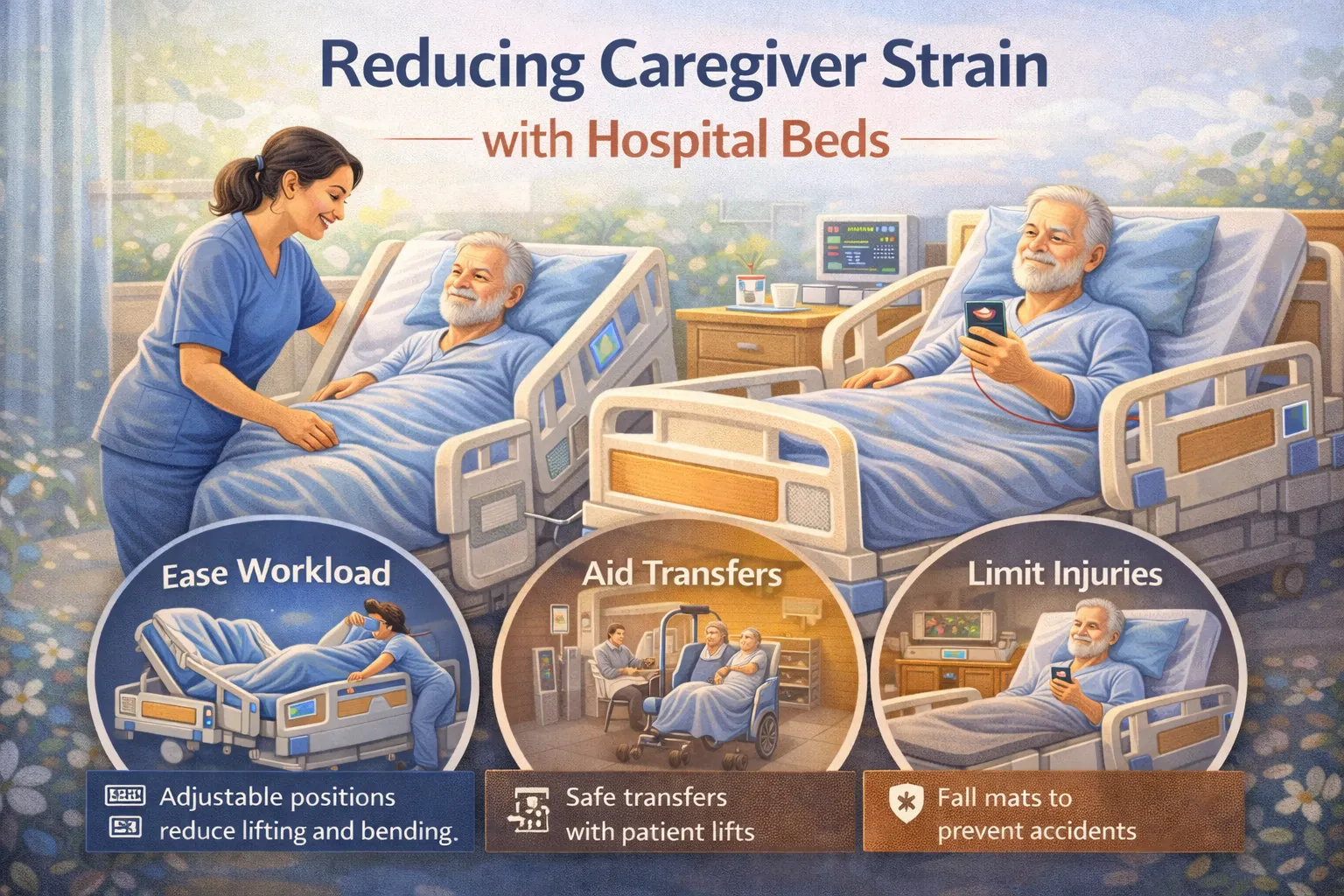
How Hospital Beds Reduce Physical Strain on Caregivers
Hospital beds are designed to work with the caregiver, not
against them. Their structure and features significantly reduce physical effort
in daily care activities.
Adjustable Height: The Single Biggest Relief for the
Caregiver’s Back
Constant bending is the leading cause of caregiver back
pain.
How Height Adjustment Helps
- Bed
can be raised to waist level during care
- Reduces
spinal compression and knee stress
- Makes
dressing, diaper changes, and wound care easier
Over weeks and months, this feature alone can prevent
chronic back injuries.
Electric Head and Leg Adjustment: Less Lifting, Less
Fatigue
Repositioning a patient multiple times a day is one of the
most exhausting tasks.
Hospital beds allow:
- Smooth
head elevation for feeding and breathing
- Leg
elevation to reduce swelling
- Comfortable
posture changes using a remote
This removes the need for repeated manual lifting and pillow
arrangements.
Side Rails: Supporting Safe Movement Without Full Lifting
Transfers are one of the highest-risk moments for caregiver
injury.
Side rails help by:
- Giving
patients something to hold
- Reducing
sudden weight shifts
- Supporting
partial self-movement
- Preventing
falls during sleep
This means caregivers assist instead of lifting, which is
far safer.
Easier Repositioning for Long-Term Bedridden Patients
For patients who cannot move independently, repositioning is
essential to:
- Prevent
bedsores
- Improve
circulation
- Reduce
stiffness and pain
Hospital beds allow controlled posture changes, making
rolling and turning less force-intensive and more precise.
Reduced Strain During Night-Time Care
Night care is physically and mentally draining due to:
- Poor
lighting
- Sleep
disruption
- Fatigue-related
mistakes
Hospital beds make night care easier by:
- Allowing
quick position changes
- Making
hygiene care faster
- Reducing
patient discomfort that causes frequent waking
This improves rest for both caregiver and patient.
Emotional and Psychological Relief for Caregivers
When physical effort is reduced:
- Caregivers
feel more confident
- Fear
of injury decreases
- Stress
levels drop
- Patience
and emotional availability improve
This leads to a healthier caregiver-patient relationship,
which directly impacts recovery and wellbeing.
Long-Term Cost Perspective: Why Hospital Beds Make Sense
Many families hesitate due to upfront cost, but the
long-term benefits include:
- Fewer
caregiver injuries and medical expenses
- Reduced
dependence on paid helpers
- Lower
burnout and care discontinuation risk
- Better
patient recovery and comfort
Viewed over months or years, a hospital bed is a cost-saving
caregiving investment, not an expense.
Who Benefits the Most from Hospital Beds at Home
Hospital beds are especially valuable for:
- Elderly
parents with limited mobility
- Stroke
or paralysis patients
- Post-surgery
recovery cases
- Long-term
bedridden individuals
- Homes
with a single or elderly caregiver
Conclusion: Sustainable Care Begins with Protecting the
Caregiver
Caregiving should never mean sacrificing your own health.
A hospital bed for home care is not just for the patient it
is a vital support system for the caregiver. By reducing physical strain,
preventing injuries, and simplifying daily care routines, hospital beds enable
caregivers to provide consistent, compassionate, and dignified care over the
long term.
For families caring for elderly parents, recovering
patients, or long-term bedridden loved ones, choosing the right hospital bed is
a decision that protects:
- The
caregiver’s body
- The
patient’s safety
- The
family’s emotional balance
When caregivers are supported, care becomes safer, kinder,
and sustainable.