Why Maintaining Hospital Beds at Home Is So Important
Hospital beds are medical devices used daily for:
- Rest
and sleep
- Eating
and hygiene care
- Physiotherapy
and repositioning
- Long-term
recovery or palliative care
Without proper maintenance, problems can arise:
- Mechanical failure
- Unstable bed movement
- Increased risk of falls
- Poor hygiene and infection risk
- Mattress damage and pressure sores
- Reduced lifespan of the equipment
Regular maintenance ensures that the bed continues to
provide safe, comfortable, and reliable care.
Daily Maintenance: Small Habits That Make a Big
Difference
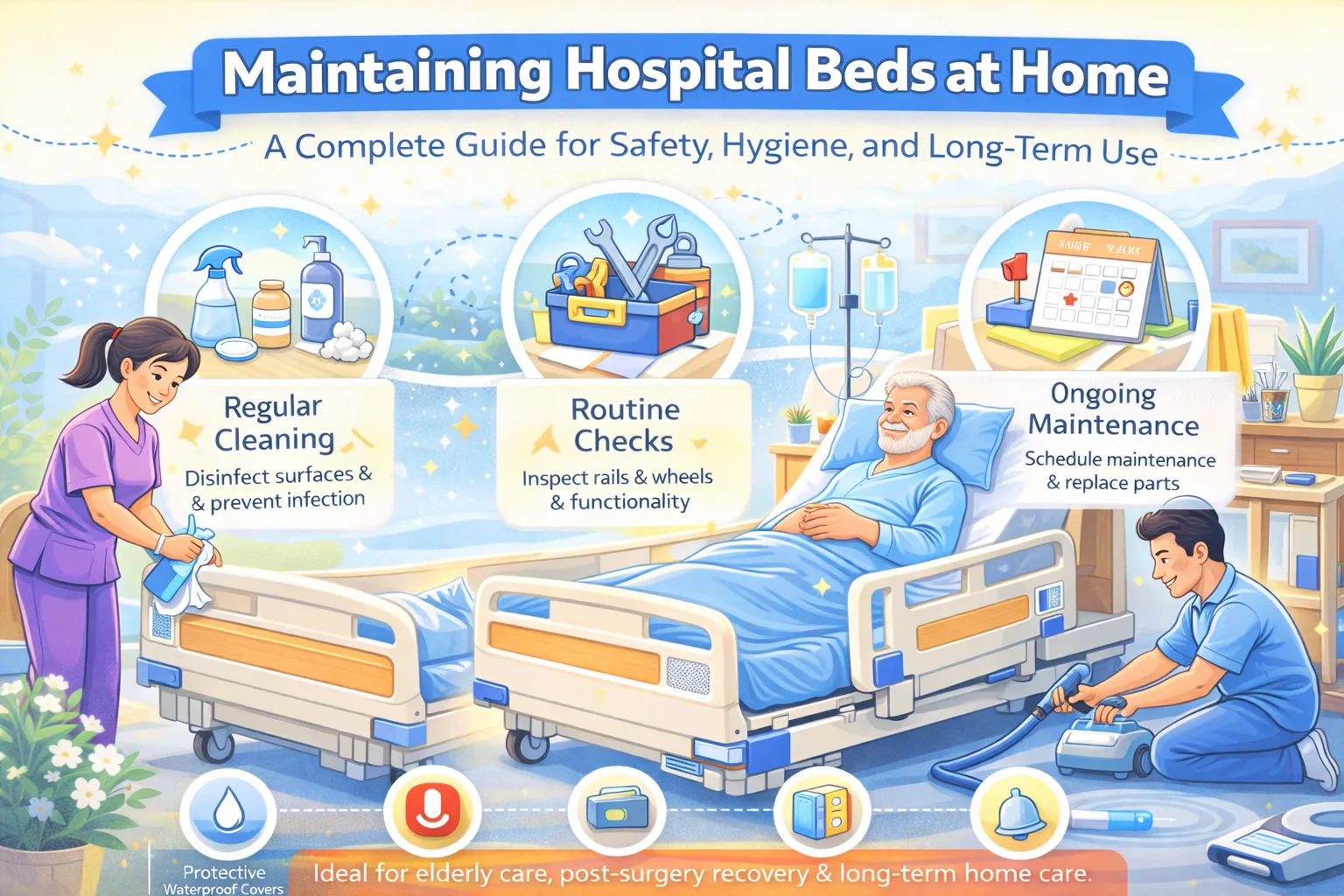
1. Keep the Bed Clean and Hygienic
Hospital beds are used continuously, making them prone to:
- Sweat
- Spills
- Body
fluids
- Dust
and bacteria
Daily cleaning should include:
- Wiping the bed frame with a mild disinfectant
- Cleaning side rails, control panels, and head/foot sections
- Changing bed linens regularly
- Keeping the mattress surface dry
2. Check for Loose Parts or Unusual Sounds
Each day, quickly inspect:
- Screws and bolts
- Side rails and locking mechanisms
- Wheels and brakes
- Electric motor sounds
If you notice:
- Creaking noises
- Wobbling
- Difficulty adjusting positions
It may be time for professional servicing.
3. Ensure Safe Positioning
- Always lock the wheels after moving the bed
- Keep the bed at a safe height for entry and exit
- Ensure side rails are raised when the patient is resting
- Keep the surrounding area clutter-free
Weekly Maintenance: Keeping the Bed Reliable
4. Deep Cleaning and Disinfection
Once a week:
- Clean all surfaces with medical-grade disinfectant
- Pay attention to high-touch areas like rails and remote controls
- Remove mattress covers and wash them thoroughly
- Air out the mattress to prevent moisture build up
This reduces the risk of:
- Skin
infections
- Odour
- Bacterial
growth
5. Inspect the Mattress and Pressure Relief System
If you are using:
- Air mattresses
- Anti-bed-sore
mattresses
- Foam
medical mattresses
Check for:
- Air leaks or deflation
- Sagging or uneven surfaces
- Tears or cracks in the cover
A damaged mattress can lead to discomfort and bed sores.
6. Test Electric Controls and Adjustments
- Check remote controls
- Move the bed through different positions
- Ensure smooth, quiet motor operation
- Confirm height adjustment and backrest movement
If the bed:
- Moves unevenly
- Stops midway
- Responds slowly
It may need technical inspection.
7. Lubricate Moving Parts (If recommended)
Some hospital beds require:
- Light lubrication of joints and hinges
- Dust removal from mechanical areas
Always follow manufacturer guidelines or professional advice
before applying any lubricant.
8. Check Electrical Safety
- Inspect power cords for wear or damage
- Ensure plugs are secure and dry
- Avoid overloading sockets
- Keep water away from electrical components
9. Review Safety Features
- Test side rail locking mechanisms
- Ensure brakes hold the bed firmly in place
- Confirm height adjustment is stable
- Check that anti-entrapment gaps are intact
Safety checks protect both patients and caregivers from
accidents.
Hygiene and Infection Control at Home
Maintaining hospital beds at home is also about infection
prevention:
- Use washable mattress covers
- Clean immediately after any spills or accidents
- Disinfect regularly if the patient has open wounds or incontinence
- Encourage hand hygiene before and after patient contact
Good hygiene not only protects the patient but also
safeguards family members and caregivers.
Common Maintenance Mistakes to Avoid
- Ignoring minor noises or instability
- Using harsh chemicals that damage surfaces
- Forgetting to clean remote controls and rails
- Not checking mattress condition
- Delaying professional servicing
- Allowing moisture near electrical parts
These mistakes can lead to equipment failure, hygiene
issues, and safety risks.
When to Call for Professional Servicing
Contact professional support if you notice:
- Sudden
motor failure
- Uneven
bed movement
- Electrical
faults
- Loose
side rails
- Wheel
or brake malfunction
Regular servicing ensures:
- Longer equipment life
- Safe operation
- Fewer emergency breakdowns
How Proper Maintenance Benefits Everyone
For Patients:
- Improved comfort
- Lower infection risk
- Reduced chance of falls
- Better recovery experience
- Safer handling and repositioning
- Less physical strain
- Peace of mind
- Reliable daily operations
For Families:
- Cost savings through longer equipment life
- Fewer medical emergencies
- More confident home care
Why Aarogyaa Bharat Supports Long-Term Home Care
At Aarogyaa Bharat, we go beyond just supplying hospital
beds we support families throughout the care journey.
What We Offer:
- High-quality hospital beds designed for home use
- Expert guidance on proper maintenance and care
- Delivery, installation, and setup support
- Durable equipment suited for Indian home environments
- Ongoing assistance for home healthcare needs
We help families ensure that their equipment remains safe,
clean, and reliable every day.
Conclusion: Well-Maintained Equipment Means Better Care
A hospital bed is more than a piece of furniture it is a
daily support system for healing, comfort, and dignity. Proper maintenance
ensures that this support never fails.
With regular cleaning, safety checks, and timely servicing:
- Patients stay safer and more comfortable
- Caregivers work with confidence
- Families avoid unnecessary stress and expenses
With Aarogyaa Bharat, you are not just investing in a
hospital bed you are investing in long-term, reliable, compassionate home care.