This feature makes the rollator walker especially useful for
seniors who need to move around independently at home, visit nearby clinics,
attend physiotherapy sessions, or travel across different cities pages.
Families exploring hospital pages and home care equipment resources often
discover that rollator walkers provide both safety and functionality, helping
elderly individuals maintain independence during daily activities. Aarogyaa
Bharat’s rehabilitation section highlights rollator walkers with baskets as one
of the most practical mobility devices because they allow users to move safely
while carrying essential items such as water bottles, medicines, groceries, or
small personal bags. Healthcare calculators that evaluate fall risk and
mobility limitations also recommend walkers as part of structured elderly
support and rehabilitation programs, making rollator walkers a valuable
addition to modern home care solutions.
Understanding What a Rollator Walker with Basket Is
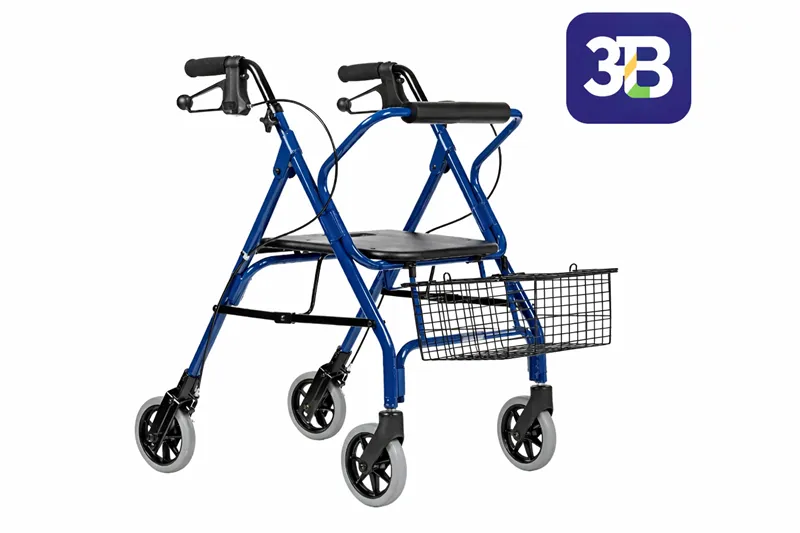
A rollator walker with a basket is a mobility support device
designed with four wheels, ergonomic handlebars, hand brakes, and a built-in
storage compartment. Unlike traditional walkers that require lifting between
steps, rollator walkers allow continuous rolling movement, making walking
smoother and less physically demanding. The addition of a storage basket
significantly enhances usability because it allows users to carry everyday
items without needing a separate bag or caregiver assistance. Many rollator
walkers available through Aarogyaa Bharat’s rehabilitation equipment section
include lightweight aluminium frames, adjustable handles, and durable storage
baskets capable of holding essential items. Patients visiting hospital pages
for physiotherapy or orthopaedic recovery are often advised to use rollators
once their balance improves and they are ready for more independent mobility.
Because the walker includes both walking support and storage functionality, it
becomes a versatile tool that supports daily routines, home care activities,
and rehabilitation exercises recommended by healthcare professionals.
Why Storage Baskets Make Rollator Walkers More Practical
One of the biggest advantages of rollator walkers is the
built-in basket or pouch that allows users to carry items while walking. For
elderly individuals living independently, performing small daily tasks such as
carrying water bottles, medicines, books, or groceries can become difficult
without assistance. A rollator walker with a basket eliminates this limitation
by providing a convenient storage space within the walker frame. Aarogyaa
Bharat’s home care equipment guides emphasize this feature because it improves
independence and reduces the need for caregiver assistance during daily
activities. Seniors visiting hospital pages for routine check-ups often carry
medical reports or prescription medicines, and the rollator basket provides a
safe place to store these items while walking. Healthcare calculators that
assess independence levels for elderly individuals also consider mobility aids
with storage compartments beneficial for maintaining active lifestyles. The
presence of a basket transforms the rollator walker from a simple mobility aid
into a multifunctional daily support device.
Important Design Features of Rollator Walkers with
Baskets
Rollator walkers with baskets are designed with several
structural features that enhance both mobility and safety. The four-wheel
configuration allows smooth movement across indoor floors, pavements, and
hospital corridors, making walking easier compared to traditional walkers. Hand
brakes provide an important safety mechanism by allowing users to slow down or
stop the walker whenever necessary. Many rollators also include locking brakes
that secure the walker in place when the user wants to sit or stand still.
Aarogyaa Bharat’s rehabilitation section often highlights rollator models that
include comfortable padded seats, allowing seniors to rest during longer walks
or while waiting in public areas. Adjustable handlebars ensure that the walker
can be customized to match the user’s height, promoting correct posture and
reducing strain on shoulders and wrists. When families consult hospital pages
or healthcare calculators for mobility planning, rollator walkers with baskets
frequently appear as recommended devices for seniors who remain active but
require walking support.
Common Situations Where Rollator Walkers with Baskets Are
Useful
Rollator walkers with storage baskets are particularly
useful in situations where users need both mobility assistance and the ability
to carry items independently. Elderly individuals living alone often rely on
these walkers to move safely within their homes while carrying personal items
between rooms. Patients undergoing physiotherapy sessions listed on hospital
pages may use rollators during outdoor walking exercises recommended by
therapists. Seniors visiting nearby markets or parks often find the basket
extremely useful for carrying small purchases or personal belongings. Aarogyaa
Bharat’s home care and rehabilitation equipment guides frequently recommend
rollator walkers for seniors who remain socially active and prefer independent
mobility across different cities pages. Healthcare calculators designed to
measure mobility independence also highlight rollator walkers with baskets as
effective tools for supporting daily activities without requiring constant
caregiver assistance.
Table: Typical Features of a Rollator Walker with Basket
|
Feature |
Description |
|
Wheel
Configuration |
Four wheels
for smooth movement |
|
Storage
Basket |
Built-in
basket or pouch for carrying items |
|
Braking
System |
Hand brakes
with locking feature |
|
Handle
Adjustment |
Adjustable
height handlebars |
|
Frame
Material |
Lightweight
aluminium construction |
|
Seat
Availability |
Many models
include padded resting seat |
How Rollator Walkers Improve Home Care Independence
Maintaining independence is one of the most important goals
of elderly care. Many seniors prefer to perform everyday activities without
relying heavily on caregivers, but mobility limitations can make even simple
tasks challenging. Rollator walkers with baskets support independence by
allowing users to walk safely while carrying essential items during daily
routines. Aarogyaa Bharat’s home care section emphasizes that mobility aids
should not only provide physical support but also encourage independence and
confidence. Families reviewing hospital pages for elderly mobility guidance
often discover that walkers help seniors maintain activity levels and reduce
fall risk. Healthcare calculators designed to measure elderly safety also
indicate that mobility aids combined with safe walking environments
significantly reduce the likelihood of accidents. Rollator walkers with baskets
therefore play an important role in helping seniors maintain an active
lifestyle while managing mobility limitations safely.
Benefits of Using Rollator Walkers with Baskets
- Allow
users to carry personal items while walking
- Improve
independence during daily home activities
- Reduce
the need for caregiver assistance
- Provide
smooth rolling movement with four wheels
- Include
hand brakes for improved safety control
- Often
include comfortable seats for resting
- Useful
during outdoor walks and shopping trips
- Suitable
for rehabilitation and physiotherapy exercises
Rollator Walker with Basket vs Standard Walker
Traditional walkers provide strong structural support but
often lack additional features that improve daily usability. Rollator walkers,
on the other hand, combine mobility assistance with convenience features such
as baskets, seats, and braking systems. Patients consulting hospital pages
often transition from traditional walkers to rollators as their balance
improves during rehabilitation programs. Aarogyaa Bharat’s rehabilitation
equipment guides highlight rollators as ideal mobility aids for seniors who can
walk independently but still benefit from stability and support. Healthcare
calculators that assess mobility levels often recommend rollator walkers when
users require both movement assistance and greater independence during daily
tasks.
Rollator Walker with Basket vs Standard Walker
|
Feature |
Rollator
Walker with Basket |
Standard
Walker |
|
Wheels |
Four wheels |
Usually, no
wheels |
|
Storage |
Built-in
basket or pouch |
No storage
option |
|
Brakes |
Hand brakes
included |
Typically, no
brakes |
|
Mobility |
Smooth
rolling movement |
Requires
lifting between steps |
|
Independence |
Supports
carrying items |
Limited
convenience |
Choosing the Right Rollator Walker with Basket
Selecting the correct rollator walker depends on factors
such as user height, mobility condition, and daily activity level. Seniors who
enjoy outdoor walks or frequently travel between healthcare facilities across
cities pages may prefer rollators with larger wheels and durable frames.
Individuals undergoing physiotherapy or rehabilitation programs listed on
hospital pages may require walkers with adjustable handles and comfortable
seats. Aarogyaa Bharat recommends reviewing product specifications carefully
and consulting healthcare professionals before purchasing mobility equipment.
Healthcare calculators used for mobility planning can also help determine
whether a rollator walker with a basket is the best choice for the user’s
physical condition and lifestyle needs. Choosing the right walker ensures that
the device supports long-term mobility and independence safely.
Role of Rollator Walkers in Rehabilitation Programs
Rehabilitation programs often focus on restoring walking
ability, balance, and muscle strength after injuries or surgeries. During early
recovery stages, patients may use standard walkers for maximum support. As
strength improves, physiotherapists listed on hospital pages often recommend
rollator walkers to encourage smoother and more natural walking movement.
Aarogyaa Bharat’s rehabilitation section explains that rollator walkers allow
patients to practice walking longer distances while maintaining safety through
braking systems and stable frames. Healthcare calculators used in
rehabilitation planning frequently monitor walking progress and mobility
improvement. Because rollator walkers with baskets combine mobility support
with everyday convenience, they are often included in long-term rehabilitation
plans that aim to restore independence and active living.
Conclusion
Rollator walkers with baskets provide a highly practical mobility solution for elderly individuals and rehabilitation patients who require walking support while maintaining independence. The combination of four-wheel mobility, hand braking systems, and convenient storage baskets makes these walkers ideal for both indoor and outdoor use. Unlike traditional walkers that only provide stability, rollator walkers also allow users to carry personal items, making daily activities easier and more efficient. Aarogyaa Bharat’s home care and rehabilitation equipment collections emphasize the importance of mobility aids that support both safety and independence. By consulting hospital pages, exploring cities pages, and using healthcare calculators to assess mobility needs, families can select the right rollator walker that matches the user’s lifestyle and recovery stage. With the correct mobility aid, elderly individuals can maintain confidence, independence, and active movement while reducing the risk of falls and mobility-related injuries.