What Is a Medical Suction Machine?
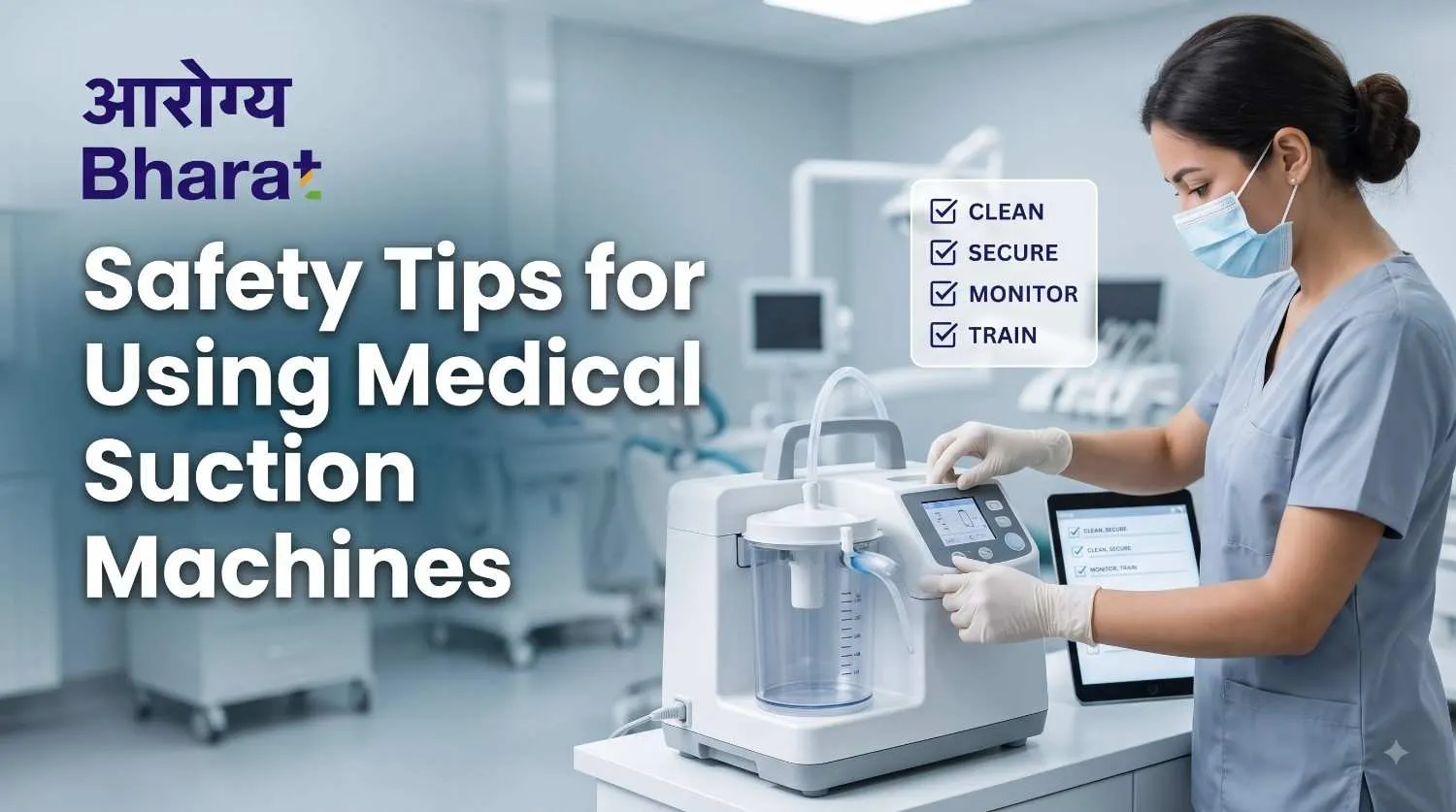
A medical suction machine, sometimes called an aspirator,
uses negative pressure to draw secretions or fluids through tubing into a
collection container. Depending on the clinical purpose, suction may be
performed through an oral suction tip such as a Yankauer or through an
appropriate suction catheter for patients with a tracheostomy or another
airway-management requirement. Aarogyaa Bharat describes electric, portable,
manual, wall-mounted, surgical, and home-care suction systems, with different
models designed for different clinical environments. Portable machines are
particularly useful when a patient requires suction away from a fixed hospital
vacuum system because some models include rechargeable batteries and compact
collection containers. However, suction machines should not be treated like
ordinary household appliances. The device, suction pressure, catheter or tip,
technique, frequency, and depth of suctioning should match the patient's care
plan and equipment instructions. Patients or caregivers using suction at home
should receive appropriate training before independently performing airway
suction.
Why Suction Machine Safety Is Important
Airway tissues are delicate, and suctioning can cause
complications when excessive pressure, incorrect catheter depth, prolonged
suction, poor hygiene, or repeated unnecessary procedures are used. Adult
tracheostomy guidance from Worcestershire Acute Hospitals lists possible
complications including airway trauma, infection, reduced blood oxygen levels,
coughing, gagging, changes in pulse or blood pressure, and patient distress.
Suctioning should therefore be performed only when clinically indicated and according
to the technique taught for the individual patient. The safety objective is to
remove secretions effectively while minimizing unnecessary contact with airway
tissues and avoiding prolonged interruption of normal breathing. Equipment
condition is equally important because blocked filters, overflowing collection
jars, damaged tubing, poorly charged portable units, or electrical faults can
make the machine unreliable when it is needed. Caregivers should consider
suction-machine safety as a combination of patient assessment, correct
technique, infection control, equipment preparation, and ongoing maintenance.
Important Suction Machine Safety Points
|
Safety
Area |
What to
Check |
Why It
Matters |
Important
Precaution |
|
Clinical
Training |
Caregiver
knows prescribed technique |
Different
patients need different suction methods |
Do not learn
invasive suction only from online instructions |
|
Suction
Pressure |
Setting
matches clinical instructions |
Excess
pressure may injure airway tissues |
Never guess
or automatically use maximum suction |
|
Catheter/Tip |
Correct type
and size |
Oversized or
incorrect accessories can cause problems |
Use only
recommended accessories |
|
Hand
Hygiene |
Hands cleaned
before and after use |
Helps reduce
infection risk |
Follow the
taught clean/sterile technique |
|
Suction
Duration |
Procedure
kept brief |
Prolonged
suction may reduce oxygen and irritate tissues |
Follow the
patient's clinical instructions |
|
Collection
Jar |
Not allowed
to overfill |
Overflow can
interfere with machine operation |
Empty at the
recommended level |
|
Tubing |
Clean, intact
and unobstructed |
Blockage
reduces suction performance |
Replace
damaged or discoloured tubing as advised |
|
Filter |
Clean and
replaced when required |
Protects the
suction system |
Follow
manufacturer replacement schedule |
|
Power/Battery |
Machine ready
for immediate operation |
Equipment
must work when needed |
Keep portable
units appropriately charged |
|
Electrical
Safety |
Cables and
adapter undamaged |
Prevents
electrical hazards |
Keep
electrical parts away from water |
|
Patient
Monitoring |
Observe
breathing, colour and distress |
Helps
identify complications |
Stop and seek
help if the patient deteriorates |
|
Maintenance |
Device
serviced as recommended |
Supports
reliable performance |
Do not ignore
recurring faults |
Use a Suction Machine Only When Recommended
A suction machine should be used because a healthcare
professional has determined that the patient requires assistance clearing
secretions, not simply because mucus is present. People normally clear
secretions through coughing and swallowing, and suction may be unnecessary when
those natural mechanisms remain effective. Adult tracheostomy guidance
recommends suctioning when secretions cannot be cleared by coughing and are
becoming audible, visible, uncomfortable, or associated with difficulty
breathing. UCLH similarly explains that suction is used when illness, injury,
or weakness reduces the ability to cough secretions effectively. Unnecessary
suctioning can irritate the airway and increase patient discomfort, so
caregivers should follow the indication and schedule taught by the clinical
team rather than suctioning automatically at fixed intervals unless that has
been specifically prescribed. If a patient's secretion pattern changes
considerably or suction is needed much more often than usual, the healthcare
team should be informed because the underlying condition may require
assessment.
Never Guess the Suction Pressure
One of the most important safety principles is to avoid
choosing suction pressure from a generic internet recommendation because
appropriate settings vary according to the patient's age, airway type, clinical
condition, device, and suction technique. Adult tracheostomy guidance provides
specific pressure ranges for trained users, while pediatric and oral-suction
instructions may use different parameters. This variation is exactly why a
caregiver should use the pressure prescribed or demonstrated by the patient's
healthcare team rather than copying another patient's settings. Before each
use, confirm that the regulator remains at the intended setting and that the
machine generates suction correctly. Do not automatically turn the regulator to
maximum because stronger suction does not necessarily clear secretions more
safely or effectively. If the machine appears unable to remove secretions at
the prescribed setting, first check the tubing, canister, filter, connections,
and machine function, then seek professional advice instead of repeatedly
increasing suction pressure.
Understand the Difference Between Oral and Tracheostomy
Suction
Oral suction and tracheostomy suction should not be treated
as the same procedure because they involve different anatomy, accessories,
depth, and clinical risks. Oral suction commonly uses a Yankauer-type suction
tip to remove pooled saliva or secretions from the mouth, particularly when
swallowing and coughing are impaired. Cambridge University Hospitals advises
avoiding insertion of the Yankauer too far toward the back of the mouth because
this can cause gagging or choking and recommends stopping if bleeding, gagging,
or significant discomfort occurs. Tracheostomy suction involves passing an
appropriate catheter through the tracheostomy tube and should be performed
using the depth, catheter size, pressure, and technique specifically taught by
the patient's clinical team. A caregiver trained only in oral suction should
therefore not attempt deep airway or tracheostomy suction without additional
professional training. The prescribed technique for one patient should also not
automatically be applied to another patient.
Wash Hands Before and After Suctioning
Hand hygiene is one of the simplest and most important ways
to reduce contamination during suction procedures. Before handling suction
catheters, tubing connections, Yankauer tips, tracheostomy components, or
collection containers, caregivers should clean their hands thoroughly according
to the infection-control technique taught by their healthcare team. Adult
tracheostomy guidance includes hand washing and appropriate glove use as part
of preparing for suction. The portion of a suction catheter that enters the
airway should not be allowed to touch surrounding surfaces because
contamination can introduce microorganisms into the respiratory tract. After
completing the procedure, used disposable items should be discarded according
to local clinical guidance, reusable components should be cleaned as
instructed, and the caregiver should wash their hands again. Gloves do not
replace hand hygiene because hands can become contaminated while putting gloves
on or taking them off. At home, keeping suction supplies together in a clean,
dry location can also reduce unnecessary handling.
Use the Correct Suction Catheter or Yankauer Tip
Suction accessories should match the patient's care plan and
the type of suction being performed. A catheter that is too large can interfere
with airflow and increase trauma risk, while an unsuitable oral suction tip may
not safely reach the intended area. Tracheostomy guidance from Sandwell and
West Birmingham NHS advises that suction catheters should not exceed half the
internal diameter of the tracheostomy tube in its guidance for patients. Exact
catheter size should nevertheless be specified by the treating team because
tracheostomy tubes vary in size, design, and length. Disposable suction
catheters intended for single use should not be cleaned and reused, and the
sterile or clean portion entering the airway should be protected from
environmental contact. Oral Yankauer devices may have different cleaning and
replacement instructions depending on the clinical service and manufacturer.
Always follow the patient-specific plan and the accessory manufacturer's
instructions rather than assuming all suction attachments are interchangeable.
Keep Each Suction Pass Brief
Suction should generally be applied for only a brief period
because prolonged suction can increase airway irritation and interfere with
normal breathing. Clinical guidance varies slightly according to technique:
Cambridge University Hospitals advises limiting oral Yankauer suction to no
longer than about 10 seconds, while adult tracheostomy guidance commonly
describes withdrawal with suction over approximately 10–15 seconds or less.
These figures should not be interpreted as instructions for every patient because
children, adults, oral suction, artificial airways, and different medical
conditions require individualized guidance. Caregivers should follow the time
limit taught for their patient and allow adequate recovery between repeated
suction attempts when repetition is necessary. If secretions cannot be cleared
within the expected technique, repeatedly extending suction duration can
increase risk rather than solving the underlying problem. Persistent difficulty
clearing secretions should prompt reassessment of equipment function, hydration
or humidification plans where applicable, secretion characteristics, and the
patient's clinical condition.
Apply Suction Only as Taught by the Clinical Team
For tracheostomy suction, several clinical guides instruct
caregivers to insert the catheter without suction and apply suction during
withdrawal rather than while advancing the catheter. The reason is to reduce
unnecessary contact and trauma while positioning the catheter. However, the
exact insertion depth is patient-specific and depends on the tracheostomy tube,
airway, clinical plan, and technique taught before discharge. Some guidance
uses the known length of the tracheostomy tube as the intended depth, while
other situations may require different professional instructions. Caregivers
should therefore never estimate catheter depth by trial and error or
intentionally advance until significant resistance is encountered unless that
precise technique has been taught by the patient's clinical team. If the
catheter meets unexpected resistance, does not pass normally, causes bleeding,
or the patient becomes distressed, stop and follow the patient's emergency or
escalation plan.
Position the Patient Safely
Patient positioning can influence comfort, breathing,
secretion drainage, and caregiver access during suctioning. For oral home
suction, Cambridge University Hospitals recommends positioning according to the
patient's clinical plan and avoiding inserting the Yankauer so far back that it
triggers gagging or choking. Some tracheostomy guidance recommends slight
elevation of the head and shoulders during the procedure when appropriate.
However, not every patient can safely sit upright because spinal precautions,
surgical restrictions, severe weakness, neurological conditions, or other
medical circumstances may require a different position. The caregiver should
therefore use the position demonstrated by the treating nurse, respiratory
therapist, doctor, or physiotherapist. Patients should be supported so that
they cannot slide or fall during coughing, and the suction machine should be
positioned where tubing can reach comfortably without pulling against the
airway or creating a trip hazard.
Watch the Patient Throughout Suctioning
The caregiver's attention should remain on the patient
rather than only on the suction machine or collection jar. Observe breathing
effort, skin or lip colour, coughing, comfort, level of alertness, and any
monitoring equipment the healthcare team has instructed you to use.
Tracheostomy guidance identifies reduced oxygen levels, respiratory distress,
changes in pulse, gagging, vomiting, and airway trauma among possible
suction-related complications. If the patient becomes significantly distressed,
develops fresh bleeding, has severe breathing difficulty, becomes unusually
drowsy or unresponsive, or shows another emergency sign, suctioning should not
simply continue repeatedly while waiting for improvement. Follow the patient's
emergency care plan and seek urgent medical assistance when required.
Caregivers should also become familiar with the patient's normal secretions
because noticeable changes in colour, thickness, amount, smell, or frequency of
suction may indicate a change in the respiratory condition that needs
professional review.
Do Not Allow the Collection Jar to Overfill
The collection jar or canister receives the secretions and
fluids removed during suction, and allowing it to become excessively full can
interfere with the suction system. NHS home tracheostomy guidance warns that an
overfilled suction chamber may block the filter and prevent the machine from
operating correctly. Check the manufacturer's maximum-fill marking and empty
the container before it reaches the specified limit. Wear appropriate
protective equipment when handling collected secretions and avoid splashing
during disposal and cleaning. The collection bottle should be installed
securely after cleaning because an improperly fitted lid, seal, or connection
may reduce vacuum pressure. Some suction systems use disposable canisters or
liners, while others have reusable containers with specific cleaning
instructions, so the correct procedure depends on the model. Never operate the
machine without the required overflow protection, filter, or collection system
installed because secretions entering the pump can contaminate or damage the
device.
Keep Suction Tubing Clean and Free From Blockages
Tubing carries secretions from the patient interface to the
collection container, which means dried mucus, kinks, contamination, or damage
can affect performance. After suctioning, some home-care protocols instruct
users to clear the connecting tubing with water according to the clinical
team's procedure, while reusable tubing may require regular cleaning or
replacement according to manufacturer and local-care instructions. Tubing that
becomes discoloured, cracked, excessively stiff, contaminated, or difficult to
clear should be replaced rather than repeatedly reused beyond its intended
lifespan. Keep tubing away from the floor when possible and avoid placing it
where furniture, bed rails, wheelchair wheels, or caregivers can compress it.
Before each use, follow the tubing from the patient end to the machine and
check for kinks or disconnected joints. Reduced suction should never
automatically be interpreted as a need for higher vacuum pressure because a
blocked or leaking tube may be the actual cause.
Clean the Suction Machine According to Manufacturer
Instructions
Cleaning routines differ between the external machine
housing, collection jar, tubing, filters, Yankauer tips, and disposable
catheters, so caregivers should not place every component into the same
cleaning solution. Cambridge University Hospitals advises that oral-suction
tubing and Yankauer equipment can be cleaned according to its home-care
protocol and that worn or discoloured components should be replaced
appropriately. Other NHS home guidance recommends daily cleaning of reusable
containers and tubing for certain tracheostomy suction systems. The
manufacturer's instructions should always determine which parts can be washed,
disinfected, replaced, or kept dry. Never immerse the motor, control panel,
electrical adapter, charging socket, or other non-waterproof electrical
components in water. Harsh chemicals can damage plastics, tubing, seals, or
device surfaces, while inadequate drying may encourage contamination. After
cleaning, components should be reassembled correctly and the machine checked
before it is needed again.
Replace Filters at the Recommended Time
Many suction machines contain a filter between the
collection system and the pump to help protect the equipment from secretions
and contamination. Filters can become blocked, wet, discolored, or ineffective
over time and may reduce the vacuum generated by the machine. Replacement
schedules vary between manufacturers, device models, and usage patterns, which
means the correct interval should be taken from the manual or service provider
rather than based on a universal schedule. Some home-care guidance describes
planned filter replacement as part of suction-machine servicing. If secretions
accidentally reach a filter or the filter becomes visibly contaminated, follow
the manufacturer or equipment provider's instructions immediately. Do not wash
or reuse a disposable filter unless the manufacturer specifically states that
it is designed for that purpose. Keeping spare compatible filters available may
be useful for patients who depend on suction regularly, particularly where
access to replacement equipment could be delayed.
Keep Portable Suction Machines Charged
Portable suction machines may depend on rechargeable
batteries when the patient is travelling, attending appointments, moving around
the home, or experiencing a power interruption. Cambridge University Hospitals
advises home users of portable suction equipment to keep units appropriately
charged when not in use. Battery performance can decline with age, so
caregivers should periodically confirm that the device holds charge and
operates away from mains power for the expected period. Do not assume that an
illuminated charging indicator proves the battery will function adequately
during an outage. If suction is considered essential for the patient's airway
management, the healthcare team should help establish an appropriate backup
plan that may include a second powered device, charged portable unit, manual
emergency suction equipment, or another clinically approved arrangement
depending on the patient's needs. Emergency backup planning is especially
important where electricity interruptions occur frequently.
Keep Electrical Parts Away from Water
Electric suction machines combine fluids and powered
equipment, making basic electrical safety particularly important. The motor,
adapter, power cable, charging socket, control switches, and electrical
connections should remain dry and should never be handled with wet hands. Place
the suction machine on a stable surface where the collection jar cannot easily
tip and where spilled secretions or cleaning water will not reach electrical
components. Inspect cables periodically for cuts, exposed wires, crushed insulation,
loose plugs, overheating, or other visible damage. Do not use improvised
adapters or attempt to repair a rented or warranty-covered suction machine
yourself. If the device produces sparks, smoke, burning odour, unusual heat,
repeated electrical interruptions, or abnormal motor sounds, stop using it when
safe and arrange professional inspection. For patients who rely on suction to
maintain airway clearance, switch to the clinically approved backup equipment
and follow the emergency plan rather than continuing to operate a visibly
unsafe device.
Avoid Sharing Patient-Contact Accessories
Patient-contact components such as suction catheters,
Yankauer tips, tubing, and collection accessories should be managed according
to their intended single-patient or disposable-use instructions. Disposable
tracheal suction catheters are generally discarded after use in the home-care
guidance reviewed here. Reusing single-use airway accessories or transferring
patient-contact equipment between people can increase contamination and
infection risk. The suction pump itself may be reusable medical equipment when
appropriately cleaned, maintained, and prepared according to manufacturer and
professional infection-control procedures, but this does not mean personal
consumables can automatically be shared. Families renting or purchasing
equipment should ask which parts are supplied new, which are reusable, which
require replacement, and how frequently consumables should be changed. Keeping
separate labelled supplies for the patient can make home-care organization
easier and reduce accidental reuse of disposable accessories.
Monitor Changes in Secretions
Secretions can provide useful information about changes in a
patient's respiratory condition, so caregivers should become familiar with what
is normal for the individual. Changes in thickness, colour, smell, amount,
frequency of suctioning, or the presence of blood can indicate irritation,
dehydration, infection, or another clinical issue that may require assessment.
Great Ormond Street Hospital advises seeking clinical review when secretions
become unusually coloured, thicker, foul smelling, more frequent, or
blood-streaked. Gloucestershire Hospitals guidance similarly advises medical
review for significant colour changes and urgent help for active fresh
bleeding. A small amount of irritation following suction may have a different
significance from active bleeding, but caregivers should not diagnose the cause
themselves. Recording changes and discussing them with the patient's healthcare
team can help determine whether the suction technique, humidification,
hydration, respiratory treatment, or underlying illness needs review.
Know When to Stop Suctioning
Suction should be stopped when the patient develops
unexpected or significant distress, bleeding, severe gagging, worsening
breathing difficulty, or another concerning response. Cambridge University
Hospitals specifically advises stopping oral suction if gagging, bleeding, or
discomfort occurs. Adult tracheostomy guidance identifies active bleeding as a
situation requiring particular caution and lists reduced oxygen levels,
distress, vomiting, and airway trauma among possible complications. The
caregiver should follow the individualized escalation plan provided before
discharge because different patients have different risks and emergency
equipment. In a severe airway or breathing emergency, do not spend excessive
time repeatedly troubleshooting the machine while the patient's condition
deteriorates. Use the prescribed emergency equipment if trained to do so and
seek emergency medical assistance. Families providing complex airway care at
home should ensure all caregivers know where emergency supplies are located and
whom to contact.
Keep Emergency Suction Supplies Ready
Patients who depend on suction for airway management should
have the necessary accessories organized and available rather than searching
for them during an urgent episode. Home tracheostomy guidance commonly
recommends keeping suction equipment, appropriate catheters, tubing, gloves,
and other patient-specific emergency supplies accessible. Portable machines
should be charged and ready, and families should know what alternative is
available during electricity failure or device malfunction. The exact emergency
kit varies depending on whether the patient has a tracheostomy, requires oral
suction only, uses oxygen, or has additional respiratory equipment, so the
treating team should define what must be kept at home and carried during
travel. Regularly check expiry dates and stock levels of disposable items and
replace used emergency supplies promptly. A backup system is only useful when
caregivers know how to operate it, so demonstrations and periodic practice with
the healthcare team can be valuable.
Quick Suction Machine Safety Checklist
Before and after using a medical suction machine, check
these important points:
- Use
suction only according to the patient's clinical care plan.
- Make
sure the caregiver has received appropriate practical training.
- Confirm
the machine is clean and working correctly.
- Use
only the prescribed suction pressure.
- Never
automatically use the machine at maximum vacuum.
- Confirm
the correct catheter or Yankauer type and size.
- Clean
hands before and after handling suction equipment.
- Use
gloves and other protective equipment as instructed.
- Protect
the patient-contact portion of the catheter from contamination.
- Keep
each suction pass within the time taught by the clinical team.
- Monitor
the patient's breathing and comfort continuously.
- Stop
if significant bleeding, severe distress, or another concerning reaction
occurs.
- Keep
the collection jar below its maximum-fill level.
- Check
tubing for kinks, cracks, leaks, and blockages.
- Replace
disposable accessories according to instructions.
- Clean
reusable components using the approved method.
- Replace
filters according to manufacturer recommendations.
- Keep
portable suction equipment appropriately charged.
- Keep
electrical components away from water.
- Have
the patient's approved backup suction plan ready.
- Contact
the healthcare team if suction requirements suddenly increase.
Common Mistakes to Avoid When Using a Suction Machine
One of the most serious mistakes is increasing suction
pressure because secretions are difficult to remove without first checking the
tubing, filter, collection container, catheter, or prescribed technique.
Another is suctioning more frequently or for longer periods simply because some
secretions remain, which may increase airway irritation. Caregivers may also
accidentally contaminate a catheter by touching the portion that enters the
airway, reuse disposable catheters, allow the collection jar to become overfilled,
or delay replacing blocked filters. Using an oral Yankauer too far back in the
mouth can trigger gagging or choking, while invasive tracheostomy suction
performed without appropriate training can cause airway trauma. Other avoidable
mistakes include leaving a portable device discharged, storing tubing on the
floor, ignoring damaged electrical cables, and having no backup plan during
equipment failure. Safe suctioning depends on disciplined preparation and
following patient-specific instructions rather than improvising when problems
occur.
Choosing a Suction Machine for Home Care
A home suction machine should be selected according to the
patient's clinical requirements rather than simply choosing the device with the
highest advertised vacuum power. Important considerations can include
prescribed suction performance, flow capacity, collection-jar size,
portability, battery backup, noise, filter design, accessory availability,
cleaning requirements, device weight, service support, and reliability.
Aarogyaa Bharat's guide to suction-machine types explains that portable models
are commonly used in home healthcare and patient transport, while larger
electric and wall-mounted systems serve different clinical environments.
Families should ask whether replacement tubing, filters, jars, catheters,
Yankauer tips, and batteries are readily available for the selected device. For
patients who need suction frequently or who may experience airway emergencies,
dependable servicing and backup equipment can matter more than small
differences in purchase price. The treating healthcare team should confirm that
the device is appropriate for the patient's specific airway-care requirements.
Medical Suction Machine Maintenance
Routine maintenance helps ensure that the suction machine
delivers dependable performance when required. Before each use, check the
device's general condition, collection jar, tubing, connections, power supply,
and battery status where applicable. Reusable components should be cleaned
according to manufacturer instructions, while disposable consumables should be
replaced at their designated interval. Portable home units may require periodic
battery checks, filter replacement, and professional servicing, and some NHS
home-care guidance describes annual servicing for certain suction devices. The
service schedule for the actual machine should nevertheless come from its
manufacturer or equipment provider rather than being assumed from another
device. Keep the machine dry, avoid dropping or striking it, and report unusual
motor noises, reduced suction, repeated overheating, electrical faults, or
vacuum-regulator problems. When the equipment is rented, repairs and servicing
should normally be coordinated through the rental provider instead of performed
by caregivers.
Suction Machine Safety During Travel
Patients who require suction outside the home need
additional preparation because access to mains electricity, replacement
accessories, and professional help may be limited while travelling. A portable
suction machine should be fully charged according to manufacturer instructions,
and the caregiver should confirm battery operation before leaving home. Carry
sufficient patient-specific catheters or Yankauer supplies, tubing, gloves,
filters or other necessary consumables, along with the patient's emergency airway
equipment as instructed by the clinical team. Keep equipment protected from
heat, moisture, impact, and contamination during transport and avoid packing
critical suction supplies where they cannot be reached quickly. If travelling
for an extended period, identify how the machine will be recharged and whether
compatible electrical supplies are available. Patients with complex
tracheostomy or airway requirements should discuss travel planning with their
respiratory or home-care team because backup equipment requirements depend on
the patient's individual level of dependence.
Why Choose Aarogyaa Bharat for Suction Machines and Home
Respiratory Care?
Aarogyaa Bharat provides information and medical-equipment
options for families, caregivers, hospitals, clinics, and patients managing
respiratory and home-care requirements. Its existing suction-machine resources
cover electric, portable, manual, surgical, wall-mounted, and home-care suction
systems and emphasize selecting equipment according to clinical application,
capacity, safety, and service requirements. Aarogyaa Bharat also identifies
portable suction machines among the equipment that may be used for selected
home-care patients when caregiver training is available. Customers considering
a suction machine should discuss patient requirements with the treating
healthcare team before selecting equipment and should verify device
specifications, compatible accessories, warranty, filters, replacement
consumables, battery backup, maintenance requirements, and after-sales support.
A reliable suction machine is only one part of safe airway care; proper
training, infection control, patient monitoring, equipment readiness, and an
appropriate emergency plan are equally important.
Conclusion
Medical suction machines can provide essential assistance
for patients who are unable to clear oral or airway secretions effectively, but
safe use requires appropriate training and careful attention to
patient-specific instructions. Caregivers should use only the prescribed
suction method, pressure, catheter or oral tip, depth, and duration rather than
relying on generic settings. Hand hygiene, correct disposable-accessory use,
clean tubing, an appropriately emptied collection jar, functional filters, safe
electrical connections, and charged portable equipment all contribute to
reliable home suction care. The patient's response should be monitored
throughout the procedure, and significant bleeding, severe respiratory
distress, unusual deterioration, or equipment failure should trigger the
individual's emergency or escalation plan rather than repeated suction
attempts. Suction equipment should also be maintained and serviced according to
manufacturer recommendations. With proper clinical training, appropriate equipment,
careful hygiene, regular maintenance, and professional support, a suction
machine can become a manageable and dependable part of selected home-care
routines.
Medical Disclaimer
This article is provided for general educational purposes only and does not replace professional medical advice, clinical training, diagnosis, treatment, airway-management protocols, respiratory therapy, or individualized patient instructions. Oral suction, tracheostomy suction, endotracheal suction, pediatric suction, and other airway procedures have different requirements and risks. Suction pressure, catheter size, insertion depth, suction duration, frequency, oxygen requirements, and monitoring should be determined by qualified healthcare professionals according to the patient's condition and equipment. Do not perform invasive airway suction unless you have been trained and authorized to do so for that patient. If a patient develops severe breathing difficulty, significant fresh bleeding, blue or grey lips, loss of consciousness, severe distress, or another medical emergency, follow the patient's emergency plan and seek immediate professional medical assistance.