Understanding Spinal Problems
in Elderly Individuals
Spinal health plays a crucial role in maintaining balance,
posture, and walking ability. As people age, the spine undergoes several
structural changes including disc degeneration, reduced flexibility, and
weakening of supporting muscles. These changes can lead to conditions such as
spinal stenosis, herniated discs, osteoarthritis of the spine, and chronic
lower back pain. Such conditions can make standing or walking for long periods
extremely difficult. Many elderly individuals experience pain, stiffness, or
numbness in the legs caused by nerve compression in the spine. Doctors and orthopaedic
specialists listed on Aarogyaa Bharat hospital pages frequently
recommend mobility aids such as walkers to reduce strain on the spine while
maintaining safe movement. Walkers allow seniors to distribute body weight
evenly, which helps reduce pressure on the lower back during walking.
Why Walkers Are Recommended for Seniors with Spinal
Issues
When spinal problems affect balance and posture, walking
without support becomes risky. Seniors with spinal disorders often struggle to
maintain stability while walking due to muscle weakness or nerve-related
symptoms. Walkers provide a stable frame that helps seniors maintain proper
posture while moving. By holding the walker handles, a portion of body weight
is transferred from the spine to the arms, which reduces pressure on the lower
back. Physiotherapists listed on Aarogyaa Bharat hospital pages frequently
recommend walkers for patients recovering from spinal surgery or managing
chronic spinal pain. These mobility aids allow seniors to walk safely while
minimizing discomfort and preventing falls.
Common Spinal Conditions That Require Walker Support
Several spinal conditions can significantly affect mobility
among elderly individuals. Lumbar spinal stenosis causes narrowing of the
spinal canal, which can lead to leg pain and weakness while walking. Herniated
discs occur when spinal discs press against nerves, causing pain and numbness.
Osteoarthritis of the spine leads to stiffness and reduced flexibility, making
walking uncomfortable. Patients recovering from spinal surgeries such as spinal
fusion or decompression often require mobility aids during rehabilitation. Orthopaedic
specialists listed on Aarogyaa Bharat city pages frequently recommend
walkers for patients experiencing these conditions because the device provides
stable support while reducing spinal strain during walking.
Key Features of Walkers Suitable for Spinal Support
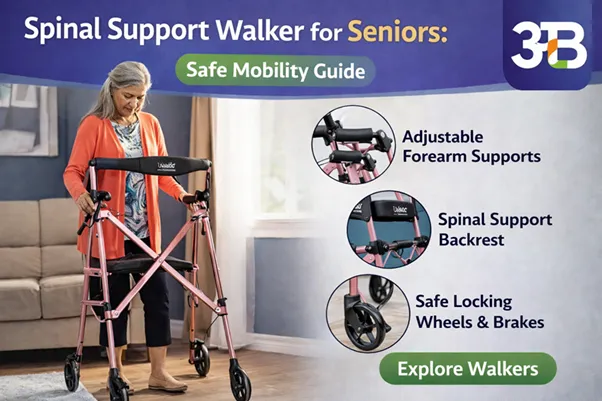
Walkers designed for seniors with spinal problems include
several features that improve comfort and stability. Adjustable height handles
allow users to maintain proper posture while walking, which reduces pressure on
the spine. Lightweight aluminium frames make the walker easy to manoeuvre
without causing additional strain on the body. Ergonomic hand grips provide
comfortable support and reduce wrist fatigue during prolonged use. Non-slip
rubber tips provide excellent traction on smooth indoor floors, preventing
accidental slips. Some walkers also include front wheels that allow smoother
movement without requiring the user to lift the walker repeatedly. Experts
listed on Aarogyaa Bharat hospital pages often recommend walkers with
strong frames and adjustable designs to ensure safe mobility for individuals
with spinal conditions.
Comparison Between Different Walkers for Spinal Support
|
Stability
Level |
Movement
Style |
Best Use
Case |
|
|
Standard
Walker |
Very high |
Lift and move |
Severe spinal
instability |
|
Walker with
Wheels |
Moderate |
Smooth
movement |
Indoor
walking with support |
|
Rollator
Walker |
Moderate |
Rolling
motion |
Outdoor
walking and rest support |
|
Foldable
Walker |
High |
Portable |
Home mobility
and travel |
This comparison helps families choose the most suitable
walker depending on the severity of spinal problems and mobility requirements.
Benefits of Using Walkers for Spinal Conditions
• Reduces pressure on the lower back and spine
• Improves balance during walking
• Prevents falls caused by instability
• Supports rehabilitation after spinal surgery
• Encourages regular movement and exercise
• Helps seniors maintain independence
• Reduces fatigue during walking
These benefits make walkers an essential mobility aid for
seniors managing spinal health problems.
Role of Walkers in Spinal Rehabilitation Programs
Spinal rehabilitation programs often include physiotherapy
exercises designed to strengthen back muscles and improve posture. Walking
exercises form an important part of these programs because they promote
circulation and help restore mobility. Walkers provide the stability required
for patients to perform these exercises safely. Physiotherapists listed on Aarogyaa
Bharat hospital pages frequently use walkers during rehabilitation sessions
for patients recovering from spinal surgeries or chronic back pain conditions.
These exercises gradually increase walking distance and improve endurance while
ensuring proper posture. Walkers allow patients to practice walking confidently
while minimizing spinal strain.
Using Healthcare Calculators to Monitor Recovery
Tracking recovery progress helps families understand how
spinal rehabilitation improves mobility over time. Aarogyaa Bharat
healthcare calculators allow caregivers to estimate physiotherapy
timelines, treatment costs, and expected recovery milestones. These tools
provide insights into mobility improvements and rehabilitation progress. For
example, spinal surgery recovery calculators may estimate how long patients
will require walker support before transitioning to independent walking. By
combining walker-assisted mobility with physiotherapy programs and healthcare
calculators, seniors can follow a structured recovery plan that improves
long-term spinal health.
Choosing the Right Walker for Seniors with Spinal Issues
Selecting the correct walker is essential for ensuring safe
and comfortable mobility for seniors with spinal conditions. Adjustable walkers
are often recommended because they allow height customization that helps
maintain proper posture. Lightweight walkers reduce physical effort during
walking while providing stable support. Non-slip rubber tips or wheels should
be selected based on the walking environment. Experts listed on Aarogyaa
Bharat city pages often recommend walkers with ergonomic handles that reduce
wrist strain and improve grip comfort. Consulting orthopaedic specialists
before purchasing mobility aids can help ensure the correct choice for spinal
support.
Where to Buy Reliable Walkers in India
Reliable walkers should always be purchased from trusted
medical equipment providers that follow healthcare safety standards.
Hospital-grade walkers are designed with durable materials and ergonomic
features that support spinal health and mobility safely. Aarogyaa Bharat
provides medically recommended walkers designed for spinal rehabilitation, home
mobility, and elderly care. With availability across major city pages including
Pune, Mumbai, Delhi, Bangalore, and Hyderabad, Aarogyaa Bharat ensures families
across India can easily access reliable mobility equipment for spinal health
support.
Conclusion
Spinal problems can significantly affect mobility, balance, and independence for elderly individuals. Conditions such as spinal stenosis, disc degeneration, and chronic back pain often make walking difficult without proper support. Walkers provide a practical mobility solution by reducing spinal strain while improving stability during walking. These devices help seniors move safely and maintain independence despite spinal health challenges. When combined with physiotherapy guidance, hospital consultations, and healthcare calculators available through Aarogyaa Bharat, walkers become an essential tool for managing spinal health and improving long-term mobility. Choosing the right walker can significantly enhance comfort, safety, and quality of life for seniors with spinal conditions.