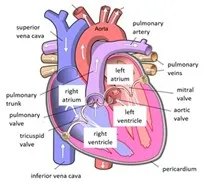
Understanding these phases helps explain blood pressure
readings, heart sounds, and many common heart conditions.
What Is the Cardiac Cycle?
The cardiac cycle is one complete heartbeat - from the start of one contraction to the start of the next.
It includes:
- Filling
of the heart with blood
- Pumping
blood out to the lungs and body
- Relaxation
before the next beat
In a resting adult, one cycle lasts about 0.8 seconds.
What Is Systole?
Systole is the phase when the heart contracts.
What happens during systole?
- Ventricles
contract forcefully
- Blood
is pumped out:
- Right
ventricle → lungs
- Left
ventricle → rest of the body
- Blood
pressure rises to its maximum level
The top number in a BP reading (e.g., 120/80) represents
systolic pressure.
What Is Diastole?
Diastole is the phase when the heart relaxes.
What happens during diastole?
- Heart
muscles relax
- Chambers
fill with blood
- Coronary
arteries supply oxygen to the heart
- Blood
pressure falls to its lowest point
The bottom number in BP (e.g., 80) is the diastolic
pressure.
Diastole is vital because the heart itself gets nourished
during this phase.
Atrial vs Ventricular Activity During the Cardiac Cycle
The cardiac cycle involves two sets of chambers:
- Atria
receive blood
- Ventricles
pump blood out
Sequence:
- Atrial
systole - atria push blood into ventricles
- Ventricular
systole - ventricles pump blood out
- Diastole
- all chambers relax and refill
This timing ensures efficient circulation.
Heart Valves During Systole and Diastole
Heart valves act like one-way doors:
- Mitral
& tricuspid valves open during diastole
- Aortic
& pulmonary valves open during systole
- Valve
closure produces heart sounds:
- S1 (lub) - start of systole
- S2 (dub) - start of diastole
Abnormal valve function can cause murmurs.
How the Cardiac Cycle Relates to Blood Pressure
Blood pressure changes with the cardiac cycle:
|
Phase |
Pressure |
|
Systole |
Highest |
|
Diastole |
Lowest |
Doctors analyze both values to assess heart health, arterial
flexibility, and disease risk.
Clinical Importance of Systole and Diastole
Abnormal readings may indicate:
- High
systolic BP → arterial stiffness
- High
diastolic BP → poor relaxation
- Low
diastolic BP → reduced coronary flow
That’s why both numbers matter.
How Aarogyaa Bharat Supports Heart Health
At Aarogyaa Bharat, we help patients and caregivers with:
- Accurate
BP monitoring devices
- Correct
cuff sizes
- Heart-health
education
- Medical
equipment for home and clinics
Good heart care begins with correct understanding.
Conclusion
The cardiac cycle - through systole and diastole - keeps
life moving with every beat.
Knowing how these phases work empowers you to understand blood pressure, heart
sounds, and cardiovascular health more clearly.
For trusted medical knowledge and quality healthcare
solutions, Aarogyaa Bharat is here for you.