What Is a Pulse Oximeter and How Does It Work?
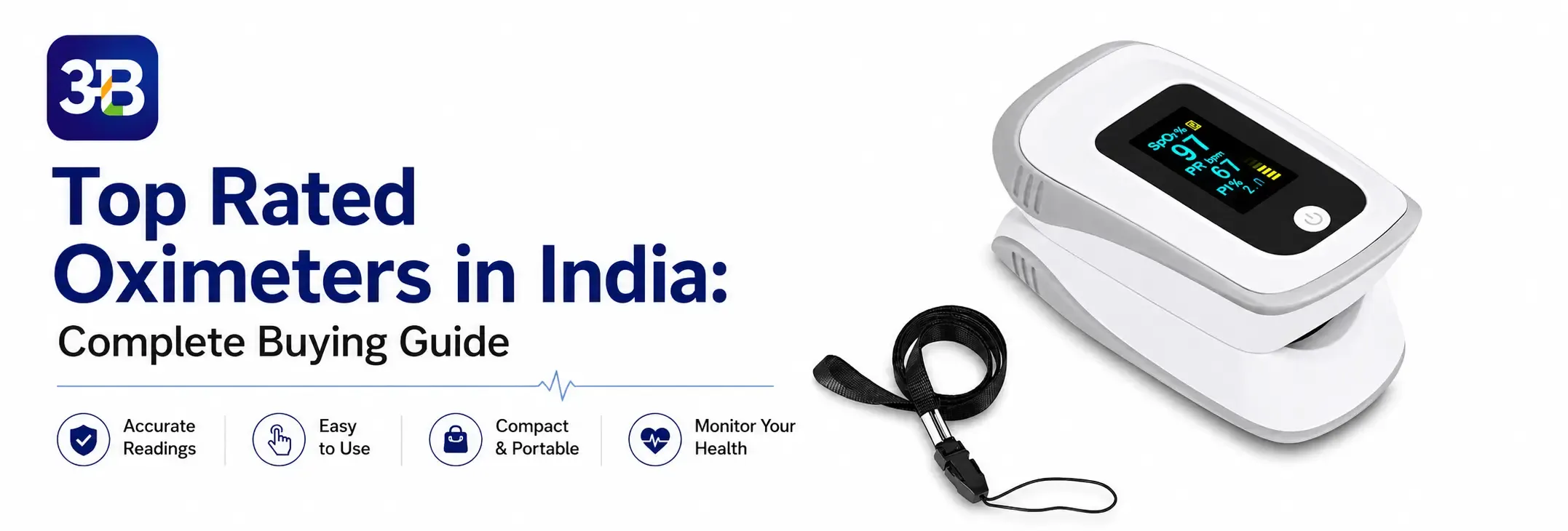
A pulse oximeter clips onto
your fingertip and uses two wavelengths of light red and infrared to measure
the percentage of oxygenated hemoglobin in your blood. This is displayed as
SpO2 (oxygen saturation percentage) along with your pulse rate. The measurement
is completely painless and provides results within seconds.
Who Needs a Pulse Oximeter?
●
Patients with
respiratory conditions such as asthma, COPD, or pneumonia
●
Anyone who had or is
recovering from COVID-19
●
Patients with heart
conditions or heart failure
●
Elderly individuals who
are at risk of respiratory complications
●
Athletes who want to
monitor oxygen levels during training
●
Frequent travellers to
high altitudes where oxygen levels are lower
●
Home care patients on
oxygen therapy
Key Features to Look for in a Pulse Oximeter
1. Accuracy (SpO2 Error Rate)
The most critical feature of
any oximeter is its accuracy. Look for devices with an SpO2 accuracy of ±2% or
better. Clinically validated devices meeting CE, FDA, or BIS certification
standards are the most reliable. Avoid very cheap, unbranded devices that may
show inaccurately high readings.
2. Display Type and Readability
Most oximeters use OLED or LED
displays. Look for:
●
Large, bright display
visible in all lighting conditions
●
Multiple display
orientations (some rotate the display for different viewing angles)
●
Simultaneous display of
SpO2, pulse rate, and plethysmograph waveform
3. Perfusion Index (PI)
The Perfusion Index measures
the strength of the blood flow at the measurement site. A low PI (below 0.4)
indicates poor circulation and may result in inaccurate readings.
Higher-quality oximeters display the PI to help assess reading reliability.
4. Plethysmograph Waveform
The plethysmograph (or pleth
wave) is a graphical representation of blood flow in each heartbeat. A stable,
regular waveform confirms that the reading is reliable. This feature is
valuable for healthcare professionals and informed patients.
5. Alarm Settings
Programmable alarms that alert
you when SpO2 falls below a set threshold (commonly 90 or 94%) are invaluable
for home care patients and those on oxygen therapy.
6. Battery Life
Most pulse oximeters run on AA
or AAA batteries. Look for devices that offer at least 20-30 hours of
continuous use per set of batteries. Some newer models are rechargeable via
USB.
7. Bluetooth Connectivity
Bluetooth-enabled oximeters
connect to smartphone apps for data logging, trend monitoring, and sharing
readings with healthcare providers. This is particularly useful for patients
managing chronic respiratory or cardiac conditions.
Understanding Your Oximeter Readings
|
SpO2 Reading |
Interpretation |
Action Required |
|
95% – 100% |
Normal |
No action needed |
|
91% – 94% |
Mild hypoxemia |
Monitor closely; consult
doctor if persistent |
|
86% – 90% |
Moderate hypoxemia |
Seek medical attention
promptly |
|
Below 86% |
Severe hypoxemia |
Emergency — call ambulance
immediately |
Important Factors That Can Affect Oximeter Accuracy
Pulse oximeters can give
inaccurate readings in certain situations. Be aware of:
●
Poor circulation: Cold
hands, shock, or peripheral vascular disease can reduce signal quality
●
Nail polish: Dark colors
(particularly blue, black, or purple) can interfere with light transmission -
remove polish before measuring
●
Movement: Keep the
finger completely still during measurement
●
Skin pigmentation: Some
older devices may give lower SpO2 readings in people with darker skin tones.
Look for devices validated across skin tones.
●
Bright ambient light:
Very bright fluorescent or sunlight can interfere with some oximeters
How to Use a Pulse Oximeter Correctly
1. Warm your hands if they
are cold poor circulation causes inaccurate readings.
2. Remove any nail polish
from the finger you will use.
3. Clip the oximeter to the
index or middle finger of either hand.
4. Remain still and relaxed
for 30-60 seconds until the reading stabilizes.
5. Read the SpO2 percentage
and pulse rate simultaneously.
6. Take 3-5 readings and
record the most stable value.
Types of Oximeters Available in India
|
Type |
Description |
Best For |
Price Range (₹) |
|
Fingertip Oximeter |
Clip-on fingertip device |
Home use, travel |
₹500 – ₹5,000 |
|
Tabletop Oximeter |
Desk-based with continuous
monitoring |
ICU, clinic use |
₹5,000 – ₹50,000 |
|
Handheld Oximeter |
Portable with probe and
display unit |
Professional use |
₹3,000 – ₹30,000 |
|
Wrist Oximeter |
Wearable watch-style with
overnight monitoring |
Sleep apnea monitoring |
₹3,000 – ₹15,000 |
|
Pediatric Oximeter |
Smaller probe for children |
Infant/child monitoring |
₹1,500 – ₹10,000 |
Conclusion
A pulse oximeter is one of the
most valuable and affordable health monitoring tools you can own. Whether you
are managing a chronic respiratory or cardiac condition, recovering from
illness, or simply want to keep a watchful eye on your family's health, a
quality oximeter provides fast, reliable, and actionable information. The key
is to choose a certified, accurate device from a reputable manufacturer and to
understand what your readings mean so you can respond appropriately.
Why Choose Aarogyaa Bharat?
When it comes to reliable,
affordable, and high-quality medical equipment, Aarogyaa Bharat is your trusted
partner. Whether you are searching for hospital-grade devices for home use or
looking to rent medical equipment for recovery, Aarogyaa Bharat offers an
extensive range of products with expert guidance.
Visit us today at
https://aarogyaabharat.com/ and explore hundreds of certified medical devices,
compare prices, read expert reviews, and place your order with complete
confidence. Our team of healthcare professionals is always ready to help you
make the right choice for your health and well-being.
Contact Aarogyaa Bharat now
because your health deserves the best.