What Is a Hospital Bed?
A hospital bed is a specially designed medical bed that
allows adjustable positioning of the head, legs, and overall height to support
patients during treatment and recovery. Unlike regular beds, hospital beds are
engineered to:
- Reduce
patient discomfort
- Prevent
pressure ulcers (bedsores)
- Improve
breathing and circulation
- Assist
medical procedures
- Enable
easier caregiving
Hospital beds are widely used in:
- Hospitals
& ICUs
- Clinics
& nursing homes
- Rehabilitation
centers
- Home
healthcare settings
Why Hospital Beds Are Essential in Healthcare
Hospital beds are a critical part of patient care
infrastructure.
Key Importance of Hospital Beds
- Enable
correct patient positioning
- Reduce
complications in long-term patients
- Improve
respiratory and cardiac comfort
- Minimize
caregiver strain
- Enhance
patient safety and dignity
In short, the right hospital bed improves both medical
outcomes and quality of life.
Major Types of Hospital Beds
Hospital beds are broadly categorized based on adjustment
mechanism and usage:
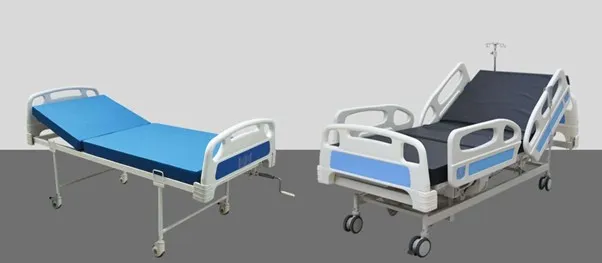
- Manual
Hospital Beds
- Semi-Electric
Hospital Beds
- Fully
Electric Hospital Beds
- ICU
Hospital Beds
- Specialty
& Home-Care Hospital Beds
This blog focuses deeply on the three primary categories
while also covering advanced and specialty beds.
Manual Hospital Beds
What Is a Manual Hospital Bed?
A manual hospital bed is operated using hand cranks to
adjust the head, leg, or height positions. These beds do not require
electricity and rely entirely on physical effort.
Key Features of Manual Hospital Beds
- Hand-crank
operated
- No
electricity required
- Fixed
or limited height adjustment
- Strong
steel or aluminium frame
- Side
rails for safety
Types of Manual Hospital Beds
- Manual
Fowler Bed
- Manual
Semi-Fowler Bed
- Manual
ICU-style Bed (basic)
Uses of Manual Hospital Beds
Manual beds are commonly used in:
- Government
hospitals
- Rural
healthcare centers
- Emergency
backup wards
- Home
care with limited mobility needs
They are ideal when:
- Budget
is limited
- Electricity
supply is unreliable
- Patient
repositioning is minimal
Advantages of Manual Hospital Beds
- Affordable
and cost-effective
- Low
maintenance
- Works
without power
- Durable
and long-lasting
Limitations of Manual Hospital Beds
- Requires
physical effort
- Not
suitable for heavy or immobile patients
- Less
comfort for long-term care
Semi-Electric Hospital Beds
What Is a Semi-Electric Hospital Bed?
A semi-electric hospital bed combines electric controls for
head and leg adjustment with manual height adjustment. This hybrid design
balances comfort and affordability.
Key Features of Semi-Electric Hospital Beds
- Electric
head and leg movement
- Manual
height control
- Hand-held
remote
- Side
rails for fall protection
- Compatible
with medical mattresses
Uses of Semi-Electric Hospital Beds
Semi-electric beds are widely used in:
- Private
hospitals
- Nursing
homes
- Post-surgery
recovery wards
- Long-term
home care
They are ideal for:
- Patients
needing frequent position changes
- Reduced
caregiver strain
- Moderate
medical monitoring
Advantages of Semi-Electric Hospital Beds
- Better
patient comfort than manual beds
- Easier
repositioning
- Affordable
compared to fully electric beds
- Suitable
for home care
Limitations of Semi-Electric Hospital Beds
- Height
adjustment still requires manual effort
- Requires
electricity for full functionality
Fully Electric Hospital Beds
What Is a Fully Electric Hospital Bed?
A fully electric hospital bed uses electric motors for all
adjustments, including:
- Head
position
- Leg
position
- Bed
height
All movements are controlled using a remote control or
control panel.
Key Features of Fully Electric Hospital Beds
- Motorized
height, head & leg control
- Zero-effort
repositioning
- Advanced
safety rails
- Trendelenburg
& reverse Trendelenburg (in advanced models)
- Compatible
with ICU mattresses
Uses of Fully Electric Hospital Beds
Fully electric beds are commonly used in:
- ICUs
and HDUs
- Critical
care units
- Advanced
home ICU setups
- Long-term
immobile patient care
They are ideal when:
- Patient
is fully dependent
- Frequent
repositioning is required
- Caregiver
efficiency is critical
Advantages of Fully Electric Hospital Beds
- Maximum
patient comfort
- Minimal
caregiver strain
- Improved
safety and positioning
- Ideal
for critical and long-term care
Limitations of Fully Electric Hospital Beds
- Higher
cost
- Requires
continuous power supply
- Needs
periodic maintenance
ICU Hospital Beds (Advanced Category)
ICU beds are advanced fully electric beds with added medical
features.
Special ICU Bed Features
- CPR
release function
- X-ray
compatible platform
- Weighing
scale integration
- Multiple
motor controls
- Central
locking wheels
Used for critical, ventilated, and unstable patients.
Hospital Beds for Home Care
With the growth of home healthcare, hospital beds are now
widely used at home.
Best Beds for Home Care
- Semi-electric
beds
- Fully
electric beds
- Fowler
beds with air mattress
Used for:
- Elderly
care
- Stroke
recovery
- Post-surgery
care
- Long-term
illness
Hospital Bed Mattresses & Accessories
Essential Accessories
- Anti-bedsore
air mattress
- Foam
medical mattress
- IV
pole
- Side
rails
- Over-bed
table
- Bedside
lockers
Hospital Bed Price in India
Approximate Price Range
- Manual
hospital bed: ₹8,000 - ₹18,000
- Semi-electric
hospital bed: ₹25,000 - ₹55,000
- Fully
electric hospital bed: ₹55,000 - ₹1,50,000+
- ICU
hospital bed: ₹1,20,000 - ₹3,50,000+
Prices vary based on features, brand, and accessories.
How to Choose the Right Hospital Bed
Consider:
- Patient
mobility level
- Duration
of use
- Home
vs hospital setup
- Caregiver
availability
- Budget
and space
Maintenance & Safety Tips
- Regular
motor checks
- Proper
mattress cleaning
- Wheel
locking during use
- Electrical safety inspection
Conclusion
Hospital beds are not just furniture they are medical support systems that directly affect patient comfort, safety, and recovery speed. Understanding the types of hospital beds manual, semi-electric, and fully electric helps you choose the right solution for hospitals, clinics, and home care settings.
At Aarogyaa Bharat, we are committed to helping patients and
healthcare providers make confident, informed decisions with clarity and
compassion.