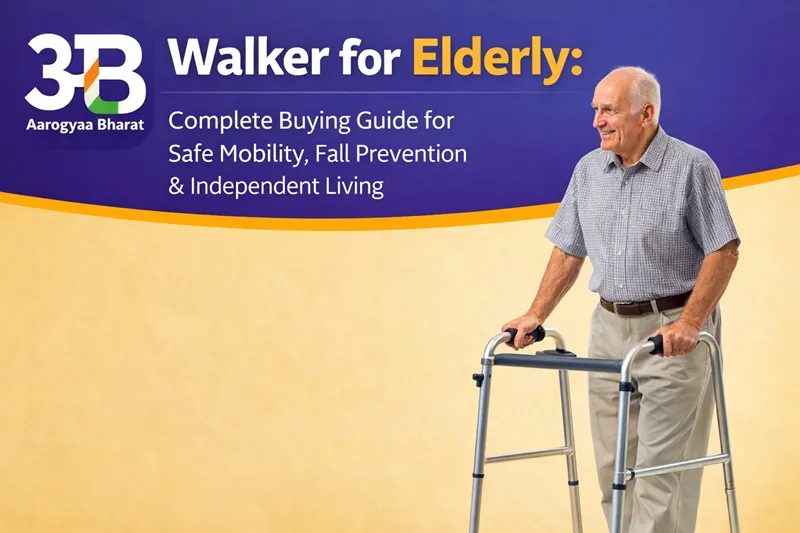
Aarogyaa Bharat (aarogyaabharat.com) offers trusted, medical-grade walkers and mobility aids designed to ensure safe walking, fall prevention, and confident independent living for seniors across India.
Why a Walker is Essential for Elderly Mobility and Safety
As individuals age, natural muscle strength declines, joint
flexibility reduces, and balance becomes less stable, increasing the risk of
falls and injuries. A walker provides a stable base of support that allows
elderly individuals to move safely without depending entirely on caregivers.
Many seniors restrict movement due to fear of falling, which leads to
stiffness, poor circulation, and slower recovery from illnesses or surgeries. A
properly selected walker encourages regular movement while reducing strain on
knees, hips, and lower back. Families planning elderly care often combine
walkers with hospital equipment pages that include patient beds, transfer aids,
and bedside support accessories to create a secure and mobility-friendly home
environment. By integrating walkers into a broader mobility support plan,
seniors can regain independence while maintaining dignity in daily activities.
Understanding When an Elderly Person Needs a Walker
Recognizing the right time to introduce a walker is critical
for preventing accidents and improving mobility. Signs such as frequent
imbalance, difficulty standing up from chairs, post-surgery weakness, arthritis
pain, or recovering from fractures often indicate the need for a walking aid.
Seniors who hesitate while walking or hold onto walls and furniture for support
may benefit from a walker that provides stability and confidence. Caregivers
often consult rehabilitation categories and physiotherapy sections to
understand how walkers can complement recovery exercises. Introducing a walker
early can prevent falls and reduce long-term complications associated with
limited mobility.
Types of Walkers Available for Elderly Users
Walkers are available in various designs, each suited for
different mobility levels and health conditions. Standard walkers without
wheels offer maximum stability and are ideal for seniors who need strong
balance support during early rehabilitation. Front-wheel walkers reduce lifting
effort and allow smoother movement, making them suitable for moderate mobility
needs. Rollator walkers come with four wheels, hand brakes, and often a
built-in seat, allowing users to rest during longer walks. Foldable walkers are
lightweight and easy to store, making them highly practical in compact Indian
households. Exploring mobility aid sections and hospital equipment pages helps
families compare walker models alongside related elderly care products to
ensure compatibility with specific needs.
Standard Walker vs Rollator Walker: Which is Better?
The choice between a standard walker and a rollator walker
depends on the individual’s strength and daily routine. Standard walkers
provide strong support and require lifting with each step, offering controlled
and stable movement for seniors recovering from surgery. Rollators are designed
for more active seniors who require less support but appreciate the convenience
of wheels and seating. Families often review mobility categories and compare
features across hospital support sections to determine which type aligns best
with medical advice and lifestyle requirements. Understanding usage patterns
helps in selecting the safest and most comfortable option.
Key Features to Consider Before Buying a Walker
Choosing the right walker involves evaluating multiple
features that affect comfort and safety. Adjustable height ensures correct
posture, preventing back strain and shoulder discomfort. Ergonomic hand grips
improve comfort and reduce wrist pressure during prolonged use. Anti-slip
rubber tips or high-quality wheels enhance stability on smooth flooring
surfaces such as marble or tiles. Lightweight aluminium frames offer durability
while remaining easy to handle, and foldable designs improve portability. Many
caregivers use healthcare calculators and elderly care planning tools to
estimate costs when combining walkers with beds, wheelchairs, or rehabilitation
equipment, ensuring a balanced and sustainable care plan.
Walker Types and Ideal Usage Comparison
|
Walker
Type |
Best For |
Key
Advantage |
Recommended
Environment |
|
Standard
Walker |
Weak balance,
early recovery |
Maximum
stability |
Indoor
rehabilitation |
|
Front-Wheel
Walker |
Moderate
mobility support |
Easier
forward motion |
Daily indoor
use |
|
Rollator
Walker |
Active
seniors |
Wheels,
brakes, and seat |
Indoor &
outdoor walking |
|
Foldable
Walker |
Travel-friendly
mobility |
Lightweight
and compact |
Small spaces
& transport |
Weight Capacity and Frame Durability
A walker must match the user’s weight and physical strength
to ensure safety and long-term durability. High-quality aluminium or steel
frames provide reliable support while maintaining structural stability during
daily use. Overloading a walker beyond its weight capacity can compromise
safety, so checking manufacturer specifications is essential. Families
exploring hospital equipment pages often compare build quality alongside other
mobility aids to ensure consistency in safety standards. Choosing a durable
walker reduces maintenance issues and ensures dependable performance over time.
Adjustable Height and Proper Fit
Proper walker height is crucial for maintaining correct
posture and preventing strain. When standing upright, the handles should align
with the user’s wrist level, allowing elbows to bend slightly. A poorly
adjusted walker can lead to back pain, shoulder discomfort, and reduced
stability. Many caregivers consult physiotherapy categories and rehabilitation
sections to understand posture alignment techniques that improve walking
comfort. Ensuring the right fit enhances safety and allows elderly users to walk
naturally without excessive effort.
Indoor vs Outdoor Walker Selection
Environmental considerations play an important role in
choosing the right walker. Indoor walkers should be compact and easy to manoeuvre
through narrow spaces, while outdoor walkers benefit from larger wheels and
braking systems for uneven surfaces. Seniors who frequently visit parks or
markets may require a rollator with a seat for resting. Families often explore
mobility aid categories within hospital support sections to identify models
suitable for both indoor and outdoor use. Matching the walker design to daily
lifestyle ensures consistent and safe mobility.
Role of Walkers in Post-Surgery and Rehabilitation
Walkers are frequently recommended after joint replacement
surgeries, fractures, or stroke recovery to provide stable support during
rehabilitation. Controlled walking with a walker promotes gradual muscle
strengthening and balance improvement without excessive strain on healing
joints. Physiotherapists often combine walker use with exercise equipment found
in rehabilitation categories to create structured recovery plans. Integrating
walkers into physiotherapy routines enhances progress and reduces the likelihood
of setbacks during recovery.
Benefits of Using a Walker for Fall Prevention
Falls are one of the leading causes of injury among elderly
individuals, and using a walker significantly reduces this risk by offering
consistent support. Regular walking with assistance improves circulation,
strengthens muscles, and enhances overall mobility. Seniors who feel secure
while walking are more likely to remain active, which contributes to improved
mental and emotional well-being. Caregivers often combine walkers with home
safety accessories such as grab bars, bedside commodes, and anti-slip supports
available in hospital care sections to create a comprehensive fall-prevention
strategy.
Rental vs Purchase Decision
Deciding whether to rent or purchase a walker depends on the
expected duration of use and budget considerations. Renting is suitable for
short-term recovery, while purchasing may be more cost-effective for long-term
mobility support. Healthcare calculators help families estimate total expenses
when walkers are part of a broader home care plan that includes beds,
physiotherapy equipment, and mobility accessories. Exploring hospital equipment
categories ensures that caregivers compare pricing and durability before making
a final decision.
Maintenance and Safety Checks
Regular maintenance ensures that a walker remains safe and
functional. Rubber tips, wheel alignment, and braking systems should be
inspected periodically to prevent unexpected failures. Cleaning the frame and
ensuring that folding mechanisms operate smoothly also contributes to long-term
reliability. Families often integrate mobility aids into their broader hospital
care planning strategy, ensuring that all equipment remains in optimal
condition for daily use.
Important Feature Checklist
|
Feature |
Why It
Matters |
What to
Verify |
|
Adjustable
Height |
Proper
posture alignment |
Wrist-level
handle position |
|
Strong Frame |
Long-term
durability |
Aluminium or
steel construction |
|
Comfortable
Grips |
Reduced wrist
strain |
Ergonomic
padded handles |
|
Anti-Slip
Tips/Wheels |
Stability |
High-traction
rubber tips |
|
Foldability |
Easy storage
& travel |
Smooth
folding mechanism |
Emotional and Psychological Benefits
Mobility aids contribute not only to physical safety but
also to emotional confidence. Seniors who can walk independently often
experience reduced anxiety and increased motivation to participate in daily
activities. A walker restores a sense of control, helping elderly individuals
feel less dependent on others. Combining walkers with supportive elderly care
solutions creates a balanced environment that promotes both physical recovery
and mental well-being.
Conclusion
Selecting the right walker for elderly individuals requires
careful evaluation of health conditions, daily routines, safety features, and
long-term planning. By exploring hospital pages, rehabilitation
categories, mobility aids sections, elderly care solutions, and healthcare
calculators, families can build a comprehensive support system tailored to
their loved one’s needs. A well-chosen walker enhances independence, reduces
fall risks, and supports active living, allowing seniors to move confidently
while maintaining dignity and comfort.