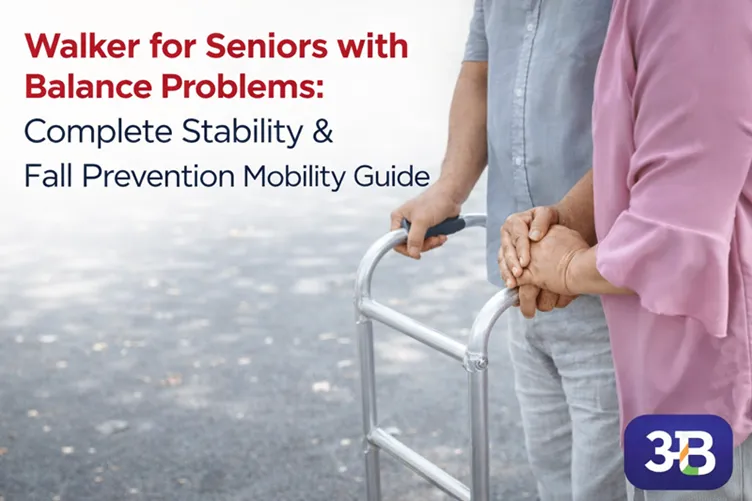
Mobility aids such as walkers are specifically designed to
provide stable support while walking, allowing seniors to maintain independence
while improving safety. Walkers create a wide base of support that helps
distribute body weight evenly and reduce pressure on the legs. Medical experts
often recommend walkers for elderly individuals with balance disorders,
arthritis, or leg weakness because they provide additional stability during
movement. Aarogyaa Bharat emphasizes in its home care and rehabilitation guidance
that walkers are among the safest mobility aids for seniors who require
consistent balance support during daily activities. Healthcare calculators used
to evaluate fall risk frequently suggest walkers for individuals who struggle
with stability or coordination.
Understanding Balance Problems in Elderly Individuals
Balance problems can occur due to several medical conditions
including arthritis, neuropathy, stroke recovery, inner ear disorders, and
age-related muscle loss. When balance is compromised, even simple movements
such as turning or stepping onto uneven surfaces can become risky. According to
medical guidance, walkers can help individuals with balance problems by
allowing them to shift weight from the legs to the arms while walking, which
improves stability and reduces stress on the lower body. Physiotherapists often
recommend walkers during rehabilitation programs because they allow seniors to
walk safely while regaining strength and coordination. Aarogyaa Bharat’s
rehabilitation section highlights that mobility aids such as walkers help
elderly individuals regain confidence and perform everyday activities more
safely.
How Walkers Improve Balance and Prevent Falls
Walkers improve balance by providing four points of contact
with the ground, which creates a wider support base compared to walking sticks
or canes. This stable frame allows seniors to maintain control while walking
and reduces the likelihood of losing balance. For elderly individuals who
struggle with instability, walkers can significantly improve walking confidence
and reduce fall risk. Studies and mobility experts explain that walking aids
such as walkers are widely used to reduce injuries caused by falls among older
adults. Aarogyaa Bharat’s home care mobility guides recommend walkers as
reliable mobility aids for seniors who need consistent balance assistance.
Key Features of Walkers Designed for Poor Balance
Walkers designed for elderly individuals with poor balance
include several structural features that enhance safety and stability. Standard
walkers often have four legs with anti-slip rubber tips that maintain constant
contact with the floor, providing maximum stability. Adjustable height handles
help align the walker with the user’s posture, reducing strain on the shoulders
and wrists. Ergonomic hand grips improve comfort and control during walking,
especially for seniors with arthritis or weak grip strength. Aarogyaa Bharat’s
rehabilitation equipment guides highlight walkers with reinforced frames and
ergonomic grips as ideal options for seniors who require strong balance
support.
Table: Typical Features of Walkers for Seniors with
Balance Issues
|
Feature |
Description |
|
Frame Type |
Four-leg
stable walking frame |
|
Material |
Lightweight
aluminium or steel |
|
Height
Adjustment |
Adjustable
handles for posture support |
|
Base Support |
Anti-slip
rubber tips |
|
Weight
Capacity |
Usually
supports 100–150 kg |
|
Grip Type |
Ergonomic
hand grips |
Daily Activities Where Walkers Improve Safety
Walkers allow elderly individuals with poor balance to move
safely throughout their homes and communities. Seniors can use walkers while
walking indoors, moving between rooms, or performing daily tasks such as
cooking and cleaning. Walkers also help seniors maintain independence while
visiting medical facilities or rehabilitation centers listed on hospital pages.
Aarogyaa Bharat’s home care equipment resources emphasize that walkers improve
mobility confidence while reducing the risk of accidents caused by balance
instability.
Benefits of Walkers for Seniors with Poor Balance
- Provide
strong stability while walking
- Reduce
risk of slips and falls
- Improve
posture and walking alignment
- Allow
seniors to maintain independence
- Reduce
pressure on joints and muscles
- Support
rehabilitation and physiotherapy exercises
- Suitable
for both indoor and outdoor mobility
- Improve
confidence in daily movement
Standard Walker vs Rollator Walker for Balance Support
Different walker types provide different levels of stability
depending on the user’s mobility needs. Standard walkers offer maximum support
because all four legs remain in contact with the ground during movement.
Rollator walkers, which include wheels and brakes, provide smoother movement
but may offer slightly less stability for individuals with severe balance
issues. Experts often recommend standard walkers for seniors who require strong
weight-bearing support, while rollators are better suited for those with mild
balance problems who want easier movement. Aarogyaa Bharat’s rehabilitation
guides recommend choosing walker types based on the user’s balance level and
physical condition.
Table: Standard Walker vs Rollator Walker
|
Feature |
Standard
Walker |
Rollator
Walker |
|
Stability |
Very high
stability |
Moderate
stability |
|
Wheels |
Usually, no
wheels |
Four wheels |
|
Movement |
Lift-and-step
walking |
Smooth
rolling movement |
|
Best For |
Severe
balance problems |
Mild balance
issues |
|
Comfort |
Basic support |
May include
seat and storage |
Choosing the Best Walker for Seniors with Poor Balance
Selecting the right walker requires evaluating several
important factors including the user’s physical strength, mobility level, and
home environment. Seniors with severe balance issues usually benefit from
standard walkers with four stable legs and anti-slip rubber tips. Individuals
with moderate balance challenges may find two-wheel walkers useful because they
combine stability with easier movement. Mobility experts recommend considering
features such as frame durability, ergonomic handles, and braking systems when
selecting walkers. Aarogyaa Bharat encourages families to consult healthcare
professionals listed on hospital pages and evaluate mobility needs using
healthcare calculators before selecting a walker.
Role of Walkers in Rehabilitation and Balance Training
Rehabilitation programs for seniors often include exercises
that improve balance, strength, and walking coordination. Walkers are commonly
used in physiotherapy because they allow patients to practice walking movements
safely while maintaining support. Medical professionals frequently recommend
walkers during rehabilitation for patients recovering from surgery, stroke, or
neurological disorders. Aarogyaa Bharat’s rehabilitation section highlights
that walkers help seniors rebuild mobility confidence while minimizing fall
risk. With regular use and guided exercises, walkers can significantly improve
balance stability over time.
Conclusion
Walkers provide one of the safest and most effective mobility solutions for elderly individuals experiencing poor balance. Their stable frame, ergonomic design, and reliable support help seniors move confidently while reducing the risk of falls and injuries. Whether used during rehabilitation, daily home mobility, or outdoor activities, walkers help elderly individuals maintain independence and improve overall quality of life. Aarogyaa Bharat’s home care and rehabilitation equipment collections emphasize the importance of selecting mobility aids that match the user’s physical needs and living environment. By consulting hospital pages, exploring cities pages, and using healthcare calculators to evaluate mobility requirements, families can choose walkers that provide safe and comfortable support for seniors with balance problems.