Why a Walking Stick is Essential for Elderly with Balance
Loss?
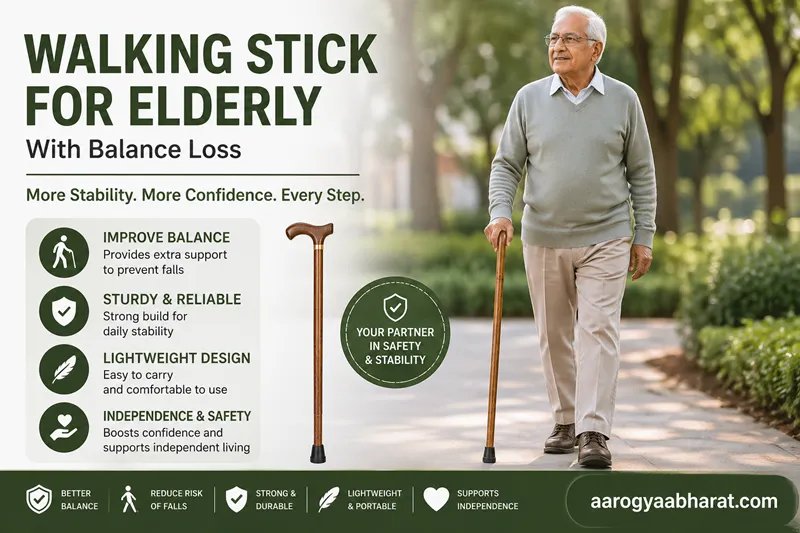
Balance loss is a common issue among elderly individuals,
often caused by age-related muscle weakness, neurological conditions, or
post-illness recovery. A walking stick serves as a reliable support system that
helps maintain stability and confidence during movement. It acts as an
additional point of contact with the ground, distributing body weight and
reducing the risk of falls. In everyday situations such as walking indoors,
climbing stairs, or moving outdoors, even slight imbalance can lead to serious
injuries. A walking stick minimizes these risks by providing consistent support
and helping users maintain proper posture. In home healthcare environments, it
plays a vital role in promoting independence, allowing elderly individuals to
move without constant supervision. As the demand for mobility aids and
rehabilitation products continues to grow, walking sticks have become an
essential category in elderly care solutions, offering a practical and
accessible way to manage balance-related challenges.
Key Features of Walking Sticks for Stability and Support
Walking sticks are designed with features that enhance
stability and comfort for elderly users. One of the most important features is
adjustable height, which ensures that the stick aligns properly with the user’s
body, preventing strain on the wrist and shoulders. Non-slip rubber tips
provide better grip on different surfaces, reducing the chances of slipping.
Ergonomic handles are designed to fit comfortably in the hand, minimizing
pressure and improving control during use. Some walking sticks come with lightweight
aluminium or sturdy wooden frames, offering a balance between durability and
ease of handling. Foldable designs are also available, making storage and
transportation convenient. Additionally, certain models include shock-absorbing
mechanisms that help reduce impact on joints during walking. With a wide range
of options available under categories such as mobility aids, orthopaedic
supports, and rehabilitation equipment, users can select a walking stick that
best suits their stability and comfort needs.
Benefits of Using a Walking Stick for Balance Loss
Using a walking stick offers several benefits for elderly
individuals dealing with balance loss. One of the primary advantages is
improved stability, as the stick provides an extra point of support, helping
users maintain balance while walking. This significantly reduces the risk of
falls and injuries, which are common concerns for seniors. A walking stick also
promotes better posture by encouraging users to stand upright while moving,
which can prevent back and joint pain. Another key benefit is increased confidence,
as users feel more secure and independent during daily activities. The
lightweight design makes it easy to carry and use for extended periods without
fatigue. Regular use of a walking stick can also encourage physical activity,
which is essential for maintaining muscle strength and overall health. In
combination with other home healthcare products such as hospital beds, patient
monitoring systems, and healthcare calculators, walking sticks contribute to a
safe and supportive living environment.
How to Choose the Best Walking Stick for Balance Issues
Selecting the right walking stick requires careful
consideration of several factors to ensure maximum safety and comfort. The
first aspect to consider is height adjustability, as the stick must be properly
aligned with the user’s body to provide effective support. The handle design is
also important, as ergonomic grips reduce pressure on the hand and improve
control. Material and weight should be evaluated, as a lightweight yet sturdy
frame is ideal for ease of use and durability. The type of tip is another key
factor, with non-slip rubber tips providing better traction on various
surfaces. Foldability can be beneficial for users who need to store or
transport the stick easily. Some walking sticks also offer additional features
such as shock absorption or multi-point bases for enhanced stability. With a
wide range of options available under categories like elderly care products,
physiotherapy equipment, and mobility aids, users can compare different models
and choose the one that best meets their needs.
Comparison Table: Walking Stick vs Walker for Balance
Support
|
Feature |
Walking
Stick |
Walker |
|
Support Level |
Moderate |
High |
|
Portability |
Very high |
Moderate |
|
Weight |
Lightweight |
Heavier |
|
Ease of Use |
Simple |
Requires more
handling |
|
Best Use |
Mild balance
loss |
Severe
mobility issues |
|
Storage |
Easy to store |
Requires more
space |
Role of Walking Sticks in Home Healthcare and
Rehabilitation
Walking sticks play a significant role in both home
healthcare and rehabilitation, especially for elderly individuals experiencing
balance loss. They are often recommended by physiotherapists as an initial
mobility aid for patients recovering from injuries or illnesses. In
rehabilitation programs, walking sticks help users practice controlled movement
and gradually improve their balance and coordination. In home care settings,
they provide a practical solution for maintaining mobility without occupying much
space or requiring complex setup. With the expansion of healthcare services
across city-based Pages and hospital support systems, walking sticks have
become easily accessible to users in various locations. They are often used
alongside other healthcare equipment such as orthopaedic supports, exercise
therapy tools, and monitoring devices. This integrated approach ensures
comprehensive patient care, focusing on both safety and mobility improvement.
Walking sticks are not just simple aids but an essential part of a structured
approach to managing balance issues.
Bullet Points: Key Advantages of Walking Sticks
- Provides
additional support for balance
- Reduces
risk of falls and injuries
- Lightweight
and easy to carry
- Improves
posture and stability
- Enhances
confidence during movement
- Suitable
for indoor and outdoor use
- Easy
to store and transport
- Encourages
independent mobility
Conclusion
A walking stick is a simple yet highly effective mobility aid for elderly individuals dealing with balance loss. Its lightweight design, ease of use, and ability to provide stability make it an essential tool for maintaining independence and safety in daily life. Whether used for routine activities or rehabilitation purposes, a walking stick offers the support needed to move confidently and securely. As healthcare continues to emphasize home-based solutions, choosing the right walking stick can make a significant difference in improving mobility and overall well-being. By understanding its features, benefits, and selection criteria, users can ensure they make the best choice for their needs.