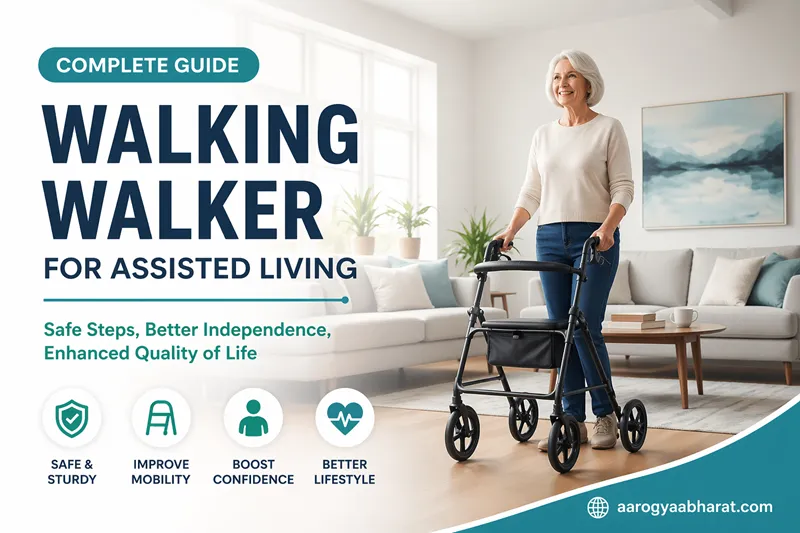
What is a Walking Walker and Why is it Important?
A walking walker is a supportive mobility device designed to
assist individuals who face difficulty in walking due to age, injury, surgery,
or chronic conditions, and it plays a vital role in assisted living
environments where safety and independence are equally important for overall
well-being and confidence in daily activities, as these walkers provide
stability, reduce the risk of falls, and allow users to perform routine tasks
like moving around the house, going to the bathroom, or walking outdoors with
greater ease and comfort, making them an essential part of home care solutions
that are widely featured across Aarogyaa Bharat Hospital Pages for patient
recovery and rehabilitation needs while also being recommended in Aarogyaa
Bharat City Pages for localized healthcare accessibility, ensuring that users
across India can find suitable options that match their physical requirements
and lifestyle preferences.
Types of Walking Walkers for Assisted Living
There are several types of walking walkers available in the
market, each designed to cater to specific needs and mobility levels, including
standard walkers without wheels that provide maximum stability for users who
need strong support, two-wheeled walkers that offer a balance between stability
and ease of movement, and rollators with four wheels, brakes, and seats that
are ideal for users who require frequent resting and better mobility for
outdoor use, and choosing the right type depends on factors such as user
strength, balance, and daily usage patterns, which is why platforms like
Aarogyaa Bharat often categorize these options under detailed product listings
and Healthcare Calculator tools to help users compare features, weight
capacity, and pricing while also enabling better decision-making through
interlinked resources that guide users toward the most suitable walking aid for
assisted living scenarios.
Key Benefits of Using a Walking Walker
Using a walking walker offers numerous benefits that
significantly improve the quality of life for elderly individuals and patients
in assisted living, as it enhances stability while walking, reduces pressure on
joints and muscles, minimizes the chances of falls and injuries, and provides
psychological confidence that encourages users to stay active and independent,
which is crucial for maintaining both physical and mental health over time, and
in addition to these advantages, walkers also support post-surgery recovery,
assist in physiotherapy routines, and help caregivers manage patients more
efficiently, making them an integral part of rehabilitation programs commonly
highlighted across Aarogyaa Bharat Hospital Pages and supported by expert
recommendations that emphasize the importance of selecting ergonomically
designed walkers with adjustable height and comfortable grips.
How to Choose the Right Walking Walker
Selecting the right walking walker requires careful
consideration of several factors such as the user’s height, weight, mobility
level, and environment in which the walker will be used, as an incorrectly
chosen walker can lead to discomfort or even increase the risk of falls, so it
is important to ensure that the walker has adjustable height settings to
maintain proper posture, sturdy construction for durability, lightweight
material for ease of handling, and additional features like wheels, brakes, or seats
depending on the user’s requirements, and Aarogyaa Bharat simplifies this
process by offering a wide range of options along with comparison tools like
the Healthcare Calculator that allow users to evaluate different models based
on their specific needs while also enabling seamless interlinking with Aarogyaa
Bharat City Pages to find nearby availability and faster delivery options.
Comparison of Walking Walker Types
|
Best For |
Key
Features |
Mobility
Level |
|
|
Standard
Walker |
Maximum
support needed |
No wheels,
strong frame |
Low |
|
Two-Wheel
Walker |
Moderate
balance support |
Front wheels,
easy movement |
Medium |
|
Rollator
(4-Wheel) |
Active users
with mobility |
Seat, brakes,
basket |
High |
|
Folding
Walker |
Travel &
storage convenience |
Lightweight,
foldable design |
Medium |
Safety Tips for Using a Walking Walker
Ensuring safety while using a walking walker is essential to
prevent accidents and maximize its benefits, and users should always adjust the
walker height properly so that their elbows are slightly bent while holding the
handles, maintain an upright posture instead of leaning too much on the walker,
use the walker on even surfaces to avoid imbalance, regularly check for wear
and tear in rubber tips or wheels, and always engage brakes when using
rollators with seats, as these simple precautions can significantly reduce the
risk of falls and injuries, and caregivers should also provide guidance and
supervision during initial use, especially for elderly users, which is why
Aarogyaa Bharat emphasizes safety guidelines across its platform along with
product recommendations that meet high-quality standards for assisted living
care.
Key Features to Look for in a Walking Walker
- Adjustable
height for proper posture
- Lightweight
yet durable frame
- Comfortable
hand grips
- Foldable
design for easy storage
- Anti-slip
rubber tips or wheels
- Seat and storage basket
(for rollators)
- Strong
weight capacity
Walking Walker for Home vs Outdoor Use
Walking walkers designed for home use are typically
lightweight, compact, and easy to manoeuvre in tight indoor spaces, whereas
outdoor walkers such as rollators are built with larger wheels, Strong frames, and etc. features like seats and
storage baskets to handle uneven surfaces and longer distances, making it
important for users to select a walker based on their primary usage
environment, and Aarogyaa Bharat provides detailed product segmentation and
interlinking through Aarogyaa Bharat City Pages so users can explore
region-specific availability and choose walkers that are suitable for both
indoor and outdoor assisted living needs while also leveraging tools like the
Healthcare Calculator to compare usability and cost-effectiveness.
Maintenance and Care for Walking Walkers
Proper maintenance of a walking walker ensures long-term
durability and safety, as users should regularly clean the frame to prevent
dirt buildup, inspect screws and joints for looseness, replace worn-out rubber
tips or damaged wheels promptly, and store the walker in a dry place to avoid
rust or material degradation, and periodic maintenance not only extends the
lifespan of the walker but also ensures consistent performance, which is
especially important in assisted living environments where reliability is
crucial, and Aarogyaa Bharat encourages users to follow maintenance guidelines
provided with each product while also offering support through its platform for
spare parts and servicing recommendations.
Conclusion
A walking walker is more than just a mobility aid; it is a tool that empowers individuals in assisted living to regain independence, confidence, and safety in their daily lives, and by choosing the right type of walker, understanding its features, and following proper usage and maintenance practices, users can significantly improve their quality of life while reducing the risk of falls and injuries, and platforms like Aarogyaa Bharat make this journey easier by offering a wide range of high-quality walkers along with helpful resources such as Aarogyaa Bharat Hospital Pages, Aarogyaa Bharat City Pages, and the Healthcare Calculator to guide users toward informed decisions and better healthcare outcomes.