An Ambu Bag, also known as a Bag Valve Mask (BVM) or manual
resuscitator, is used to manually push air or oxygen into a patient’s lungs. It
is one of the most important emergency devices found in hospitals, ambulances, operation theatres, and emergency kits.
At Aarogyaa Bharat, we believe medical knowledge should
be clear, practical, and human-friendly - not complicated or intimidating.
What Exactly Is an Ambu Bag?
An Ambu Bag is a soft, squeezable bag connected to a face
mask or airway device. When a healthcare provider squeezes the bag, air is
delivered into the lungs. When the bag is released, it refills automatically.
In simple words:
You squeeze the bag → air goes into the lungs
You release the bag → the patient exhales
This process helps patients who cannot breathe on their own
or whose breathing is not effective.
Why Is an Ambu Bag So Important?
An Ambu Bag is often the first breathing support given in
emergencies.
It is commonly used when:
- A
person collapses or goes into cardiac arrest
- Breathing
suddenly stops
- Oxygen
levels fall dangerously low
- During
CPR
- Before
placing a ventilator or breathing tube
Because it does not require electricity, it works anywhere -
even in ambulances or disaster zones.
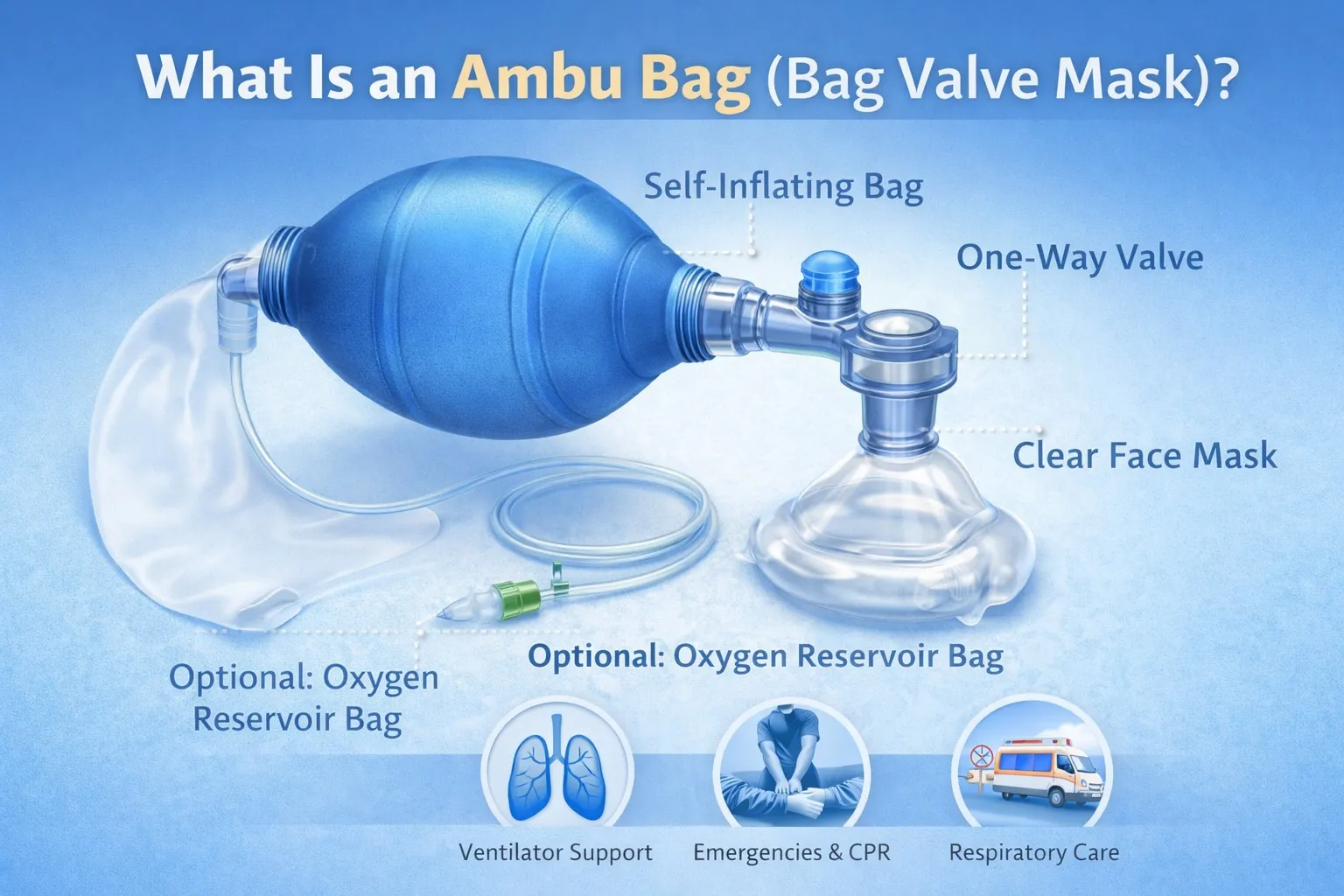
Parts of an Ambu Bag (Made Simple)
An Ambu Bag may look simple, but every part has a purpose:
- Self-inflating
bag - the part you squeeze
- Face
mask - covers the nose and mouth tightly
- One-way
valve - prevents exhaled air from re-entering
- Oxygen
inlet - connects to oxygen supply
- Reservoir
bag - helps deliver high oxygen concentration
Together, these parts ensure safe and effective ventilation.
How Does an Ambu Bag Work?
The working principle is very straightforward:
- The
mask is placed firmly on the patient’s face
- The
bag is gently squeezed
- Air
or oxygen enters the lungs
- The
bag is released
- The
patient exhales naturally
When connected to oxygen, an Ambu Bag can deliver nearly
100% oxygen, which is crucial during emergencies.
Different Types of Ambu Bags
Ambu Bags come in different sizes to match the patient:
- Adult
Ambu Bag - for adults
- Pediatric
Ambu Bag - for children
- Infant
/ Neonatal Ambu Bag - for newborns
Using the correct size is important to avoid lung injury.
Ambu Bag vs Ventilator - What’s the Difference?
|
Feature |
Ambu Bag |
Ventilator |
|
Operation |
Manual |
Automatic |
|
Power
required |
No |
Yes |
|
Portability |
Very high |
Limited |
|
Emergency use |
Excellent |
Limited |
|
Precision |
Operator
dependent |
Highly
controlled |
Ambu Bags save lives immediately
Ventilators manage long-term breathing
Proper Use Matters (Very Important)
Incorrect use can be harmful. Common mistakes include:
- Squeezing
too hard or too fast
- Poor
mask seal
- Over-ventilating
the patient
Healthcare professionals are trained to:
- Maintain
proper mask seal
- Use
the correct ventilation rate
- Prefer
two-person technique when possible
Where Is an Ambu Bag Commonly Used?
- Emergency
rooms
- Intensive
Care Units (ICUs)
- Operation
theatres
- Ambulances
- First-aid
and disaster kits
- Home
care (under medical guidance)
How Aarogyaa Bharat Helps
At Aarogyaa Bharat, we support emergency and critical care
by providing:
- High-quality
Ambu Bags
- Airway
management equipment
- Trusted
medical education content
- Reliable
healthcare solutions
Our goal is simple: help save lives with the right knowledge and tools.
Conclusion
An Ambu Bag (Bag Valve Mask) is one of the most powerful yet
simple life-saving devices in medicine. It works when machines fail, when power
is unavailable, and when time is critical.
Understanding how it works - even at a basic level - helps
caregivers, families, and healthcare workers appreciate its life-saving role.
For trusted medical guidance and emergency care knowledge,
Aarogyaa Bharat is always here.