In recent years, especially after the COVID-19 pandemic, awareness around home oxygen therapy has increased significantly across India. Among the various oxygen delivery options available, the 5 litre oxygen concentrator has emerged as the most commonly recommended and widely used solution for home care. However, despite its popularity, many families remain unsure about whether it is the right choice for their specific situation.
At Aarogyaa Bharat, we believe that informed decisions lead to better outcomes. This comprehensive guide explains in detail who should use a 5 litre oxygen concentrator, who should not, how it works, and how to use it safely at home, so families can make confident and medically sound choices.
What Is a 5 Litre Oxygen Concentrator?
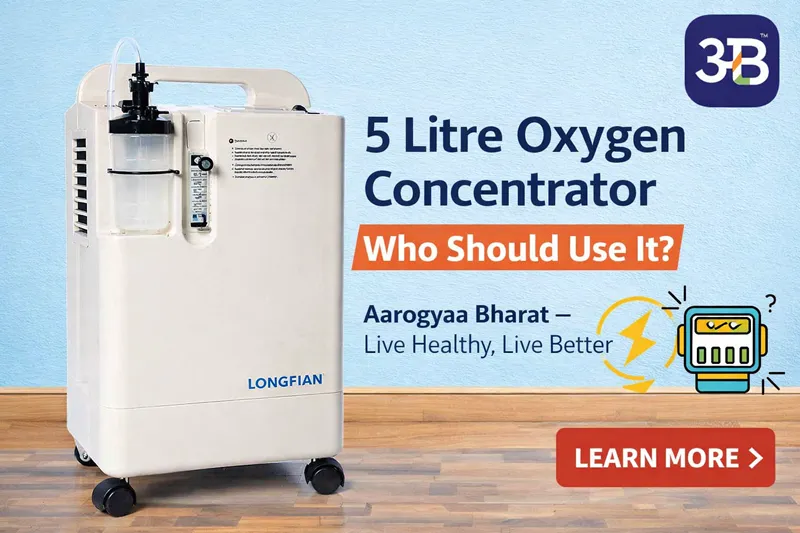
A 5 litre oxygen concentrator is a medical-grade device designed to provide a continuous supply of oxygen at flow rates of up to 5 litres per minute (LPM). It is specifically intended for patients who are unable to maintain adequate blood oxygen levels due to compromised lung or heart function. Unlike oxygen cylinders, which store a fixed amount of oxygen, concentrators generate oxygen continuously.
The device works by drawing in normal room air, which contains approximately 21% oxygen and 78% nitrogen. Through an internal filtration system known as molecular sieve technology, nitrogen is separated and removed, allowing the concentrator to deliver oxygen with a purity level of 90–95%. This oxygen is then supplied to the patient through a nasal cannula or oxygen mask.
Because a concentrator produces oxygen on demand and does not rely on stored gas, it is particularly well suited for long-duration and daily use in home environments, where safety, consistency, and ease of operation are essential.
Why Is 5 LPM Considered the Ideal Capacity for Home Use?
In clinical practice, most patients who require oxygen therapy at home are prescribed relatively low flow rates. For stable patients, doctors typically recommend oxygen flow between 1 and 3 litres per minute, depending on oxygen saturation levels and activity tolerance. Occasional increases may be required during walking, physiotherapy, or mild exertion.
A 5 litre oxygen concentrator provides a comfortable safety margin above these typical requirements. It ensures that the device is not operating at its maximum capacity at all times, which helps maintain oxygen purity and prolongs the lifespan of the machine. This balance between capacity and efficiency is one of the key reasons why 5L concentrators are so widely prescribed.
From a practical perspective, 5L concentrators are also more affordable, consume less electricity, generate less heat, and are easier to maintain than higher-capacity models. For the majority of Indian households, they represent the most practical and sustainable oxygen solution for home care.
Who Should Use a 5 Litre Oxygen Concentrator?
1. Patients with Mild to Moderate Respiratory Conditions
Patients suffering from mild to moderate respiratory illnesses often experience reduced oxygen exchange in the lungs, leading to lower blood oxygen saturation levels. These patients typically do not require hospital admission but still need supplemental oxygen to maintain comfort and prevent complications. A 5L oxygen concentrator is ideally suited for such cases.
Common conditions include Chronic Obstructive Pulmonary Disease (COPD), chronic bronchitis, controlled asthma with hypoxemia, early-stage interstitial lung disease, and post-tuberculosis lung damage. These conditions usually require low to moderate oxygen flow, which falls well within the operational range of a 5L concentrator.
By providing stable and continuous oxygen at home, the device helps reduce breathlessness, improve sleep quality, and enhance daily functioning, allowing patients to maintain independence and dignity.
2. Elderly Patients with Age-Related Breathing Difficulties
As people age, natural changes occur in lung structure and function. Lung elasticity decreases, respiratory muscles weaken, and oxygen absorption efficiency declines. Many elderly individuals experience breathlessness during routine activities such as walking, bathing, or climbing stairs, even in the absence of severe lung disease.
A 5 litre oxygen concentrator offers a safe and reliable solution for elderly patients who experience low oxygen saturation, fatigue, dizziness, or shortness of breath, especially during exertion or sleep. Unlike oxygen cylinders, concentrators eliminate the physical strain and safety risks associated with handling heavy equipment.
For families caring for elderly members at home, a concentrator provides reassurance by ensuring continuous oxygen availability while reducing dependence on emergency services and repeated hospital visits.
3. Post-COVID and Post-Viral Recovery Patients
Many patients recovering from COVID-19 or other severe respiratory infections continue to experience lingering lung issues long after the acute phase has passed. These may include reduced lung capacity, inflammation, scarring, and difficulty maintaining oxygen saturation during physical activity or sleep.
Doctors often recommend temporary home oxygen therapy during the recovery phase to support lung healing and prevent setbacks. A 5L oxygen concentrator is particularly well suited for this purpose, as it allows patients to receive oxygen support while gradually improving their breathing capacity.
Using a concentrator during recovery helps patients participate more comfortably in physiotherapy, breathing exercises, and daily activities, which are essential for long-term respiratory rehabilitation.
4. Patients Requiring Long-Term Oxygen Therapy (LTOT)
Certain chronic conditions require oxygen therapy for extended periods, sometimes spanning months or years. In such cases, reliability, safety, and cost-effectiveness become more important than peak oxygen delivery. A 5L oxygen concentrator is designed precisely for this kind of long-term use.
Patients with advanced COPD, chronic heart failure with hypoxia, early-to-moderate pulmonary fibrosis, or neuromuscular disorders affecting breathing often benefit from continuous low-flow oxygen therapy. A concentrator allows them to receive consistent oxygen without the logistical challenges of cylinder refills.
For long-term users, a concentrator not only improves physical health but also significantly reduces caregiver burden and emotional stress.
5. Bedridden and Home-Care Patients
Patients who are bedridden or receiving long-term home nursing care often have limited mobility and compromised respiratory function. Even minor oxygen fluctuations can cause discomfort, anxiety, and delayed recovery. A 5L oxygen concentrator integrates seamlessly into home-care setups.
It can be used alongside hospital beds, pulse oximeters, suction machines, and other home-care equipment. Caregivers can easily adjust oxygen flow as prescribed and monitor oxygen saturation levels throughout the day.
For such patients, continuous access to oxygen improves comfort, supports better sleep, reduces cardiac strain, and enhances overall quality of life.
Who Should Not Rely Only on a 5L Oxygen Concentrator?
While a 5 litre oxygen concentrator is suitable for most home-care scenarios, it is important to understand its limitations. Patients with severe respiratory failure or rapidly worsening conditions may require higher oxygen flow rates than a 5L machine can provide.
Patients with severe ARDS, advanced pulmonary fibrosis, acute respiratory distress, or ICU-level oxygen requirements may need 10 LPM concentrators, oxygen cylinders with high-flow regulators, or hospital-based oxygen systems. In such cases, relying solely on a 5L concentrator may be insufficient and potentially unsafe.
Oxygen therapy decisions should always be guided by a qualified medical professional based on clinical assessment and oxygen saturation monitoring.
Oxygen Concentrator vs Oxygen Cylinder for Home Use
Families often face confusion when choosing between oxygen concentrators and cylinders. While both serve the same purpose, their use cases differ significantly. Oxygen concentrators provide a continuous supply of oxygen as long as power is available, making them ideal for daily and long-term use.
Oxygen cylinders, on the other hand, store a limited amount of oxygen and require frequent refilling. They are best used as backup or emergency support in case of power failure or device malfunction. At Aarogyaa Bharat, we commonly recommend using a concentrator for routine therapy and keeping a small cylinder as a safety backup.
Safety and Usage Guidelines for Home Oxygen Therapy
Using a 5L oxygen concentrator safely is just as important as choosing the right device. Oxygen should always be used at the flow rate prescribed by a doctor, as excessive oxygen can be harmful, especially for patients with chronic lung disease.
Rooms should be well ventilated, and the device should be kept away from heat sources, open flames, and smoking areas. Regular cleaning of filters, tubing, and humidifier bottles (if used) is essential to maintain hygiene and performance.
Monitoring oxygen saturation with a pulse oximeter helps caregivers ensure that therapy remains effective and safe over time.
Buying vs Renting a 5L Oxygen Concentrator
The decision to buy or rent depends largely on the expected duration of oxygen therapy. Patients requiring oxygen for several months or longer often benefit from purchasing a concentrator, as it becomes more cost-effective over time.
For short-term needs, such as post-COVID recovery or temporary respiratory support, renting may be a more economical option. At Aarogyaa Bharat, we help families evaluate their medical requirements, duration of use, and budget before recommending the best option.
Conclusion
A 5 litre oxygen concentrator is more than just a piece of medical equipment. For many families, it becomes a source of reassurance, stability, and improved quality of life. When used for the right patient profile and under proper medical guidance, it provides safe, reliable, and effective oxygen support in the comfort of home.
At Aarogyaa Bharat – Live Healthy, Live Better, our mission is to help families make healthcare decisions based on understanding, compassion, and real-world practicality not fear or confusion.