Why Uneven Floors Are a Major Fall Risk for Seniors
Uneven flooring is one of the most overlooked causes of elderly falls, as minor surface variations such as tile gaps, carpet edges, door thresholds, cracked pavements, and slightly sloped corridors can disrupt balance and cause sudden instability, particularly in seniors with reduced muscle strength, slower reflexes, or neurological conditions. As aging affects proprioception and depth perception, even small surface irregularities may result in missteps or hesitation, which increases fall probability. Indoor environments may appear safe but often contain subtle unevenness between rooms or near bathrooms. Outdoor pavements and parking areas present additional hazards such as gravel, moisture, or small depressions. In home care and rehab categories, mobility planning must consider flooring quality as seriously as medical condition. Aarogyaa bharat emphasizes that selecting a walker with appropriate wheel size, shock absorption, and frame stability is essential for minimizing the impact of uneven surfaces and ensuring safe daily movement across varying environments.
How Wheel Size and Design Improve Stability
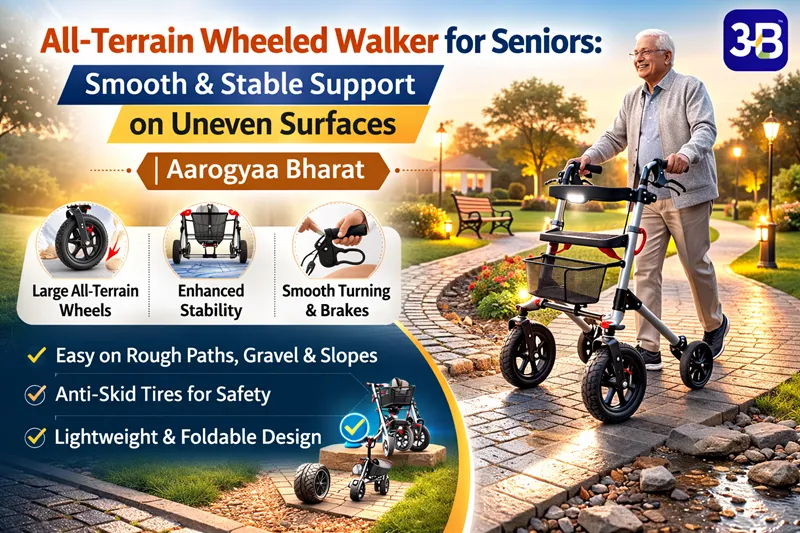
The design and diameter of walker wheels significantly influence how smoothly a mobility aid performs on uneven floors, as larger front wheels glide over minor obstacles more effectively than smaller wheels, reducing abrupt stops that may cause forward tipping. Wheels with rubberized tread improve traction on smooth tiles and damp surfaces, while shock-absorbing materials help reduce vibration and jolts that can destabilize elderly users. Smaller rigid wheels may struggle on carpet transitions or cracked flooring, increasing the need for lifting and reducing walking flow. In mobility support solutions recommended by aarogyaa bharat, four-wheel rollators with wide-set wheels provide better lateral stability and smoother maneuverability compared to standard two-wheel walkers. Selecting the correct wheel configuration ensures reduced physical strain and improved confidence during indoor and outdoor mobility.
Recommended Walker Types for Uneven Surfaces
| Walker Type | Surface Compatibility | Stability Level |
|---|---|---|
| Standard Folding Walker | Flat indoor floors | Moderate |
| Two-Wheel Walker | Slightly uneven indoor | Good |
| Four-Wheel Rollator | Indoor & outdoor use | High |
| Large-Wheel Rollator | Rough pavements | Very High |
| Heavy-Duty Rollator | Uneven & weight support | High |
Four-wheel rollators with larger diameter front wheels are generally most effective for handling floor irregularities without compromising balance.
Frame Width and Base Stability on Irregular Floors
Frame width directly influences lateral stability, and walkers with a slightly wider base provide improved resistance against tipping when one wheel encounters a raised surface or small obstruction. Narrow frames may shift balance quickly when crossing uneven tiles or slight ramps, increasing fall risk. Reinforced crossbars enhance structural rigidity and prevent frame flexing during weight transfer. In rehab categories involving post-surgical recovery or neurological conditions, frame durability becomes even more critical because patients may lean heavily on the walker during transitions. Aarogyaa bharat mobility support solutions focus on stable base geometry to reduce sway and improve secure stepping patterns on mixed flooring environments.
Brake Systems and Control on Sloped or Uneven Ground
Responsive brake systems are essential when navigating slightly sloped surfaces or outdoor pavements, as gravity may cause unintended rolling if brakes are weak or poorly adjusted. Ergonomic brake handles that require minimal grip force ensure safer stopping control for seniors with reduced hand strength or arthritis. Locking brakes must hold firmly during seated rest stops, particularly when the walker is positioned on uneven ground. Regular brake inspection is recommended through home care maintenance routines and hospital discharge checklists. Aarogyaa bharat hospital pages and healthcare calculators encourage families to evaluate both mobility aid suitability and environmental risk factors to create comprehensive fall prevention strategies.
Indoor vs Outdoor Uneven Surface Considerations
Indoor uneven surfaces typically include carpet transitions, bathroom tile slopes, and doorway thresholds, while outdoor irregularities involve pavement cracks, gravel, or uneven sidewalks, requiring different levels of wheel durability and shock absorption. For indoor use, moderate wheel size with stable frame support may be sufficient, whereas outdoor use demands larger wheels with enhanced traction and reinforced frames. Seniors living independently should evaluate daily walking patterns before selecting a walker. Aarogyaa bharat recommends considering both home layout and external mobility needs within elderly care planning to ensure consistent stability across environments.
Comparing Wheel Materials and Their Performance
| Wheel Material | Best For | Durability |
|---|---|---|
| Hard Plastic | Smooth indoor floors | Moderate |
| Rubber Tread | Mixed indoor/outdoor | High |
| Shock-Absorbing Composite | Rough pavements | Very High |
| Foam-Filled Wheels | Outdoor uneven terrain | High |
Choosing appropriate wheel materials reduces impact force and enhances overall comfort during prolonged walking sessions.
Integration with Home Care and Rehabilitation Planning
Selecting a walker suitable for uneven floors should be part of a broader home care and rehabilitation strategy, particularly for seniors recovering from orthopedic surgery, stroke, or neurological disorders. Evaluating flooring safety through aarogyaa bharat hospital pages and healthcare calculators allows families to identify high-risk zones and upgrade mobility aids accordingly. Combining appropriate walker selection with anti-slip mats, improved lighting, and removal of loose rugs significantly enhances safety outcomes. Mobility support solutions are most effective when environmental modifications and equipment choices are aligned within a comprehensive care plan.
Psychological Confidence and Reduced Fear of Falling
Fear of falling often increases hesitation and disrupts natural gait rhythm, especially when seniors anticipate unstable surfaces. A walker designed for uneven floors restores confidence by providing consistent support and smoother rolling performance across variable terrains. This confidence encourages regular movement, which supports muscle strength and overall health. Aarogyaa bharat emphasizes that stability not only prevents physical injury but also promotes emotional well-being and long-term independence.
Conclusion
Uneven floors pose a significant risk to elderly mobility, but selecting a walker with appropriate wheel size, stable frame width, reliable brakes, and durable materials dramatically reduces fall probability. Four-wheel rollators with larger wheels and reinforced structures provide superior performance across indoor and outdoor irregular surfaces. By integrating walker selection with environmental safety assessments through aarogyaa bharat hospital pages, healthcare calculators, and rehab categories, families can ensure safer home care mobility and improved long-term independence.