Families often explore hospital pages and home care
equipment resources to identify mobility aids that support safe indoor
movement. Aarogyaa Bharat’s rehabilitation section highlights walkers as one of
the most effective mobility devices for elderly individuals who require
stability assistance during everyday walking routines. Healthcare calculators
used to evaluate fall risk frequently recommend walkers as part of a structured
safety plan for seniors living independently. When used correctly, walkers can transform
home environments into safer spaces where elderly individuals can move freely
while maintaining independence and confidence.
Understanding the Role of Walkers in Indoor Elderly
Safety
Walkers are mobility support devices designed to provide a
stable frame that users can hold while walking. This structure helps distribute
body weight evenly and provides multiple points of contact with the ground,
significantly improving balance during movement. Indoor walkers are
particularly beneficial for seniors experiencing muscle weakness, joint
stiffness, arthritis, or balance problems. Physiotherapists listed on hospital
pages often recommend walkers for patients recovering from surgeries such as knee
replacement or hip replacement because they provide reliable support during
early recovery stages. Aarogyaa Bharat’s home care equipment guides emphasize
that walkers help seniors maintain safe walking habits within their homes while
reducing the risk of falls. Healthcare calculators that analyze mobility
limitations frequently identify walkers as essential tools for elderly
individuals who require structured walking assistance during everyday
activities.
Why Indoor Walkers Are Essential for Elderly Home
Mobility
Many falls among seniors occur inside the home rather than
outdoors. Slippery floors, uneven rugs, narrow hallways, and low lighting
conditions can increase the risk of accidents for individuals with reduced
balance. Walkers provide stable support that allows seniors to move carefully
through these environments without losing balance. Aarogyaa Bharat’s home care
mobility solutions highlight indoor walkers as one of the most effective
fall-prevention tools available for elderly individuals. Seniors who frequently
visit hospital pages for physiotherapy guidance are often advised to continue
using walkers during daily movement inside their homes. Healthcare calculators
used to measure fall risk also recommend mobility aids as an important safety
measure for seniors who live alone or have limited caregiver support. By
incorporating walkers into everyday routines, elderly individuals can
significantly improve indoor safety and mobility confidence.
Key Features of Walkers Designed for Indoor Use
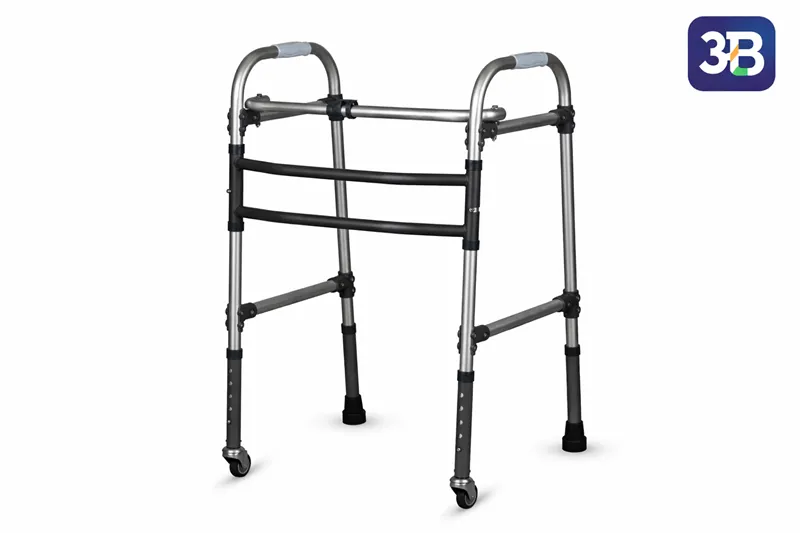
Walkers designed specifically for indoor environments
include several important features that improve usability and safety.
Lightweight aluminium frames allow seniors to move the walker easily without
exerting excessive effort. Adjustable height settings ensure that the walker
aligns correctly with the user’s posture, reducing strain on the shoulders and
back. Anti-slip rubber tips provide strong traction on smooth indoor flooring
surfaces such as tiles or wooden floors. Some indoor walkers also include small
wheels that make movement smoother while still maintaining stability. Aarogyaa
Bharat’s rehabilitation section highlights walkers that combine durability with
lightweight construction to ensure seniors can use them comfortably throughout
the day. Families exploring hospital pages for mobility recommendations often
look for walkers with ergonomic grips and stable frames that support safe
indoor walking.
Typical Features of Indoor Walkers
|
Feature |
Description |
|
Frame
Material |
Lightweight
aluminium or steel |
|
Height
Adjustment |
Adjustable
handle height |
|
Base Support |
Anti-slip
rubber tips |
|
Optional
Wheels |
Some models
include front wheels |
|
Weight
Capacity |
Usually
supports 100–150 kg |
|
Grip Type |
Ergonomic
handles for comfort |
How Indoor Walkers Improve Safety and Independence
Maintaining independence is extremely important for elderly
individuals because it helps preserve both physical and emotional well-being.
Indoor walkers allow seniors to perform everyday tasks without relying heavily
on caregivers. With a walker, seniors can move safely from one room to another,
access the bathroom during the night, and participate in normal daily
activities. Aarogyaa Bharat’s home care equipment recommendations emphasize
that walkers are not only mobility tools but also confidence-building devices
that help seniors maintain independence. Hospital pages often highlight the
importance of safe mobility practices in preventing injuries among elderly
patients. Healthcare calculators designed to assess fall risk frequently
indicate that mobility aids such as walkers can significantly reduce the
likelihood of accidents in home environments.
Common Situations Where Indoor Walkers Are Useful
Indoor walkers are commonly used by seniors who experience
reduced balance or muscle strength during everyday activities. Individuals
recovering from surgery often use walkers during the early stages of
rehabilitation to ensure safe movement inside their homes. Elderly individuals
with arthritis or joint stiffness may rely on walkers to reduce pressure on
their knees and hips while walking. Aarogyaa Bharat’s rehabilitation equipment
guides explain that walkers are particularly helpful for seniors who spend most
of their time indoors but still want to maintain mobility and independence.
Families reviewing hospital pages for elderly care advice often discover that
walkers play an important role in fall prevention strategies. Healthcare
calculators designed to measure mobility stability also recommend walkers for
individuals with moderate walking difficulties.
Benefits of Using Walkers for Indoor Elderly Safety
- Improve
balance and walking stability
- Reduce
the risk of slips and falls
- Support
safe movement between rooms
- Encourage
independence for elderly individuals
- Provide
reliable support during rehabilitation recovery
- Suitable
for both temporary and long-term mobility assistance
- Lightweight
design makes them easy to use indoors
- Compatible
with home care and physiotherapy programs
Walker vs Walking Stick for Indoor Mobility
Different mobility aids serve different purposes depending
on the user’s physical condition. Walking sticks provide light balance
assistance and are suitable for seniors who have mild mobility challenges.
Walkers, however, provide stronger structural support because they include
multiple contact points with the ground. Patients consulting hospital pages
often use walkers during early recovery stages before transitioning to walking
sticks later in rehabilitation programs. Aarogyaa Bharat’s rehabilitation section
emphasizes that walkers are ideal for seniors who require significant stability
support during indoor movement. Healthcare calculators used in mobility
assessments frequently indicate that walkers are safer for individuals with
moderate balance limitations.
Walker vs Walking Stick Comparison
|
Feature |
Walker |
Walking
Stick |
|
Support Level |
Strong
balance support |
Light support |
|
Stability |
Multiple
contact points |
Single
support point |
|
Best Use |
Indoor
mobility and recovery |
Mild balance
assistance |
|
Movement
Style |
Structured
walking support |
Natural
walking support |
|
Fall
Prevention |
High |
Moderate |
Choosing the Right Walker for Indoor Safety
Selecting the appropriate walker requires evaluating several
important factors including the user’s mobility level, height, and home
environment. Seniors who live in apartments or houses with narrow hallways may
benefit from lightweight walkers that are easy to manoeuvre indoors.
Individuals undergoing physiotherapy programs listed on hospital pages may
require walkers with wheels that allow smoother walking movement during
rehabilitation exercises. Aarogyaa Bharat recommends reviewing walker
specifications carefully and consulting healthcare professionals before
purchasing mobility equipment. Healthcare calculators used to evaluate mobility
safety can also help determine whether a standard walker, wheeled walker, or
rollator is the most appropriate option for the user’s needs. Choosing the
correct walker ensures that seniors can move safely while maintaining
independence in their homes.
Role of Walkers in Rehabilitation and Recovery
Rehabilitation programs often involve structured walking
exercises designed to restore strength and balance after injury or surgery.
Walkers play an important role in these programs because they provide the
stability needed for safe walking practice. Physiotherapists listed on hospital
pages frequently recommend walkers for patients recovering from orthopaedic
procedures or neurological conditions. Aarogyaa Bharat’s rehabilitation section
explains that walkers allow patients to gradually rebuild walking confidence
while minimizing the risk of falls. Healthcare calculators used in
rehabilitation planning often monitor walking progress and mobility
improvements over time. By providing stable support during recovery, walkers
help patients transition from assisted movement to independent walking.
Conclusion
Walkers designed for indoor safety provide one of the most effective solutions for improving mobility and preventing falls among elderly individuals. Their stable structure, ergonomic design, and supportive frame allow seniors to move confidently within their homes while maintaining independence. Unlike lighter mobility aids such as walking sticks, walkers provide stronger stability and are particularly beneficial for individuals recovering from surgery or managing moderate balance challenges. Aarogyaa Bharat’s home care and rehabilitation equipment collections emphasize the importance of selecting mobility aids that match the user’s physical needs and living environment. By consulting hospital pages, exploring cities pages, and using healthcare calculators to evaluate mobility requirements, families can choose walkers that support safe and comfortable indoor movement. With the right walker and proper usage, elderly individuals can continue enjoying independent lifestyles while significantly reducing the risk of accidents inside the home.