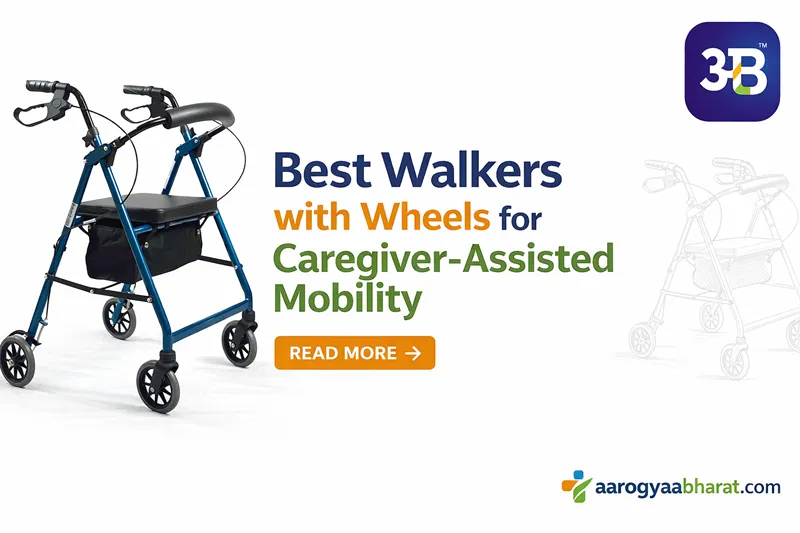
Understanding the Role of Caregivers in Elderly Mobility
Support
Caregivers play a crucial role in assisting elderly
individuals with daily mobility, ensuring safety, and preventing falls during
movement. Many seniors require support due to conditions such as arthritis,
neurological disorders, or post-surgical recovery, which can limit their
ability to walk independently. Assisting with mobility can be physically
demanding for caregivers, as it often involves lifting, balancing, and guiding
the individual through different environments. Without proper tools, this can
lead to caregiver fatigue and increased risk of injury for both the caregiver
and the elderly individual. Walkers with wheels provide an effective solution
by reducing the need for manual support and enabling smoother movement.
Platforms like Aarogyaa Bharat Hospital Pages highlight the importance of
assistive devices in reducing caregiver burden and improving patient outcomes.
Why Walkers with Wheels Are Ideal for Caregiver Support
Walkers with wheels are specifically designed to simplify
mobility assistance, making them an ideal choice for caregivers. Unlike
standard walkers that require lifting, wheeled walkers allow users to move
forward smoothly, reducing physical effort for both the caregiver and the
elderly individual. This feature is particularly beneficial when assisting
individuals with limited strength or balance, as it minimizes strain during
movement. Additionally, wheeled walkers provide better control and stability, allowing
caregivers to guide the user safely through different environments. The
presence of brakes ensures that the walker can be stopped securely when needed,
adding an extra layer of safety. Tools like Healthcare Calculator can help
determine the appropriate walker type based on the user’s mobility level and
caregiver requirements.
Types of Wheeled Walkers Suitable for Caregiver
Assistance
There are several types of walkers with wheels designed to
support caregiver-assisted mobility. Two-wheel walkers provide a balance
between stability and ease of movement, making them suitable for individuals
who require moderate support. Four-wheel rollators offer maximum mobility with
features such as seats, brakes, and storage options, making them ideal for
outdoor use and longer distances. Heavy-duty walkers are designed for
individuals requiring additional support and higher weight capacity, ensuring safety
and durability. Transport walkers, which allow caregivers to push the user when
needed, provide an added level of convenience for individuals with limited
mobility. Availability of these walker types can be explored through Aarogyaa
Bharat City Pages, helping users find suitable options locally.
Key Features to Look for in Walkers for Caregiver Support
When selecting a walker with wheels for caregiver support,
certain features are essential to ensure safety and ease of use. Lightweight
frames are important for easy handling and manoeuvrability, allowing caregivers
to assist without excessive effort. Large wheels provide better stability on
uneven surfaces, while shock-absorbing mechanisms enhance comfort during
movement. Reliable braking systems are crucial for maintaining control,
especially when navigating slopes or crowded areas. Adjustable height settings
ensure proper posture for the user, reducing strain on joints and muscles.
Additional features such as seats and storage compartments enhance convenience,
allowing users to rest and carry personal items during movement.
Benefits of Using Walkers with Wheels for Caregiver
Support
Walkers with wheels offer numerous benefits that improve the
mobility experience for both elderly individuals and caregivers. They reduce
physical strain on caregivers by minimizing the need for lifting and manual
support, making mobility assistance more manageable. For elderly users, these
walkers provide enhanced stability and confidence, reducing the risk of falls
and injuries. The smooth movement enabled by wheels allows for easier
navigation of different environments, while braking systems ensure safety and
control. Additionally, features such as seats and storage options enhance
comfort and convenience, making daily activities more accessible. Over time,
the use of wheeled walkers can improve independence and quality of life for
seniors while easing the workload for caregivers.
Comparison of Wheeled Walker Types for Caregiver Support
|
Stability |
Ease for
Caregiver |
Best Use
Case |
Support
Level |
|
|
Two-Wheel
Walker |
High |
Moderate |
Indoor &
short-distance use |
Good |
|
Four-Wheel
Rollator |
Medium |
Easy |
Outdoor &
long-distance use |
Excellent |
|
Transport
Walker |
Medium |
Very Easy |
Assisted
movement & recovery |
High |
Tips for Caregivers Using Walkers with Wheels
- Always
ensure brakes are engaged when stationary
- Guide
the walker from behind for better control
- Adjust
height for proper posture and comfort
- Avoid
pushing too fast to maintain stability
- Regularly
inspect wheels and frame for safety
How Aarogyaa Bharat Supports Caregiver-Friendly Mobility
Solutions
Aarogyaa Bharat provides a comprehensive platform that
supports both elderly individuals and caregivers in selecting the right
mobility aids. The platform offers a wide range of walkers with wheels designed
for caregiver-assisted use, along with detailed product descriptions and
comparisons. By integrating healthcare insights with product availability,
Aarogyaa Bharat ensures that users can make informed decisions based on their
specific needs. Tools like Healthcare Calculator help evaluate mobility requirements,
while Aarogyaa Bharat City Pages assist in locating nearby suppliers and
healthcare providers. This integrated approach simplifies the process of
choosing the right walker and enhances the overall caregiving experience.
Common Mistakes to Avoid When Choosing Walkers for
Caregiver Support
Selecting the wrong walker can create challenges for both
caregivers and users, making it important to avoid common mistakes. Choosing a
walker without considering weight and manoeuvrability can make handling
difficult for caregivers. Ignoring the importance of braking systems can
compromise safety, especially during assisted movement. Selecting a walker with
small wheels may limit usability on uneven surfaces, while neglecting
adjustable height features can lead to discomfort and improper posture. It is
essential to evaluate all features carefully and choose a walker that meets
both the user’s mobility needs and the caregiver’s handling requirements.
Future Innovations in Caregiver-Support Mobility Aids
The mobility aid industry is evolving with a focus on
improving convenience and safety for both users and caregivers. Future walkers
are expected to incorporate advanced materials that reduce weight while
enhancing durability. Smart features such as automated braking systems,
stability sensors, and health monitoring tools may become more common,
providing additional functionality and safety. Improved ergonomic designs will
focus on reducing strain for caregivers during assisted movement. Additionally,
compact and foldable designs will enhance portability, making these walkers
more versatile for different environments. These innovations will further
improve the effectiveness of mobility aids in supporting caregiving.
Conclusion
Walkers with wheels are an essential mobility solution for caregiver-assisted support, providing ease of movement, stability, and enhanced safety for elderly individuals. By reducing physical strain on caregivers and improving confidence for users, these walkers play a crucial role in daily mobility and rehabilitation. Choosing the right walker with appropriate features ensures a better experience for both caregivers and seniors. Aarogyaa Bharat serves as a trusted platform that helps users explore and select the most suitable mobility aids, ensuring improved mobility, safety, and quality of life for elderly individuals and their caregivers.