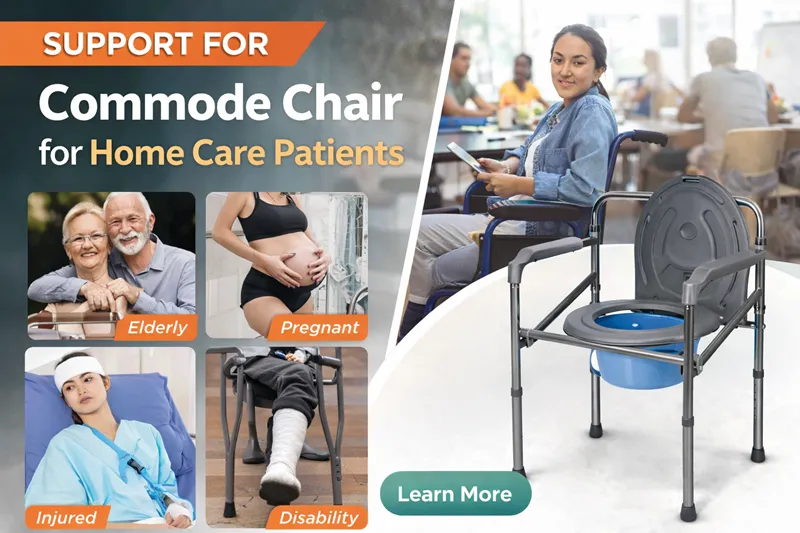
Who Are Considered Home Care Patients
Home care patients include a wide spectrum of individuals
receiving medical or supportive care outside hospital settings, often for
extended periods. This group includes elderly people with age-related weakness,
patients discharged after surgery or ICU stays, individuals with chronic
diseases like diabetes, arthritis, Parkinson’s disease, stroke, or heart
conditions, as well as patients with spinal injuries, paralysis, or terminal
illness. Many home care patients experience fluctuating strength levels, unpredictable
fatigue, medication side effects, and mobility limitations that make
independent bathroom access unsafe. Unlike short-term illness, home care often
extends for weeks, months, or years, making safe and sustainable toileting
solutions essential rather than optional.
Why Toileting Is One of the Biggest Risks in Home Care
Toileting accidents are among the most common causes of
injury, hospital readmission, and caregiver burnout in home care settings.
Bathroom floors are slippery, toilets are low, spaces are narrow, and
assistance may not be immediately available. Home care patients may experience
sudden urgency due to medications, infections, or weak bladder control, leading
them to rush unsafely. Fatigue, dizziness, and balance issues further increase
risk. A single fall during toileting can undo weeks of recovery, cause fractures,
reopen wounds, or trigger serious complications. A commode chair placed near
the patient eliminates unnecessary movement and significantly reduces these
risks.
Role of a Commode Chair in Home Care Settings
In home care, a commode chair is not merely a toilet
substitute but a medical support device that enables safe daily functioning. It
provides a stable seat, arm support, and controlled transfers, allowing
patients to toilet without walking to the bathroom. The removable bucket allows
hygienic waste management without plumbing dependency. By positioning the chair
close to the bed or living area, toileting becomes predictable, calm, and safe,
which is critical for patients with limited energy or mobility.
Supporting Long-Term Care and Chronic Conditions
Many home care patients live with chronic conditions that do
not improve quickly or may worsen over time. Conditions such as arthritis,
Parkinson’s disease, multiple sclerosis, stroke after-effects, or respiratory
illness require long-term adaptations rather than temporary fixes. A commode
chair provides a consistent, adaptable toileting solution that can be adjusted
with the patient’s changing condition. This continuity reduces daily stress and
helps families manage long-term care without constant equipment changes.
Importance of Energy Conservation for Home Care Patients
Energy conservation is essential in-home care, especially
for patients with chronic illness, cancer recovery, or respiratory weakness.
Walking to the bathroom multiple times a day drains valuable energy that should
be used for healing, physiotherapy, breathing exercises, or simply maintaining alertness.
A commode chair allows patients to conserve energy by reducing physical
exertion during toileting, which directly improves recovery outcomes and
quality of life.
Emotional Dignity and Psychological Comfort in Home Care
Home care patients often struggle emotionally with
dependency, loss of privacy, and embarrassment, particularly around toileting.
Repeatedly asking for help can damage self-esteem and lead to withdrawal or
depression. A commode chair restores a sense of control by allowing patients to
manage toileting independently or with minimal assistance. Preserving dignity
is not just emotional care; it directly affects cooperation, mental health, and
physical recovery.
Night-Time Safety for Home Care Patients
Night-time is especially dangerous for home care patients
due to low lighting, sleepiness, dizziness, and sudden urgency. Many patients
wake up multiple times at night due to medications, infections, or bladder
issues. Walking to the bathroom at night dramatically increases fall risk. A
commode chair placed beside the bed allows safe night-time toileting without
walking, improving sleep quality and reducing anxiety for both patients and
caregivers.
Benefits for Family Caregivers in Home Care
Family caregivers carry a heavy physical and emotional
burden in home care. Assisting patients to the bathroom multiple times a day
and night is exhausting and risky, often leading to caregiver injury or
burnout. A commode chair reduces emergency situations, physical strain, and
constant vigilance. It allows caregivers to assist calmly and safely, improving
the sustainability and quality of care at home.
Adaptability to Different Home Care Scenarios
Home care setups vary widely depending on space, patient
condition, and duration of care. Some patients need temporary assistance after
surgery, while others require permanent support. Commode chairs are adaptable
to these scenarios, functioning as bedside units, bathroom alternatives, or
temporary recovery aids. Their portability allows repositioning as the
patient’s condition or living arrangement changes.
Types of Commode Chairs Suitable for Home Care Patients
|
Commode
Chair Type |
Suitable
Home Care Use |
Primary
Benefit |
|
Fixed Commode
Chair |
Stable
long-term care |
Maximum
safety |
|
Adjustable-Leg
Chair |
Changing
mobility |
Custom height |
|
Cushioned
Seat Chair |
Long sitting
needs |
Comfort |
|
Anti-Slip
Commode Chair |
High fall
risk |
Stability |
|
Foldable
Commode Chair |
Temporary
care |
Easy storage |
Hygiene and Infection Control in Home Care
Home care patients may have compromised immunity, wounds,
catheters, or ongoing infections, making hygiene critical. A commode chair
allows controlled waste handling and easy cleaning, reducing bathroom
contamination. Regular cleaning of the bucket, seat, and armrests prevents
infection and odor, supporting a safe recovery environment.
Choosing the Right Commode Chair for Home Care Patients
Selecting the right commode chair requires evaluating
patient weight, mobility, balance, medical condition, and caregiver support.
The chair must be stable, comfortable, easy to clean, and suitable for
long-term use. Poor-quality or unstable chairs increase risk rather than
reducing it. Aarogyaa Bharat helps families choose commode chairs that match
real home care needs rather than generic specifications.
Long-Term Cost Effectiveness of Commode Chairs in Home
Care
While some families hesitate to invest in a commode chair,
the cost of falls, injuries, hospital readmissions, and caregiver burnout is
far higher. A good commode chair reduces emergency expenses, improves care
efficiency, and supports long-term home management, making it a cost-effective
healthcare investment.
Why Aarogyaa Bharat Recommends Commode Chairs for Home
Care
Aarogyaa Bharat understands that home care is not a
short-term arrangement but a daily reality for many families. Our commode
chairs are selected to meet Indian home environments, diverse patient needs,
and caregiver challenges. By prioritising safety, comfort, hygiene, and
dignity, Aarogyaa Bharat supports reliable and compassionate home care.
Conclusion
A commode chair for home care patients is one of the most
important tools for safe, dignified, and sustainable care at home. By
preventing falls, conserving energy, supporting emotional well-being, and
reducing caregiver burden, it plays a central role in successful home
healthcare. Whether for temporary recovery or long-term support, a commode
chair transforms daily living for patients and families alike. Aarogyaa Bharat
remains committed to enabling safe, respectful, and confident care at home.