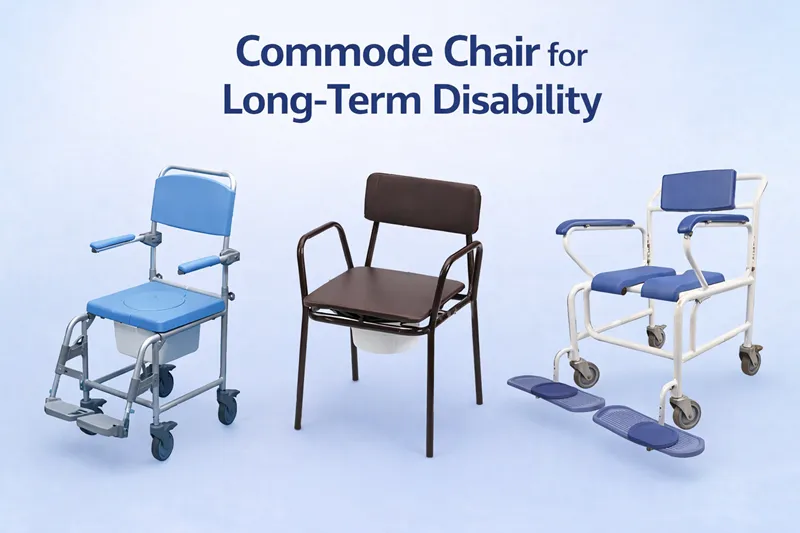
Understanding the Reality of Long-Term Disability at Home
Long-term disability is not defined only by physical
limitation but by its permanence and unpredictability. Unlike temporary
conditions, there is no “end date” for adaptation, which means assistive
solutions must withstand continuous daily use without becoming burdensome or
emotionally draining. Individuals with long-term disability often experience
fluctuations in strength, fatigue, pain, and coordination, even within the same
day. Home care environments must therefore be forgiving, safe, and flexible.
Toileting routines cannot depend on physical endurance, caregiver availability,
or architectural access alone. A commode chair provides a consistent and
reliable toileting solution that adapts to these realities without demanding
constant adjustment or emergency intervention.
Why Toileting Is One of the Most Difficult Aspects of
Long-Term Disability
Toileting involves a combination of sitting, standing,
balance, timing, and hygiene, making it particularly challenging for
individuals with long-term disability. Urgency, limited sensation, muscle
weakness, spasticity, or lack of coordination can make reaching a bathroom
unsafe or impossible. Repeated failures or near-accidents cause anxiety, loss
of confidence, and withdrawal from social interaction. In Indian homes,
bathrooms may be inaccessible due to steps, narrow doors, squat toilets, or
slippery floors. A commode chair eliminates these barriers by allowing
toileting to occur in a controlled, accessible environment tailored to the
individual’s abilities.
Role of a Commode Chair in Lifelong Disability Care
In long-term disability care, a commode chair serves as a
permanent adaptive interface between the individual and daily toileting needs.
It provides predictable access, stable support, and ergonomic posture that
reduces strain on the body. Over years of use, consistency becomes essential,
as even minor instability or discomfort can accumulate into serious injury or
emotional distress. A well-chosen commode chair supports independence, routine,
and dignity without requiring constant supervision or emergency assistance.
Preserving Independence Over the Long Term
Independence in long-term disability is not about doing
everything unaided but about controlling one’s own routine as much as possible.
Being able to toilet independently or with minimal assistance is one of the
most powerful contributors to self-worth. A commode chair allows individuals to
manage toileting at their own pace, reducing dependence on caregivers and
restoring a sense of control over daily life. Even partial independence
significantly improves mental health and long-term motivation.
Emotional Dignity and Psychological Well-Being
Loss of privacy and dignity in toileting can cause deep
psychological harm over time, leading to depression, frustration, and social
withdrawal. Long-term disability already places emotional strain on
individuals, and repeated humiliation or discomfort during toileting compounds
this burden. A commode chair allows toileting to be performed in an upright,
dignified posture, reducing exposure and embarrassment. Emotional comfort is
essential for long-term resilience and quality of life.
Safety and Fall Prevention for Long-Term Use
Long-term disability increases fall risk due to muscle
weakness, balance issues, or involuntary movements. Falls during toileting are
particularly dangerous and often result in severe injury. A commode chair
reduces fall risk by eliminating the need to walk to the bathroom and providing
stable support during transfers. For lifelong use, stability and structural
integrity are critical to prevent cumulative risk.
Reducing Long-Term Caregiver Burden
Caregivers supporting individuals with long-term disability
often face years of physical and emotional strain. Toileting assistance is one
of the most demanding caregiving tasks due to its frequency and urgency. A
commode chair reduces lifting, rushing, and emergency situations, allowing
caregivers to assist safely or supervise rather than physically support every
movement. This makes long-term caregiving more sustainable and less exhausting.
Adaptability to Progressive or Changing Conditions
Many long-term disabilities are progressive, meaning
mobility and strength may decline over time. A commode chair with adjustable
height, strong armrests, and adaptable positioning can continue to serve the
individual as needs evolve. This adaptability reduces the need for frequent
equipment changes and provides continuity of care.
Suitability for Different Long-Term Disability Scenarios
Long-term disability care occurs in varied home
environments, including bedrooms, living spaces, or dedicated care areas.
Commode chairs can be repositioned or adjusted based on comfort and
accessibility needs. This flexibility allows individuals to remain within
familiar surroundings rather than restructuring their living space entirely.
Types of Commode Chairs Suitable for Long-Term Disability
|
Disability
Scenario |
Recommended
Chair Type |
Key
Long-Term Benefit |
|
Paralysis /
SCI |
High-stability
commode chair |
Safe
transfers |
|
Neurological
disorders |
Adjustable-height
chair |
Adaptability |
|
Progressive
disability |
Reinforced
commode chair |
Durability |
|
Long sitting
needs |
Cushioned
seat chair |
Comfort |
|
Home-based
lifelong care |
Anti-slip
commode chair |
Safety |
Hygiene Management in Lifelong Use
Long-term use requires strict hygiene to prevent infections,
skin breakdown, and odor. Commode chairs with removable buckets, smooth
surfaces, and easy cleaning routines support daily hygiene without overwhelming
caregivers. Maintaining cleanliness is essential for dignity and health over
years of use.
Preventing Secondary Health Complications
Unsafe or uncomfortable toileting can lead to secondary
complications such as urinary infections, constipation, pressure sores,
dehydration, and skin injuries. A commode chair supports proper posture and
timely toileting, reducing these risks and improving long-term health outcomes.
Financial Sustainability in Long-Term Disability Care
Long-term disability care often involves ongoing medical
expenses, making cost-effective solutions essential. A durable commode chair is
a one-time investment that reduces hospitalisation, caregiver injury, and
emergency costs. Compared to repeated medical interventions, it offers
excellent long-term value.
Supporting Ageing with Disability at Home
Many individuals with long-term disability age at home
rather than moving to institutional care. Safe toileting is a key requirement
for this choice. A commode chair supports ageing in place by ensuring that
disability does not force relocation due to bathroom accessibility issues.
Why Aarogyaa Bharat Focuses on Long-Term Disability
Solutions
Aarogyaa Bharat recognises that long-term disability care is
not about short-term fixes but about building sustainable, dignified routines
for everyday life. Our commode chairs are selected for durability, stability,
and adaptability to Indian home environments. By focusing on long-term
usability, Aarogyaa Bharat helps individuals live safely and confidently with
disability at home.
Conclusion
A commode chair for long-term disability is not simply a
toileting aid but a cornerstone of safe, dignified, and sustainable home care.
By supporting independence, preventing falls, reducing caregiver strain, and
protecting emotional well-being, commode chairs enable individuals with
long-term disability to maintain control over one of the most essential daily
activities. In Indian home-care settings, where family support and limited
accessibility are realities, the right commode chair transforms long-term disability
from constant risk into manageable routine. Aarogyaa Bharat remains committed
to delivering solutions that uphold dignity and safety throughout a lifetime.