While families focus on medicines, diet plans, and follow-up
appointments, the everyday risks of basic activities like toileting are
frequently ignored. In Indian homes, bathrooms are rarely designed for recovery
patients, with slippery tiles, low toilet heights, steps, poor night lighting,
and cramped spaces creating a high-risk environment. A commode chair for
post-hospital discharge acts as a protective bridge between hospital-level
safety and real home conditions by allowing patients to toilet safely near the
bed without unnecessary walking, strain, or fear. Aarogyaa Bharat strongly
considers a commode chair a discharge-essential item because it prevents falls,
protects healing wounds, reduces caregiver panic, and supports smooth recovery
during the most dangerous transition period.
Why the Post-Discharge Phase Is More Dangerous Than
Hospital Stay
Ironically, many patients are at greater risk after leaving
the hospital than while admitted, because monitoring is reduced while weakness
remains. In hospital, patients have raised beds, nurses, call bells, grab
rails, and controlled environments. At home, they suddenly face uneven floors,
narrow bathrooms, unfamiliar movements, and delayed assistance. Post-discharge
weakness, low blood pressure, dizziness, muscle loss, and medication side
effects increase fall risk dramatically. Many hospital readmissions occur
within the first 30 days due to preventable accidents at home, especially
bathroom-related falls. Toileting accidents during this phase can undo surgical
recovery, reopen wounds, cause fractures, or trigger infections, making
post-discharge safety planning absolutely critical.
Toileting Difficulties Immediately After Hospital
Discharge
After discharge, patients commonly experience difficulty
standing up, maintaining balance, walking steadily, and sitting down safely.
Surgical pain, stitches, drains, catheters, IV puncture sites, or neurological
weakness make simple movements exhausting and risky. Medications such as
painkillers, blood pressure drugs, and diuretics often cause dizziness or
sudden urgency to urinate, leading patients to rush unsafely to the bathroom.
Many patients hesitate to ask caregivers for help due to embarrassment or the
desire to appear independent, which increases fall risk further. A commode
chair placed close to the bed removes urgency-driven movement and allows
controlled, assisted toileting without panic or physical strain.
What a Commode Chair Does in Post-Hospital Recovery
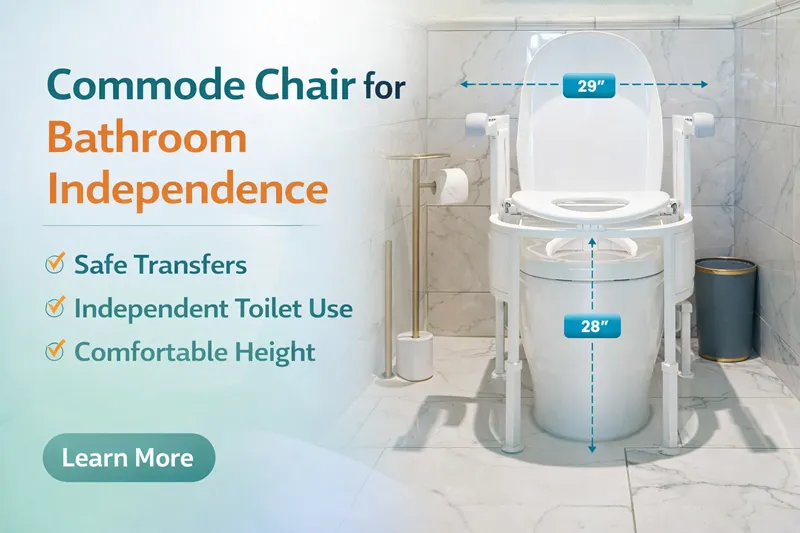
In the post-hospital context, a commode chair is not just a
toilet substitute but a recovery support device that protects healing,
conserves energy, and maintains dignity. It provides a stable seating surface
at the correct height, allowing patients to sit and stand gradually using
armrests rather than forcing weak legs to bear sudden load. The backrest
supports posture, while the removable bucket enables hygienic waste disposal
without walking. By positioning the chair near the bed or recovery area, toileting
becomes predictable, controlled, and safe, which is exactly what recovering
patients need.
Preventing Falls and Readmission Through Safe Toileting
Falls are one of the most common reasons for emergency
readmission after hospital discharge. A single fall can cause fractures,
internal bleeding, wound reopening, or neurological damage, setting recovery
back by weeks or months. Toileting-related falls are especially dangerous
because they occur when patients are tired, dizzy, or alone. A commode chair
dramatically reduces fall risk by eliminating bathroom walking, providing
stable support, and preventing sudden posture changes. By preventing these incidents,
a commode chair directly reduces readmission risk and supports uninterrupted
recovery at home.
Energy Conservation and Faster Healing After Discharge
Healing requires significant physical energy, yet
post-discharge patients have very limited reserves. Walking to the bathroom
multiple times a day drains energy that should be used for wound healing,
physiotherapy, breathing exercises, and basic daily functioning. Overexertion
can worsen pain, delay recovery, and increase dependency frustration. A commode
chair helps conserve energy by minimizing unnecessary movement, allowing
patients to focus strength on healing rather than survival tasks. Energy conservation
leads to faster recovery, better mood, and improved rehabilitation outcomes.
Night-Time Safety in the First Weeks After Discharge
Night-time poses the highest risk for post-discharge
patients due to darkness, sleepiness, dizziness, and urgency caused by
medications or IV fluids. Blood pressure drops and muscle stiffness after lying
down further increase fall risk. Many serious injuries occur at night when
patients attempt to reach the bathroom alone. A commode chair beside the bed
allows safe night-time toileting without walking, switching lights, or
navigating obstacles, greatly reducing night-time accidents and anxiety for
both patients and caregivers.
Emotional Recovery and Dignity After Hospitalisation
Hospitalisation often leaves patients feeling vulnerable,
dependent, and emotionally shaken. Regaining dignity and control is a key part
of psychological recovery. A commode chair allows patients to manage toileting
with privacy or minimal assistance, reducing embarrassment and restoring
confidence. Emotional comfort directly impacts physical healing, as patients
who feel safe and respected are more cooperative, motivated, and mentally
resilient during recovery.
Which Patients Benefit the Most After Discharge
Patients recovering from orthopaedic surgeries, abdominal
surgeries, cardiac procedures, strokes, neurological conditions, ICU stays,
respiratory illness, severe infections, or prolonged bed rest benefit greatly
from commode chair use. Elderly patients with multiple medical conditions are
especially vulnerable and should always have a commode chair during early
recovery at home. Even patients who appear mobile during the day may need a
commode chair at night for safety.
Types of Commode Chairs Suitable After Hospital Discharge
|
Type of
Commode Chair |
Best For |
Key
Recovery Benefit |
|
Fixed Commode
Chair |
General
recovery |
Maximum
stability |
|
Height
Adjustable Chair |
Knee / hip
surgery |
Easier
transfers |
|
Cushioned
Seat Chair |
Frail
patients |
Pressure
comfort |
|
Anti-Slip
Commode Chair |
Dizziness
risk |
Fall
prevention |
|
Foldable
Commode Chair |
Short-term
recovery |
Space saving |
How to Choose the Right Commode Chair Post Discharge
Choosing the right commode chair requires assessing patient
weight, balance, leg strength, medical condition, and caregiver availability.
The chair must be stable, easy to clean, and comfortable for repeated use. Seat
height should allow easy transfers without knee strain, and armrests must
support body weight during standing. Aarogyaa Bharat helps families select
recovery-appropriate chairs rather than generic options that may compromise
safety.
Hygiene and Infection Control During Home Recovery
Post-discharge patients may have low immunity or healing
wounds, making hygiene essential. A commode chair allows controlled waste
handling and easy cleaning, reducing bathroom contamination and infection risk.
Regular cleaning of the bucket, seat, and armrests helps maintain a safe
recovery environment and prevents complications that could delay healing.
Caregiver Relief During the Recovery Phase
Caregivers often experience extreme stress after bringing a
patient home from hospital, fearing accidents and complications. A commode
chair reduces emergency situations, night-time panic, and physical strain by
making toileting predictable and safe. This allows caregivers to provide
support calmly and sustainably, improving overall home-care quality.
Why Aarogyaa Bharat Recommends Commode Chairs After
Discharge
Aarogyaa Bharat understands that discharge is not the end of
treatment but the beginning of the most delicate recovery phase. Our commode
chairs are selected to match Indian home environments, recovery needs, hygiene
standards, and caregiver realities. By focusing on safety, comfort, and
dignity, Aarogyaa Bharat helps families transition patients’ home without
unnecessary risk or fear.
Conclusion
A commode chair for post-hospital discharge is one of the most important yet overlooked recovery aids in home healthcare. By preventing falls, conserving energy, protecting dignity, and reducing readmission risk, it supports safe and confident healing at home. For Indian families bringing loved one’s home after hospitalisation, a commode chair is not optional equipment but a recovery safeguard. Aarogyaa Bharat remains committed to enabling smooth, safe, and complication-free recovery through thoughtful home-care solutions.