Why Proper Cleaning of a Commode Chair Is Absolutely
Essential
A commode chair comes into direct contact with human waste,
moisture, and skin, making it a high-risk surface for bacteria, viruses, and
fungi if not cleaned correctly. Unlike standard toilets, commode chairs are
used in living spaces such as bedrooms, increasing the risk of environmental
contamination. Improper cleaning can lead to unpleasant odors, visible stains,
and invisible microbial buildup that compromises health. For elderly users,
post-surgery patients, and individuals with long-term disability, even minor
infections can escalate into serious medical issues. Proper cleaning is
therefore not optional but essential for safe daily use.
Difference Between Cleaning and Disinfection
Cleaning and disinfection are often confused but serve
different purposes. Cleaning involves removing visible dirt, waste, and organic
matter using water and detergent. Disinfection involves using chemical agents
to kill germs that remain after cleaning. Skipping either step reduces
effectiveness. Simply rinsing a commode chair does not eliminate pathogens,
while disinfecting without cleaning first may leave organic matter that shields
germs. A proper routine always includes both steps in the correct order.
How Often a Commode Chair Should Be Cleaned
Frequency of cleaning depends on usage, user health, and
environment. In most home-care settings, the bucket and seat should be cleaned
after every use, while the full chair frame should be cleaned daily. For users
with infections, diarrhoea, wounds, or compromised immunity, more frequent
disinfection is required. Regular cleaning prevents build up and makes
disinfection easier and more effective.
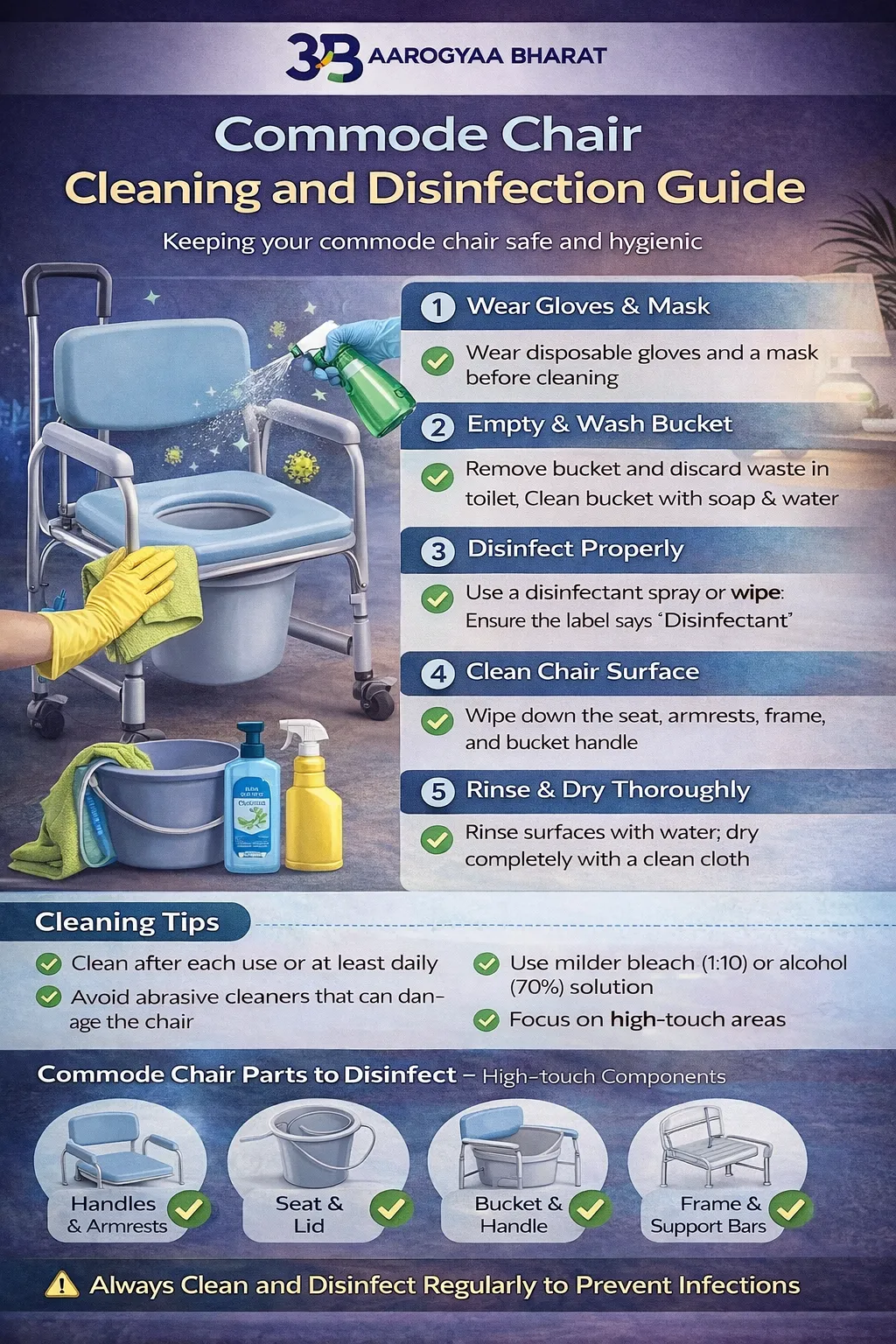
Step-by-Step Daily Cleaning Routine
Daily cleaning should follow a consistent routine to ensure
no surfaces are missed. The bucket should be removed carefully, emptied into
the toilet, rinsed with water, washed with detergent, and then disinfected
before drying. The seat, armrests, backrest, and frame should be wiped with a
mild detergent solution to remove residue. This routine ensures that waste does
not remain on the chair and that odors are controlled.
Weekly Deep Cleaning and Disinfection
In addition to daily cleaning, a weekly deep-cleaning
routine is essential for long-term hygiene. This involves disassembling
removable parts, thoroughly scrubbing the bucket, seat, and frame, and applying
a disinfectant to all contact surfaces. Deep cleaning removes hidden residue
and prevents long-term bacterial build up that daily wiping may miss.
Choosing the Right Cleaning and Disinfection Products
Not all cleaning products are suitable for commode chairs.
Harsh chemicals can corrode metal frames, damage plastic surfaces, or cause
skin irritation for users. Mild detergents, hospital-grade disinfectants, or
diluted bleach solutions are commonly recommended. Products should be effective
against bacteria and viruses while remaining safe for repeated use. Always
ensure proper dilution and ventilation during cleaning.
Special Care for Plastic vs Metal Commode Chairs
Plastic and metal commode chairs require slightly different
care approaches. Plastic surfaces are easier to clean but may stain if waste is
not removed promptly. Metal frames require protection from moisture to prevent
rust, especially in humid Indian climates. Drying metal parts thoroughly after
cleaning is essential for longevity
Managing Odor Control Effectively
Odor control is a major concern in home-care settings.
Persistent odor often indicates inadequate cleaning rather than normal use.
Regular disinfection, proper drying, and occasional use of deodorising agents
help maintain freshness. Avoid masking odors with strong fragrances, as they do
not address underlying hygiene issues and may cause discomfort.
Infection Prevention for High-Risk Users
Users with weakened immunity, surgical wounds, pressure
sores, or urinary catheters require stricter hygiene protocols. In such cases,
gloves should be worn during cleaning, disinfectants should be used
consistently, and surfaces should be dried completely. Preventing
cross-contamination between users and caregivers is critical in these
scenarios.
Hygiene Management in Shared Household Environments
In Indian homes, commode chairs are often used in shared
living spaces. Proper hygiene management ensures that other family members are
not exposed to contamination. Designated cleaning tools, regular disinfection
schedules, and discreet storage help maintain household hygiene and comfort.
Caregiver Safety During Cleaning
Cleaning a commode chair exposes caregivers to waste and
cleaning chemicals. Wearing gloves, washing hands thoroughly afterward, and
using proper posture during cleaning reduce health risks and physical strain.
Caregiver safety is as important as patient hygiene.
Long-Term Maintenance Through Proper Cleaning
Consistent cleaning extends the life of a commode chair by
preventing corrosion, material degradation, and joint damage. Chairs that are
well-maintained remain safe, stable, and visually acceptable over years of use,
reducing replacement costs.
Common Cleaning Mistakes to Avoid
Common mistakes include skipping disinfection, using
excessively strong chemicals, failing to dry metal parts, cleaning irregularly,
or sharing cleaning tools with other household tasks. These errors compromise
hygiene and damage the chair.
Cleaning and Disinfection Checklist Table
|
Task |
Frequency |
Purpose |
|
Bucket
emptying & washing |
After every
use |
Waste removal |
|
Seat &
armrest wiping |
Daily |
Contact
hygiene |
|
Frame
cleaning |
Daily |
Environmental
safety |
|
Disinfection |
Daily / as
needed |
Germ control |
|
Deep cleaning |
Weekly |
Long-term
hygiene |
|
Drying metal
parts |
After
cleaning |
Rust
prevention |
Adapting Hygiene Routine for Long-Term Use
For long-term users, hygiene routines should be simple,
consistent, and sustainable. Overly complex routines lead to fatigue and
inconsistency. A well-planned routine ensures long-term cleanliness without
overwhelming caregivers.
Psychological Impact of a Clean Commode Chair
A clean, odor-free commode chair improves user confidence
and willingness to use the equipment. Poor hygiene can cause embarrassment,
anxiety, and refusal to use the chair, increasing health risks. Cleanliness
supports dignity and emotional comfort.
Why Aarogyaa Bharat Emphasises Hygiene Education
Aarogyaa Bharat believes that providing equipment alone is
not enough; proper usage and hygiene education are essential for safe home
care. Our guidance focuses on practical cleaning routines suited to Indian
households, ensuring safety, dignity, and long-term usability.
Conclusion
A commode chair cleaning and disinfection guide is a
cornerstone of safe and dignified home healthcare. By following structured
cleaning routines, using appropriate disinfectants, and maintaining
consistency, families can prevent infections, control odors, protect
caregivers, and extend the life of the chair. In Indian home-care settings,
where family members play a central role in caregiving, hygiene is both a
health responsibility and an act of respect. Aarogyaa Bharat remains committed
to empowering families with knowledge and solutions that ensure safe, clean,
and compassionate care every day.