What is a Rollator Walker and Why is it Important In-Home
Care?
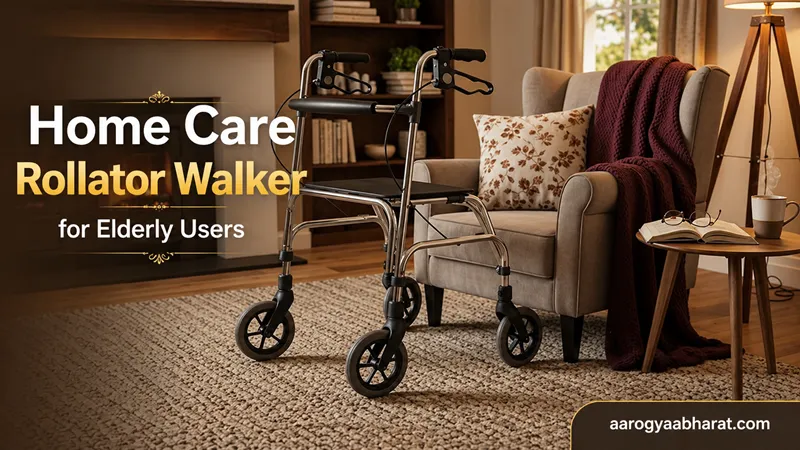
A rollator walker is a modern mobility aid designed
specifically for seniors who require support while walking but also want to
maintain independence within their home environment. Unlike traditional
walkers, it comes with wheels, a braking system, and often a built-in seat,
making it highly practical for elderly home care situations. As the aging
population grows, the demand for reliable rehabilitation products and mobility
aids has significantly increased, especially in urban areas where nuclear families
are more common. In home healthcare setups, a rollator walker reduces
dependency on caregivers while improving safety during movement across
different spaces such as bedrooms, bathrooms, and living areas. It is
particularly beneficial for patients recovering from surgery, those suffering
from arthritis, or individuals with balance issues. The design ensures smooth
movement on flat surfaces and reduces strain on joints, making daily activities
easier and safer. Additionally, with the integration of healthcare equipment in
home care solutions, devices like rollators are becoming an essential category
in hospital-grade home care products. This makes them a crucial investment for
families looking to provide quality care at home without frequent hospital
visits.
Key Features of Rollator Walkers for Elderly Users
Rollator walkers come with a variety of advanced features
that make them ideal for elderly users in home care settings. One of the
primary features is the presence of four wheels that allow smooth and
effortless movement across different surfaces, including tiles and wooden
flooring commonly found in Indian homes. The ergonomic hand brakes provide
complete control, enabling users to stop instantly and avoid accidental falls.
Many models also include a comfortable padded seat and backrest, allowing seniors
to rest whenever needed, especially during longer walks within the house or
garden area. Storage compartments or baskets are another useful feature,
helping users carry personal items, medicines, or groceries without assistance.
Height-adjustable handles ensure proper posture, reducing the risk of back pain
and improving overall comfort. In addition, foldable designs make these walkers
easy to store and transport, which is especially useful in compact living
spaces. With the rise of online medical equipment platforms, users can now
explore various rollator models categorized under mobility aids, rehabilitation
equipment, and elderly care solutions, ensuring they choose the best option
based on their specific needs.
Benefits of Using a Rollator Walker in Home Healthcare
The use of a rollator walker offers multiple benefits in
home healthcare, particularly for elderly individuals who wish to maintain
independence while ensuring safety. One of the biggest advantages is enhanced
mobility, allowing seniors to move freely without constant assistance from
caregivers. This not only boosts confidence but also contributes to better
mental health and emotional well-being. Rollators significantly reduce the risk
of falls, which is one of the leading causes of injury among the elderly
population. With improved balance and stability, users can safely navigate
different areas of the home, including uneven surfaces or slightly inclined
spaces. Another major benefit is reduced physical strain, as the walker
supports body weight and minimizes pressure on joints and muscles. This is
particularly helpful for individuals dealing with conditions like osteoporosis
or post-surgical recovery. In addition, rollator walkers contribute to faster
rehabilitation by encouraging regular movement and physical activity. As part
of a comprehensive home care setup that may include hospital beds, patient
monitoring devices, and healthcare calculators for tracking health metrics,
rollators play a key role in improving overall quality of life.
How to Choose the Right Rollator Walker for Elderly Care
Selecting the right rollator walker requires careful
consideration of several factors to ensure maximum comfort, safety, and
usability. The first aspect to consider is the weight capacity and frame
material, as it should be sturdy enough to support the user while remaining
lightweight for easy handling. Adjustable height settings are crucial to ensure
proper posture and prevent strain on the back and shoulders. Wheel size is
another important factor, as larger wheels provide better stability and are suitable
for both indoor and outdoor use. The braking system should be reliable and easy
to operate, especially for seniors with limited hand strength. Comfort features
such as padded seats, backrests, and ergonomic grips can make a significant
difference in daily usage. Storage options like baskets or pouches are also
beneficial for carrying essentials. Additionally, it is important to consider
whether the rollator is foldable for easy storage in small spaces. With the
availability of various categories like orthopaedic support, physiotherapy
equipment, and elderly mobility solutions, buyers can compare multiple options
and choose a product that fits their specific requirements. Consulting
healthcare professionals or using healthcare calculators to assess mobility
needs can further help in making an informed decision.
Comparison Table: Rollator Walker vs Standard Walker
|
Feature |
Rollator
Walker |
Standard
Walker |
|
Wheels |
3 or 4 wheels |
No wheels or
2 front wheels |
|
Mobility |
Smooth and
easy |
Requires
lifting |
|
Brakes |
Yes |
No |
|
Seat |
Available |
Not available |
|
Storage |
Basket or
pouch |
Limited or
none |
|
Foldability |
Yes |
Yes |
|
Best Use |
Active
elderly home care |
Limited
mobility support |
Applications of Rollator Walkers in Modern Healthcare
Rollator walkers are widely used in various healthcare
settings beyond just home care, making them a versatile mobility solution. In
hospitals and rehabilitation centers, they are commonly used for patients
recovering from surgeries such as hip replacement or knee surgery.
Physiotherapy clinics also utilize rollators as part of mobility training
programs, helping patients regain balance and strength. In elderly care
facilities, these walkers play a crucial role in ensuring safe movement for
residents, reducing the risk of falls and injuries. With the increasing focus
on home-based healthcare services, rollators have become an essential part of
medical equipment used in residential settings. They are often included
alongside other healthcare products such as oxygen concentrators, patient
monitors, and hospital beds. In addition, city-Pages healthcare services are
now offering easy access to such equipment, ensuring that users can find
suitable products based on their location and requirements. This integration of
mobility aids into broader healthcare categories highlights their importance in
improving patient outcomes and enhancing quality of life.
Bullet Points: Why Rollator Walkers are a Smart Choice
- Improves
independence for elderly users
- Reduces
risk of falls and injuries
- Provides
comfortable seating during movement
- Easy
to use with minimal training
- Supports
faster recovery and rehabilitation
- Suitable
for both indoor and outdoor use
- Compact
and foldable for easy storage
- Enhances
confidence and mental well-being
Conclusion
A rollator walker is more than just a mobility aid; it is a complete solution for enhancing safety, independence, and quality of life for elderly individuals in home care settings. With its advanced features, ergonomic design, and wide range of applications, it has become an essential part of modern healthcare equipment. Whether used for daily movement, post-surgical recovery, or long-term elderly care, a rollator walker provides reliable support and comfort. As healthcare continues to evolve with a focus on home-based solutions, investing in the right mobility aid can make a significant difference in overall well-being. By exploring various categories, comparing features, and understanding individual needs, families can ensure they choose the best option for their loved ones.