Understanding the Basic Difference Between Rollator and
Standard Walkers
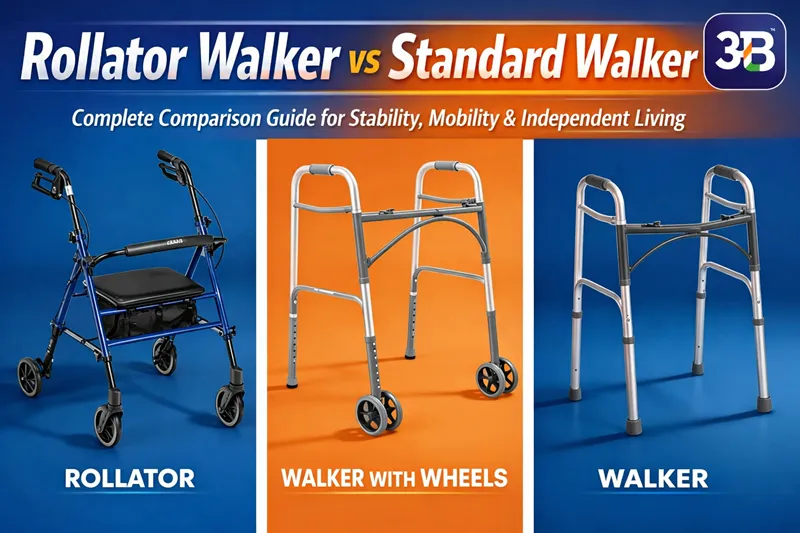
A standard walker is a four-legged mobility aid without
wheels that must be lifted slightly with each step to move forward. It provides
maximum stability and controlled movement, making it ideal for early
rehabilitation or severe balance challenges. A rollator walker, on the other
hand, comes with four wheels, hand brakes, and often a built-in seat, allowing
continuous rolling movement without lifting. While the standard walker focuses
on stability and slow-paced walking, the rollator emphasizes smoother mobility
and endurance support. Families exploring Aarogyaa Bharat Mobility Aid
Categories often compare both options within Hospital Page and Rehabilitation
Sections before selecting the most suitable walker type.
Who Should Choose a Standard Walker
Standard walkers are typically recommended for seniors
recovering from surgery, stroke, fractures, or severe weakness. They are best
suited for individuals who need maximum support while standing and walking
short distances indoors. Since the user must lift the walker with each step, it
encourages slow, controlled movement that enhances safety during early recovery
stages. Seniors with significant balance issues or fear of falling often
benefit from this design. Caregivers frequently combine standard walkers with
Aarogyaa Bharat Rehabilitation Categories such as physiotherapy tools, transfer
aids, and patient beds listed under the Hospital Page to create a structured
recovery environment.
Who Should Choose a Rollator Walker
Rollator walkers are ideal for seniors who have moderate
balance but experience fatigue during longer walks. The four-wheel design
allows smoother movement across different surfaces, and the built-in seat
provides rest breaks when needed. Active seniors who enjoy outdoor walking,
park visits, or longer indoor mobility often prefer rollators because they
reduce shoulder strain caused by lifting. Many families exploring Aarogyaa
Bharat Product Category Page consider rollators when the goal is independence
combined with comfort and endurance support.
Structural Design Comparison
The structural design of both walkers significantly impacts
usability and safety. A standard walker features a rigid aluminum or steel
frame with four rubber-tipped legs that provide direct ground contact. This
ensures stability but requires lifting effort. A rollator walker includes four
wheels, ergonomic handles, braking systems, and sometimes a storage pouch
beneath the seat. Larger wheels allow smoother outdoor navigation. Families
reviewing Aarogyaa Bharat Hospital Page often evaluate structural
strength and adjustability to ensure durability and long-term use.
Rollator vs Standard Walker Comparison Table
|
Feature |
Standard
Walker |
Rollator
Walker |
|
Wheels |
No wheels (or
optional front wheels) |
Four wheels |
|
Stability
Level |
Maximum
stability |
Moderate
stability |
|
Braking
System |
Not required |
Hand brakes
included |
|
Seat
Availability |
No |
Yes (in most
models) |
|
Ideal Use |
Early
rehabilitation |
Longer
walking distances |
|
Lifting
Required |
Yes |
No |
Mobility and Ease of Movement
Standard walkers require lifting with each step, which can
increase effort but provides maximum control. This controlled movement reduces
sudden shifts and ensures steady walking patterns. Rollators allow fluid
forward motion without lifting, making them ideal for seniors with sufficient
balance but reduced stamina. The rolling motion mimics natural walking patterns
and supports longer mobility sessions. Families often compare movement
efficiency within Aarogyaa Bharat Mobility Aid Sections and Rehabilitation
Categories when selecting the appropriate walker.
Impact on Posture and Back Support
Posture alignment plays a crucial role in long-term spinal
health. Standard walkers promote upright posture because the user must maintain
body alignment to lift and place the walker correctly. Rollators also support
posture but may encourage leaning if handle height is not adjusted properly.
Adjustable height is essential in both types to prevent back strain. Many
families review Aarogyaa Bharat Healthcare Calculator tools and Elderly Care
Sections to assess long-term posture and mobility needs.
Indoor vs Outdoor Suitability
Standard walkers are best suited for indoor environments
with smooth flooring, such as bedrooms and hallways. Their rubber-tipped legs
provide stable traction on tiles and marble surfaces. Rollator walkers perform
better outdoors due to their large wheels and braking systems, which handle
uneven terrain more effectively. Families exploring Aarogyaa Bharat Hospital
Page often compare walker models to ensure compatibility with both
indoor and outdoor mobility requirements
Rehabilitation Applications and Recovery Stages
During early rehabilitation, physiotherapists often
recommend standard walkers because they offer maximum stability while
retraining balance. As strength improves, patients may transition to rollators
for greater independence. This progression supports muscle strengthening and
endurance building. Combining walkers with Aarogyaa Bharat Rehabilitation
Sections such as resistance bands, balance boards, and physiotherapy
accessories enhances recovery outcomes and promotes structured mobility
training.
Safety Considerations for Each Walker Type
Safety depends on proper usage and adjustment. Standard
walkers must be lifted carefully to prevent imbalance. Rollator walkers require
consistent brake checks to ensure reliable stopping. Seniors should always
adjust walker height to wrist level and avoid leaning excessively. Regular
inspection of rubber tips, wheels, and frames enhances long-term safety. Adding
Aarogyaa Bharat Elderly Care Accessories such as anti-slip mats and grab bars
further reduces fall risk.
Weight and Portability Differences
Standard walkers are typically lightweight and easy to
carry, making them convenient for short transfers or small homes. Rollators may
be slightly heavier due to wheels and seating components, but most models are
foldable for storage and transport. Families often explore Aarogyaa Bharat
Product Category Pages to compare weight specifications and folding mechanisms
before finalizing a purchase.
Comfort and Convenience Features
Rollator walkers often include padded seats, backrests, and
storage compartments for carrying personal items. This makes them more
convenient for outdoor or extended walking sessions. Standard walkers focus
primarily on stability rather than comfort features. Depending on daily
mobility goals, families may prioritize comfort or stability when exploring
Aarogyaa Bharat Mobility Aid Sections.
Cost Comparison and Budget Planning
|
Aspect |
Standard
Walker |
Rollator
Walker |
|
Average Cost
Range |
Lower |
Moderate to
Higher |
|
Maintenance |
Minimal |
Brake &
wheel maintenance |
|
Durability |
High |
High with
proper care |
|
Long-Term
Value |
Excellent for
recovery |
Excellent for
active seniors |
Families often use Aarogyaa Bharat Healthcare Calculator
tools to estimate overall mobility investment when combining walkers with
physiotherapy equipment and hospital safety accessories.
Emotional and Psychological Impact on Seniors
Mobility aids influence not only physical independence but
also emotional well-being. Standard walkers provide reassurance during early
recovery, reducing fear of falling. Rollators enhance confidence for seniors
who wish to remain socially active and independent outdoors. Families
integrating walkers with Aarogyaa Bharat Elderly Care Solutions and
Rehabilitation Equipment often notice improved mood, increased participation in
daily routines, and stronger self-confidence among seniors.
Maintenance and Long-Term Care
Both walker types require periodic inspection to maintain
safety. Standard walkers need regular checking of rubber tips and frame
stability. Rollators require brake adjustment, wheel alignment, and seat
inspection. Proper maintenance extends durability and ensures consistent
support. Many families review Aarogyaa Bharat Hospital Page safety guidelines
and Elderly Care Sections to maintain walker functionality over time.
Important Feature Checklist Before Final Selection
|
Feature |
Why It
Matters |
What to
Check |
|
Adjustable
Height |
Maintains
posture |
Wrist-level
handle alignment |
|
Frame
Durability |
Long-term
stability |
Aluminum or
reinforced steel |
|
Brake System
(Rollator) |
Safe stopping |
Reliable
locking brakes |
|
Rubber Tips
(Standard) |
Slip
resistance |
High-traction
base |
|
Foldable
Design |
Storage
convenience |
Secure
locking mechanism |
Conclusion
The choice between a rollator walker and a standard walker depends on mobility level, balance strength, rehabilitation stage, and lifestyle needs. Standard walkers provide maximum stability and are ideal for early recovery, while rollator walkers offer smoother movement, seating comfort, and greater independence for active seniors. By evaluating walker features and integrating mobility aids with Aarogyaa Bharat Hospital Page solutions, Rehabilitation Categories, Elderly Care Sections, Product Category Pages, and Healthcare Calculator tools, families can create a structured and safe mobility plan. The right walker enhances not only physical movement but also confidence, dignity, and overall quality of life.