Importance of Mobility Support for Seniors at Home
As people age, mobility can gradually decline due to
conditions such as arthritis, osteoporosis, nerve weakness, or post-surgery
recovery. Many seniors experience difficulty maintaining balance when walking
across smooth floors, especially during early mornings or late evenings when
muscle stiffness increases. A walking stick provides an additional support
point that stabilizes movement and reduces the risk of sudden slips or falls.
Doctors from orthopaedic departments listed on Aarogyaa Bharat hospital pages
often recommend walking sticks for seniors who have mild mobility challenges
but still want to move independently within their homes. Walking sticks also
help distribute body weight evenly between the legs and upper body, reducing
pressure on knees and hips. This support allows elderly individuals to safely
perform everyday tasks such as moving between rooms, visiting the kitchen, or
walking to the bathroom without requiring assistance from caregivers.
How Walking Sticks Improve Indoor Balance
Walking sticks function as a balance stabilizer by creating
a third contact point with the ground, which significantly improves body
stability during movement. Many elderly individuals experience slight dizziness
or imbalance when transitioning from sitting to standing positions. A walking
stick helps maintain control during these transitions, preventing sudden falls.
The ergonomic handle of modern walking sticks allows seniors to grip the device
comfortably while walking across tiles, wooden floors, or carpeted surfaces.
Physiotherapists often include walking stick training as part of mobility
rehabilitation programs listed on Aarogyaa Bharat healthcare pages.
These programs help seniors learn the correct walking technique while using
mobility aids to maintain proper posture and weight distribution. With regular
use, walking sticks can increase confidence in indoor mobility while reducing
the fear of falling.
Common Situations Where Seniors Need Walking Sticks at
Home
Many everyday situations inside homes require careful
balance and stability for elderly individuals. Walking sticks become
particularly useful when seniors move across slippery bathroom floors, climb
short staircases, or walk long corridors inside large homes. In multi-story
houses, walking sticks provide additional support while moving between floors.
They also assist seniors who experience fatigue after standing for long periods
while cooking or performing household activities. Hospital physiotherapy specialists
featured on Aarogyaa Bharat hospital pages often recommend walking
sticks during early recovery phases after surgeries such as knee replacement or
hip surgery. During these periods, seniors may not require full walkers but
still need mild mobility support to move safely indoors. Walking sticks provide
a convenient and practical solution for maintaining independence while ensuring
safety during daily routines.
Features of a Good Walking Stick for Home Use
Selecting the correct walking stick is important to ensure
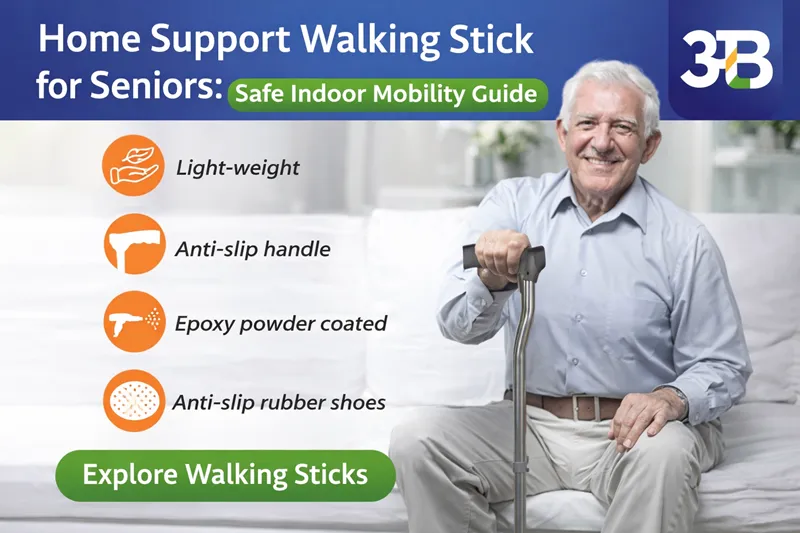
comfort and long-term usability. Lightweight aluminium walking sticks are
commonly recommended because they provide durability without making the device
difficult to handle. Adjustable height mechanisms allow the stick to match the
user’s height, ensuring proper posture alignment during walking. Non-slip rubber
tips at the base of the stick improve traction on indoor surfaces, reducing the
chances of slipping on tiles or polished floors. Many modern walking sticks
also feature ergonomic handles that reduce strain on the wrist and palm during
prolonged use. Orthopaedic specialists featured on Aarogyaa Bharat city
pages frequently advise choosing walking sticks with comfortable grip
materials such as foam or rubber. These design features ensure that seniors can
use the walking stick safely for extended periods without experiencing hand
fatigue or discomfort.
Comparison Between Walking Stick and Walker
|
Feature |
Walking
Stick |
Walker |
|
Support Level |
Mild support |
High support |
|
Portability |
Very
lightweight |
Larger
equipment |
|
Indoor
Mobility |
Excellent |
Moderate |
|
Outdoor
Mobility |
Limited |
Better for
long distances |
|
Storage |
Easy to store |
Requires
space |
This comparison highlights why walking sticks are commonly
recommended for elderly individuals who require light support while walking
inside the home.
Benefits of Using Walking Sticks at Home
• Improves balance and stability during movement
• Reduces pressure on knees and joints
• Helps seniors maintain independence
• Prevents accidental slips on smooth floors
• Supports post-surgery recovery mobility
• Lightweight and easy to carry indoors
• Encourages safe daily movement routines
These benefits explain why walking sticks remain one of the
most widely recommended mobility aids for elderly individuals.
Role of Walking Sticks in Physiotherapy Recovery
Physiotherapists frequently include walking stick training
in rehabilitation programs for elderly patients recovering from injuries or
surgeries. Walking sticks provide controlled support that helps patients
gradually rebuild muscle strength while maintaining stability. In orthopaedic
rehabilitation units, walking sticks are often used before transitioning
patients to independent walking. Physiotherapy centers listed on Aarogyaa
Bharat hospital pages frequently recommend walking sticks for patients
recovering from hip fractures, knee replacement surgeries, or neurological
conditions affecting balance. By supporting weight distribution during walking,
these devices allow patients to regain confidence in their mobility. Gradual
mobility training using walking sticks also helps improve coordination and
muscle endurance during recovery phases.
Tracking Mobility Progress with Healthcare Calculators
Monitoring mobility improvement during rehabilitation is
important for evaluating recovery progress. Aarogyaa Bharat healthcare
calculators help patients and families estimate rehabilitation timelines,
physiotherapy expenses, and expected mobility milestones. These calculators are
especially useful for elderly individuals who are undergoing physiotherapy
after surgeries or injuries. By combining walking stick usage with structured
physiotherapy sessions, seniors can gradually improve walking distance and stability.
Recovery progress can be measured using healthcare calculators that track
walking endurance improvements over time. This data-driven approach helps
families plan long-term elderly care and rehabilitation strategies more
effectively.
Choosing the Right Walking Stick for Elderly Individuals
Selecting the correct walking stick depends on factors such
as height, body weight, and mobility needs. Seniors should choose adjustable
walking sticks that allow proper posture alignment during walking.
Rubber-tipped bases provide additional grip on indoor surfaces, ensuring safe
movement across tiles and wooden floors. Lightweight materials are important
because heavy walking sticks may cause fatigue during prolonged use. Many
medical equipment experts on Aarogyaa Bharat city pages recommend
ergonomic handle designs that provide comfortable grip support. Families should
also consider foldable walking sticks for seniors who travel frequently or
visit hospitals for medical consultations. Choosing the correct walking stick
significantly improves safety and convenience during daily indoor activities.
Where to Buy Reliable Walking Sticks in India
Reliable walking sticks should always be purchased from
trusted medical equipment providers that offer clinically recommended mobility
aids. Hospital-grade walking sticks are designed with durable materials and
ergonomic features to support elderly safety. Aarogyaa Bharat provides
high-quality walking sticks that support safe mobility for seniors at home,
during rehabilitation, and while visiting hospitals. With availability across
major city pages including Pune, Delhi, Mumbai, Bangalore, and Hyderabad, Aarogyaa
Bharat ensures that elderly individuals across India can access reliable
mobility equipment easily. Each product is selected based on safety standards
and recommendations from healthcare professionals.
Conclusion
Maintaining mobility at home is essential for elderly individuals who want to live independently and safely. However, age-related conditions such as arthritis, muscle weakness, and balance issues can make indoor movement challenging. Walking sticks provide a simple yet effective mobility aid that improves balance and reduces fall risks during everyday activities. Lightweight, portable, and easy to use, walking sticks allow seniors to move confidently across rooms, hallways, and staircases without requiring assistance. When combined with physiotherapy guidance, hospital consultations, and healthcare calculators available through Aarogyaa Bharat, walking sticks become an important part of safe elderly care at home. By choosing the right walking stick and using it regularly, seniors can maintain independence while ensuring long-term mobility and safety.